
Lead
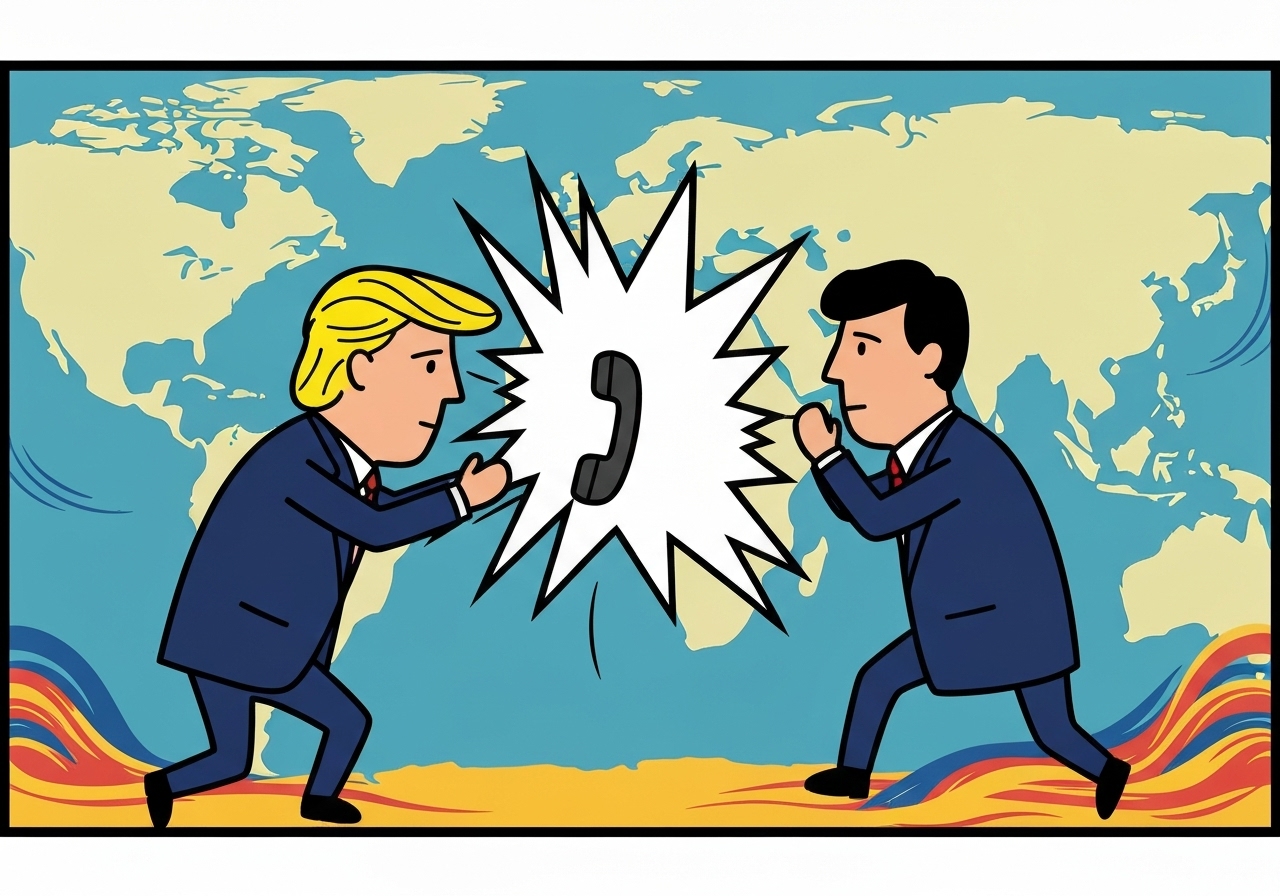
On Wednesday night, Jan. 7, 2026, President Donald J. Trump and Colombia’s President Gustavo Petro spoke by telephone for the first time in a 55-minute conversation that participants described as a sharp change in tone. The call followed a weekend in which Mr. Trump’s comments seemed to suggest possible military action toward Colombia and other regional actors after the United States seized Venezuela’s president. Mr. Petro, who spoke for most of the exchange and allowed Mr. Trump to speak in the final 15 minutes, called the conversation “historic”; Mr. Trump called it a “Great Honor.” The rapid, high-stakes outreach appears to have eased immediate tensions while leaving concrete cooperation to be negotiated later.
Key Takeaways
- The leaders held a 55-minute phone call on Wednesday night, Jan. 7, 2026; Mr. Petro said he spoke for most of the call and Mr. Trump spoke in the last 15 minutes.
- President Trump described the call as a “Great Honor”; President Petro called it “historic” and described the new tone as “friendly.”
- The conversation followed public comments by Mr. Trump over the weekend that were widely read as threatening possible military moves after the U.S. seized Venezuela’s president.
- No specific security agreements were announced immediately; both governments indicated follow-up discussions and a possible White House visit were expected.
- Analysts say the outreach could recalibrate U.S.-Colombia ties at a moment of regional volatility but that durable cooperation will require substantive follow-through.
Background
United States and Colombia have been long-standing partners on security, counter-narcotics and trade, but relations have grown strained over the past year amid sharp public disagreements. President Gustavo Petro, a 65-year-old leftist who rose to power on a platform of major policy shifts, frequently clashed with the previous U.S. approach and used pointed rhetoric in public. Meanwhile, the U.S. administration’s recent seizure of Venezuela’s president has heightened regional tensions and prompted alarm among neighboring governments about stability and possible spillover.
Throughout the last year both leaders engaged in a high-profile war of words on social media, amplifying bilateral friction. Diplomatic channels continued to operate at lower levels, but public exchanges eroded trust. The weekend remarks by President Trump that were interpreted as a threat of military measures prompted urgent outreach within both governments to avoid miscalculation and to reopen direct leader-to-leader communication.
Main Event
The conversation was arranged quickly after the weekend escalation in rhetoric. Officials from both capitals coordinated the call; Colombian aides framed it as an opportunity for Mr. Petro to explain his positions directly. According to Mr. Petro, he did most of the talking for the 55-minute call, leaving Mr. Trump the final 15 minutes to respond. Both presidents characterized the tone as markedly warmer than recent public exchanges.
No operational or binding agreements were unveiled immediately after the call. Mr. Petro said no demands or concrete proposals were presented during the initial conversation, and that follow-up bilateral meetings would determine precise cooperation. Within hours of the phone call, Mr. Trump posted on social media that a White House visit was anticipated, signaling an intention to continue high-level engagement.
The timing of the outreach — coming after the U.S. action involving Venezuela’s president — narrowed the window for de-escalation. By moving quickly to a phone conversation, both sides sought to prevent misreadings of public remarks from becoming a diplomatic or security crisis. Observers noted the call replaced a week of social-media confrontations with an old-fashioned direct exchange of views between leaders.
Analysis & Implications
At the most immediate level, the call reduced the chance of a near-term clash sparked by ambiguous public statements. Direct leader-to-leader dialogue lowers the risk that third parties will misinterpret signals and that regional militaries will respond to uncertain threats. For Colombia, securing clearer lines of communication with Washington is politically useful for managing domestic expectations and protecting national sovereignty.
For the United States, the outreach represents a test of whether an assertive public posture can be paired with quick diplomatic damage control. The episode highlights how social-media rhetoric can force rapid diplomatic responses; administrations and partner governments must now weigh the domestic political benefits of blunt public language against the security costs of ambiguity in a volatile neighborhood.
Longer-term implications hinge on what follows this initial reset. If the promised follow-up — including the announced White House visit — yields specific commitments on migration, counter-narcotics cooperation, or regional security coordination, the call could mark the beginning of a substantive policy realignment. If, however, the exchange remains largely rhetorical, underlying disputes over policy toward Venezuela and broader ideological differences could reassert themselves.
Comparison & Data
| Before the Call | After the Call |
|---|---|
| Public exchanges dominated by social-media attacks and mutual criticism between the presidents. | Direct, 55-minute telephone conversation described by both leaders as constructive. |
| No leader-level contact in recent months that reduced trust and raised public tensions. | Phone call opened a channel for follow-up talks and an announced White House visit. |
The table summarizes the qualitative shift from public confrontation to direct diplomatic engagement. While the call changed tone immediately, measurable policy shifts will depend on subsequent meetings and documented agreements on security, migration and regional cooperation.
Reactions & Quotes
Official and public reactions were swift, with both capitals portraying the call as significant while stopping short of detailing immediate policy changes. Domestic critics in both countries cautioned that words must be translated into concrete steps to alter the underlying tensions.
“Great Honor.”
President Donald J. Trump (public statement)
The White House phrasing underscored the administration’s attempt to project a diplomatic win; officials framed the remark as signaling openness to continued high-level meetings.
“Historic.”
President Gustavo Petro (interview)
President Petro used the term to emphasize the shift from heated public exchanges to direct dialogue, but he also reiterated persistent policy differences that still need to be negotiated.
“Friendly.”
President Gustavo Petro (on the new tone)
Mr. Petro’s reference to a “friendly” tone indicates a tactical de-escalation; analysts note that a cordial conversation does not erase deep disagreements on Venezuelan policy and regional strategy.
Unconfirmed
- Whether the call included specific security guarantees or signed agreements — officials said details would be discussed later and none were announced immediately.
- Exact content and intent of the weekend remarks by President Trump that were interpreted as a threat of military action; public reports describe the comments but full context and intent have not been independently verified.
- Precise dates, agenda and scope for the announced White House visit have not been released and remain subject to confirmation.
Bottom Line
The Jan. 7, 2026 phone call between Presidents Trump and Petro defused an immediate risk of escalation by moving both leaders from public confrontation to private dialogue. It demonstrated how quickly diplomacy can reopen even after a period of rancor, and it highlighted the outsized role of presidential rhetoric in shaping regional security dynamics.
That said, the call was a first step, not a finished deal. Lasting change will require concrete follow-through: clear agendas for the promised meetings, written agreements on cooperation areas, and steps to manage differences over Venezuela and other policy disputes. Observers should watch for forthcoming announcements from both capitals that translate the new tone into defined policy outcomes.
Sources
- The New York Times — news report on the leaders’ call and interviews (media)