
Lead
Iran’s supreme leader, Ayatollah Ali Khamenei, signaled on Friday that security forces would move against nationwide demonstrators, accusing them of damaging public property to curry favor with U.S. President Donald Trump. The comments came as Iran’s judiciary chief, Gholamhossein Mohseni-Ejei, vowed strict, uncompromising punishment for participants. Despite a near-total communications blackout, activists shared short videos of rallies and fires in Tehran and other cities; state media labeled demonstrators “terrorists.” The unrest, which began Dec. 28 amid economic grievances, has escalated into the most serious challenge to Iran’s leadership in several years.
Key Takeaways
- Supreme Leader Ayatollah Ali Khamenei publicly blamed protesters for “ruining their own streets” and linked demonstrations to U.S. interference, speaking at his Tehran compound on Friday.
- Judiciary chief Gholamhossein Mohseni-Ejei promised “decisive, maximum” punishments with no legal leniency for protesters.
- Communications were largely cut across the country; activists circulated short videos purporting to show chants, bonfires and debris in Tehran and other cities despite the blackout.
- Human Rights Activists News Agency (U.S.-based) reported at least 42 killed and more than 2,270 detained in the unrest so far.
- State media claimed violence, including fires set to vehicles and public transport; it reported six deaths in Hamedan, about 280 km (175 miles) southwest of Tehran.
- Former crown prince Reza Pahlavi called for mass demonstrations at 8 p.m. Thursday and Friday, a call activists and some protesters heeded on social media.
- U.S. President Donald Trump reiterated warnings that the U.S. would respond if Iranian authorities violently suppress protesters, a pledge that gained resonance after a U.S. raid linked to Venezuela.
Background
The current unrest began Dec. 28 amid a deepening economic crisis and a precipitous fall of the rial, which reached roughly 1.4 million to $1 in December. What started as protests over living standards and economic mismanagement has broadened into widespread antigovernment demonstrations challenging the Islamic Republic’s leadership. Iran has seen periodic nationwide unrest in recent years; previous rounds of protests have often been followed by heavy-handed security responses and internet restrictions designed to blunt organizing and international coverage.
Political actors inside and outside Iran have sought to influence or capitalize on the protests. Reza Pahlavi, the exiled son of the deposed shah, urged Iranians to take to the streets at synchronized times; his call appears to have helped coordinate activity in multiple neighborhoods. Tehran’s leadership, for its part, has pointed to foreign meddling—naming the U.S. and Israel—to delegitimize demonstrations and justify a security response. The judiciary and security apparatus are key stakeholders, prepared to act decisively if ordered by senior leaders.
Main Event
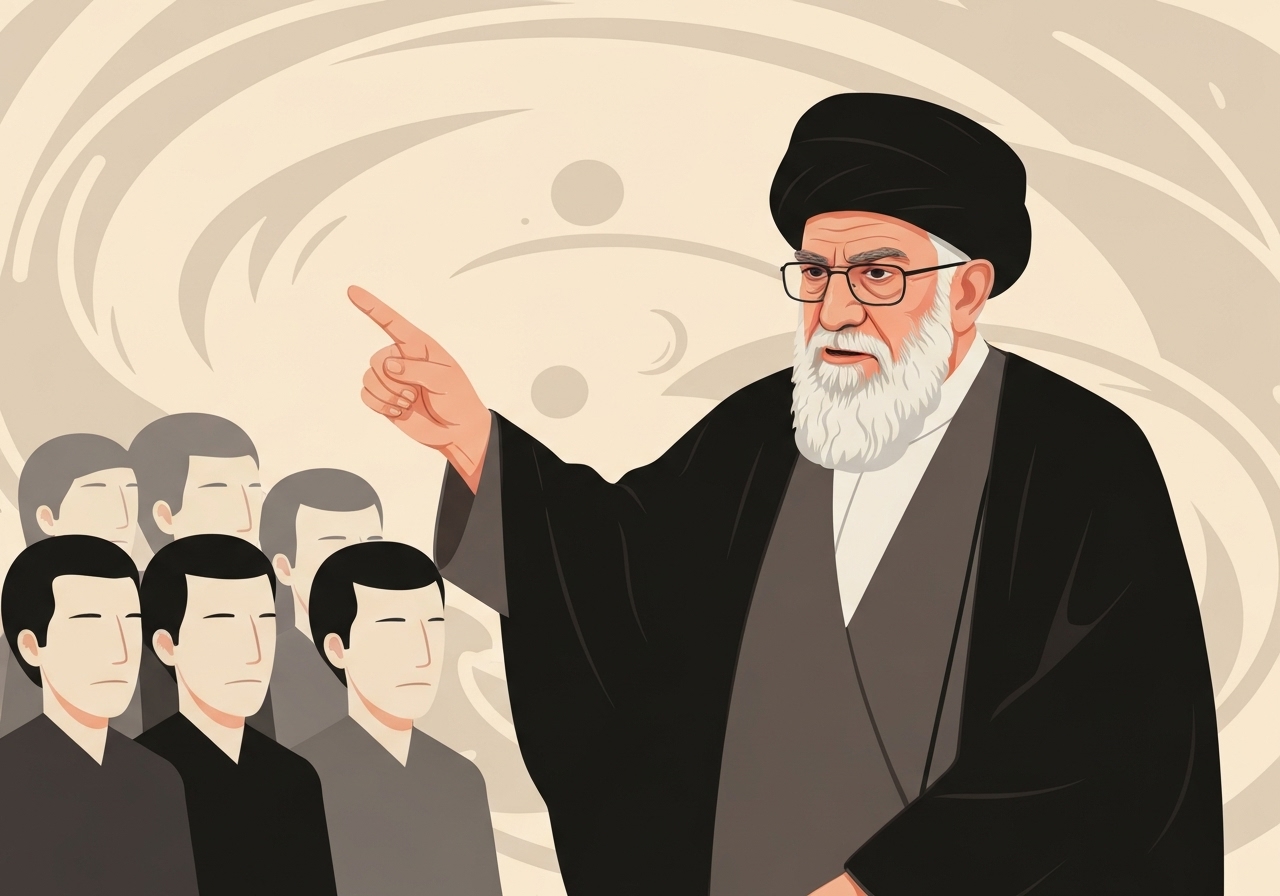
On Friday, Khamenei addressed a crowd at his compound in Tehran and dismissed Trump as having hands “stained with the blood of Iranians,” while accusing protesters of destroying their own communities to win U.S. approval. State television broadcast supporters chanting “Death to America!” and later described the demonstrators as “terrorists,” a label that often precedes arrests and use of force. Mohseni-Ejei’s public pledge of maximal punishment framed a legal backing for a stern crackdown.
Communication channels were severely restricted nationwide: internet and some international telephone services were cut, and state outlets acknowledged the demonstrations only after the blackout. Activists nonetheless posted brief videos alleging mass turnout, chants against the regime, and fires in Tehran and other cities. State media reported unspecified “casualties” and detailed incidents such as private cars, buses and fire trucks set alight, including six deaths in Hamedan.
Reports vary on the protests’ geographic spread and intensity because of the communications blackout. Local witnesses described synchronized neighborhood actions at 8 p.m. Thursday, with slogans ranging from calls for freedom to praise for the shah. Authorities’ response appeared to be preparing for wider suppression: arrests were reported in multiple cities and security forces mobilized in key urban areas.
Analysis & Implications
The protests represent both an economic revolt and a political rupture. Rising prices, currency collapse and sanctions have intensified public frustration; what began as economic protests quickly adopted political demands as participants chanted against the theocracy. The participation patterns, including synchronized evening mobilization after Pahlavi’s appeal, suggest an increased capacity for decentralized protest tactics that are harder to preempt.
Iran’s leadership faces a dilemma: tolerate protests and risk contagion and further political erosion, or impose harsh suppression that could provoke international condemnation and possible retaliation. Khamenei’s rhetoric and the judiciary’s vow point toward a choice for forceful containment. A heavy crackdown may deter some protesters short term but risks fueling longer-term grievances and international scrutiny.
U.S. statements supporting protesters and threatening consequences if killings occur complicate Tehran’s calculus. Washington’s warnings — reinforced after a U.S. raid tied to Venezuela — raise the stakes for any lethal repression and could prompt diplomatic measures, sanctions or limited military signaling. However, direct intervention remains politically sensitive and legally fraught, and U.S. options are constrained by regional dynamics and risk assessments.
Comparison & Data
| Metric | Current unrest |
|---|---|
| Start date | Dec. 28 |
| Reported deaths | At least 42 (HRANA) |
| Reported detentions | More than 2,270 (HRANA) |
| Rial exchange (Dec.) | ≈1,400,000 to $1 |
These figures are compiled from activist monitors and state reports and reflect the limited verifiable data available while communications are disrupted. Past nationwide protests in Iran have produced fluctuating casualty and detention totals; comparisons are difficult without independent verification and transparent reporting.
Reactions & Quotes
“They are ruining their own streets … in order to please the president of the United States,”
Ayatollah Ali Khamenei (Supreme Leader of Iran)
Context: Khamenei used this language to attribute the unrest to foreign influence and to argue against foreign support for demonstrators, framing protests as damaging internal cohesion.
“Punishment will be decisive, maximum and without any legal leniency,”
Gholamhossein Mohseni-Ejei (Judiciary chief)
Context: The judiciary chief’s statement signals legal and penal measures ahead of mass prosecutions or expedited sentencing for those detained.
“If they violently kill peaceful protesters, they will have to pay hell,”
Donald Trump (President of the United States)
Context: Trump reiterated prior warnings that U.S. policy could change if Iranian authorities carry out deadly suppression; the remark raises diplomatic and security implications.
Unconfirmed
- Claims that U.S. and Israeli “terrorist agents” organized fires and violence remain unverified and are asserted by state media without presenting corroborating evidence.
- The full number of casualties and detainees cannot be independently verified while the national communications blackout persists.
- It is unclear whether chants in favor of the shah reflect active support for Reza Pahlavi personally or a broader desire to reject the post-1979 system.
- Allegations that the internet shutdown specifically enabled security forces to commit killings lack conclusive, independently verified proof at this stage.
Bottom Line
The demonstrations that began Dec. 28 have evolved from economic protests into a broader political crisis that tests the resilience of Iran’s governing institutions. Senior leaders’ rhetoric and legal threats suggest Tehran is preparing to suppress unrest aggressively, even as activists exploit synchronized calls to sustain momentum. With at least 42 reported dead and over 2,270 detained, the human toll is mounting amid limited independent verification due to communications blackouts.
International responses — including U.S. warnings — raise the prospect of diplomatic pressure or punitive measures should a brutal crackdown occur, but direct intervention remains constrained. For observers, the key indicators to watch are the scale and duration of nightly mobilizations, the extent of security force deployments, verified casualty and detention figures, and whether foreign governments move beyond verbal warnings to tangible action.
Sources
- AP News (news report)
- Human Rights Activists News Agency (HRANA) (U.S.-based activist monitoring group)
- Washington Institute for Near East Policy (policy think tank; expert commentary)