
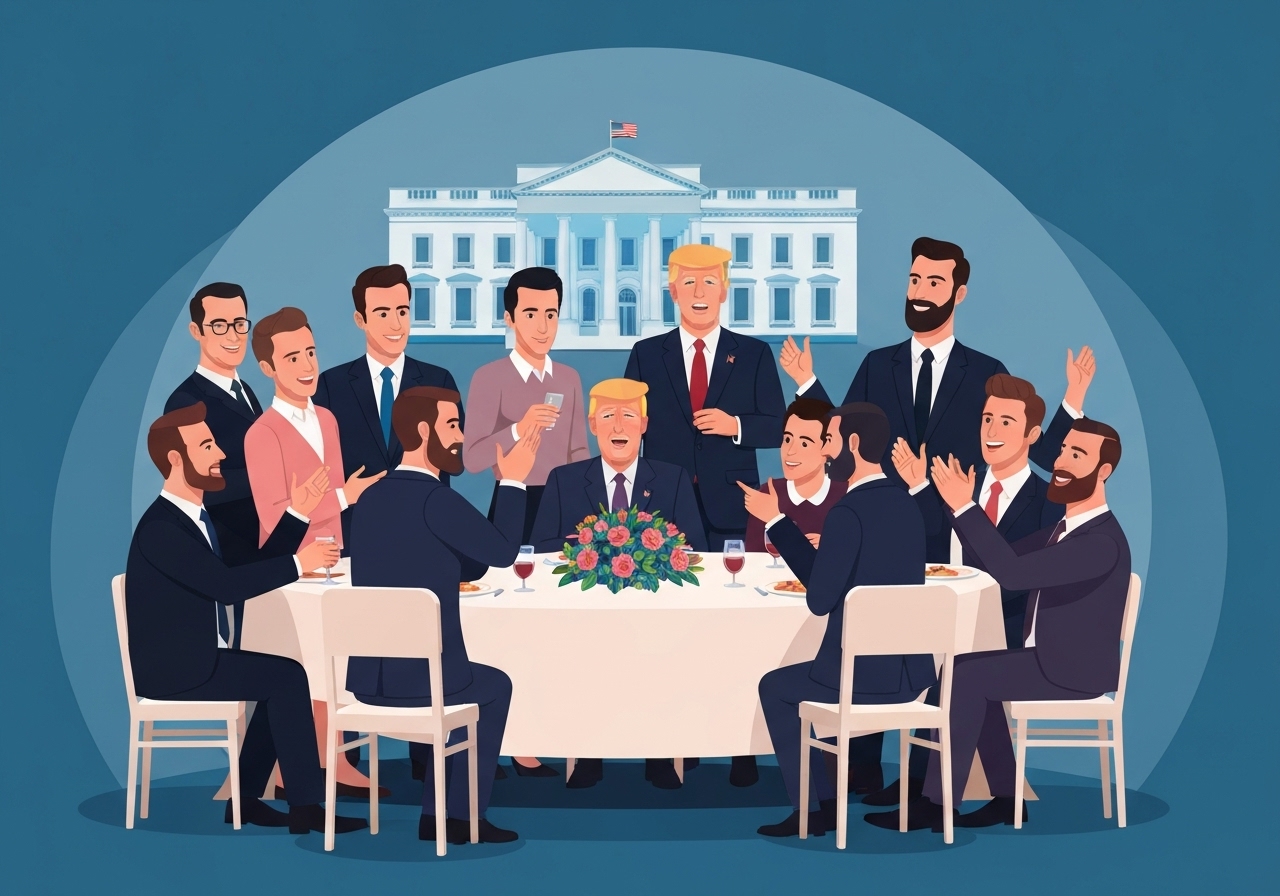
Senior executives from major technology firms met at the White House on Sept. 4, 2025, where several CEOs publicly praised President Donald Trump’s approach to artificial intelligence policy and signaled large planned U.S. investments in the sector.
Key Takeaways
- CEOs from Microsoft, AMD, Oracle, OpenAI, Apple, Google and Meta attended a White House dinner focused on AI policy.
- Executives praised the administration’s pro-business stance and described recent U.S. investment plans measured in the hundreds of billions.
- Several leaders said their companies would increase U.S. investment, workforce training, or both, following meetings earlier on AI education.
- The gathering highlighted ongoing commercial stakes: tariffs, power access for data centers, and regulatory and legal battles.
- Some CEOs at the table have longstanding ties to the administration, including prior donations or attendance at the inauguration.
- The public portion of the dinner featured direct questions from the president about planned U.S. spending, and occasional lighthearted exchanges with individual CEOs.
Verified Facts
The dinner took place at the White House on Thursday, Sept. 4, 2025. Attendees included Microsoft CEO Satya Nadella, AMD CEO Lisa Su, Oracle CEO Safra Catz, OpenAI CEO Sam Altman, Apple CEO Tim Cook, Google CEO Sundar Pichai and Meta CEO Mark Zuckerberg, among others representing companies with significant AI efforts.
During the public segment, multiple executives praised the administration’s AI policies and signaled plans to expand investment and workforce training in the United States. Several speakers offered figures described in the hundreds of billions of dollars when asked about planned domestic spending over coming years.
Earlier the same day, First Lady Melania Trump hosted a task force meeting on AI education; several companies at the dinner pledged investments aimed at preparing students and workers for AI-related roles.
The dinner also touched on policy levers that affect tech firms: proposed tariffs on semiconductors, permitting and grid access for energy-intensive facilities, and ongoing legal disputes between some companies and federal agencies.
Context & Impact
Corporate leaders routinely meet with the White House, and such gatherings shape both public messaging and business planning. For companies operating large training clusters and data centers, government decisions on tariffs, electricity allocation and permitting materially affect capital planning.
For example, administration talk of a ‘‘substantial tariff’’ on semiconductors — with possible waivers for companies building U.S. facilities — creates incentives for domestic investment but raises concerns about supply-chain costs and trade relations.
- Potential impacts on companies: higher onshore investment, altered supply chains, and new regulatory compliance needs.
- Potential impacts on the public: increased domestic jobs training, but possible price impacts if tariffs raise component costs.
Official Statements
Executives publicly thanked the administration for a ‘‘pro-innovation, pro-business’’ approach and pledged significant U.S. investment.
Statements reported from several company CEOs at the White House event
Unconfirmed
- Precise, contract-level commitments from companies (timing, locations, and funding breakdown) have not been publicly verified beyond broad pledged amounts.
- Whether all companies will receive tariff waivers or expedited permits as suggested in conversation remains uncertain and would require formal policy action.
Bottom Line
The White House dinner publicly showcased alignment between several leading AI companies and the administration’s pro-growth rhetoric, along with broad pledges of U.S.-focused investment and training. Concrete outcomes will depend on follow-up agreements, regulatory actions and how legal disputes with the government progress.