
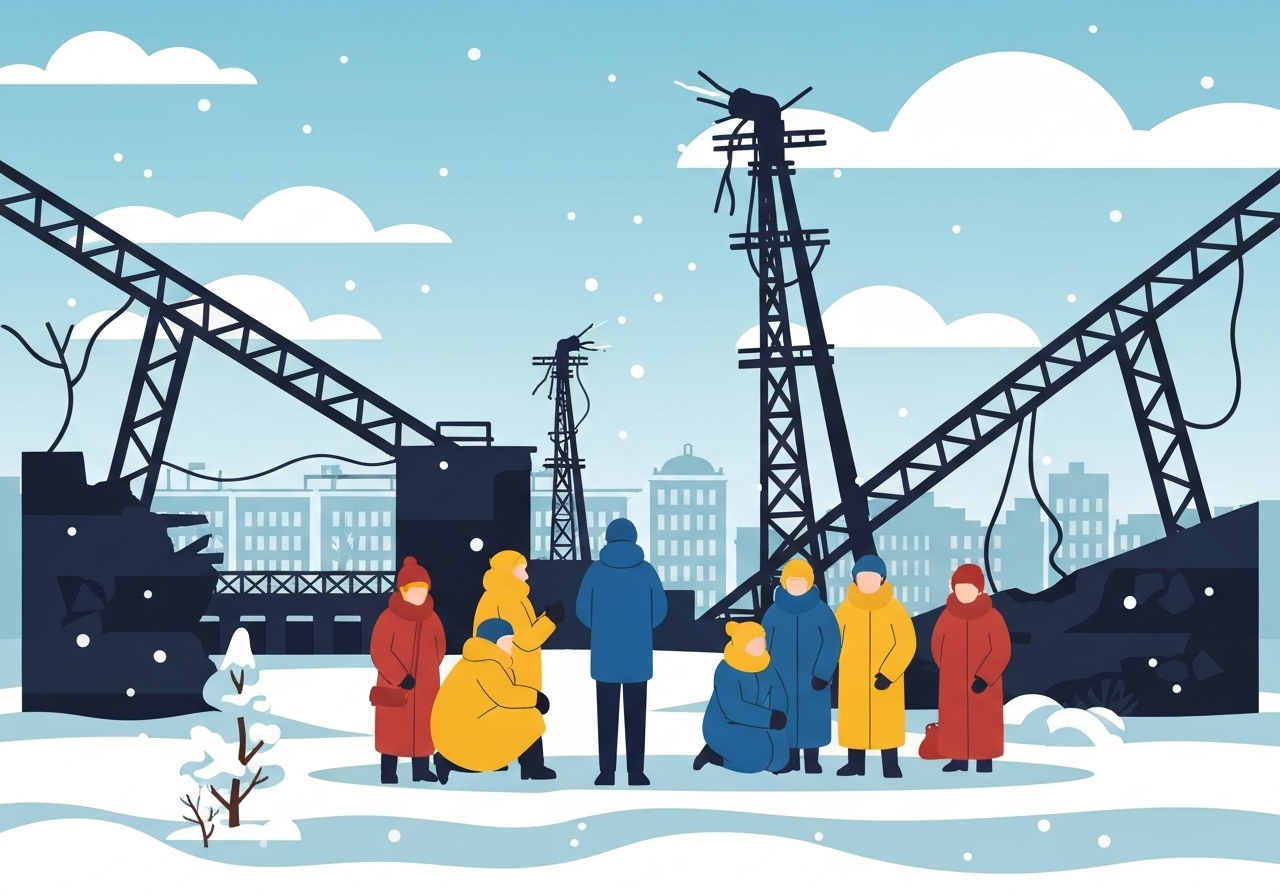
On Sunday, January 11, 2026, Ukrainian authorities raced to restore power and heating after a week of intense Russian strikes left tens of thousands without service amid daytime lows near -10C (14F). Kyiv officials said heating was back in roughly 85% of apartment blocks a day after the capital experienced a near-total outage of electricity, heat and water, while more than 1,000 buildings remained cold. National leaders and emergency services implemented mobile shelters and staged repairs as scheduled blackouts continued. Residents described improvised coping measures and growing hardship as crews worked under winter conditions.
- About 85% of Kyiv apartment buildings had heating restored by Sunday, but over 1,000 buildings remained without heat, according to Mayor Vitali Klitschko.
- Daytime temperatures fell to about -10C (14F) in Kyiv, compounding the humanitarian risk during outages.
- Ukraine reported nearly 700,000 consumers lost power over the prior seven days before some supplies were restored, per Prime Minister Yulia Svyrydenko.
- Ukrenergo ordered emergency cuts in Kyiv and the surrounding region to allow repairs after widespread damage to the grid.
- Russian strikes overnight damaged infrastructure in Dnipropetrovsk and Zaporizhzhia; by Sunday morning some 13,000 people in Zaporizhzhia were without supply.
- In December, Kyiv residents averaged 9.5 hours without electricity per day as the system struggled with winter demand.
- Scheduled blackouts in Kyiv are currently running at roughly eight hours, even where power has been partially restored.
- Some villages on the outskirts of the capital reported up to four days without electricity, prompting street protests and road blockades.
Background
Since the full-scale invasion began in 2022, Russian forces have repeatedly struck Ukraine’s energy network with missiles and drones, a campaign Ukrainian officials say aims to degrade civilian services and pressure the economy. Energy-sector targets have included generation plants, substations and heat-producing facilities, which are especially critical as temperatures fall. Winter outages have become a recurring hazard in the fourth winter of the war, forcing households and municipal services to adapt with generators, communal warm spaces and rationed power schedules. Authorities, emergency responders and international partners have invested in repairs and backup capacity, but sustained damage and fresh strikes complicate restoration efforts.
Local governments, energy companies and volunteer groups are among the primary actors responding to outages. Ukrenergo, the national grid operator, manages system-level load-shedding and repair operations, while city administrations coordinate shelters and targeted aid for vulnerable residents. International donors and technical teams have provided equipment and funding, but logistic challenges and recurrent strikes slow comprehensive recovery. The political stakes for both Kyiv and Moscow include public morale, economic resilience and international perception as the conflict continues.
Main Event
Sunday’s emergency response focused on reconnecting district heating networks and repairing damaged substations after what officials described as one of the largest concentrated attacks on Kyiv’s energy system in recent weeks. Mayor Vitali Klitschko said teams worked around the clock to restore heat to residential blocks; crews prioritized buildings with elderly or immobile residents. Ukrenergo implemented controlled outages to prevent further system collapse and to create safe conditions for repair crews.
Prime Minister Yulia Svyrydenko publicly accused Russian forces of deliberately striking heat-generating infrastructure with ballistic missiles over the prior week, noting that difficult weather intensified the humanitarian impact. Mobile shelters were established in Kyiv to provide warmth, phone charging and hot drinks, and volunteers distributed fuel canisters and generators to households. In outlying villages where lines were severed for days, residents staged road blockades to press for faster repair work.
On the ground, accounts varied from improvised cooking on gas canisters to seniors layering clothing and relying on leftovers. Some apartment elevators stopped during outages, creating additional safety hazards for elderly residents. Despite partial restorations, scheduled eight-hour blackouts and the risk of renewed strikes left many households uncertain about when normal service would return.
Analysis & Implications
The strikes and resulting outages underscore the vulnerability of centralized energy systems in a sustained conflict and the acute human risks when attacks coincide with severe winter weather. Repeated damage to generation and transmission assets reduces redundancy, prolongs repair timelines and increases the cost of recovery. For Kyiv, prolonged blackouts threaten public health, disrupt hospitals and social services, and raise the political pressure on municipal and national authorities to deliver rapid and visible fixes.
Economically, intermittent power and damage to industrial regions such as Dnipropetrovsk and Zaporizhzhia slow production, complicate logistics and increase the need for imports or emergency spending. International partners face a choice between accelerated material support for repairs and longer-term investments in decentralization and grid hardening, including microgrids and resilient heat solutions. Militarily and psychologically, targeting energy infrastructure aims to sap civilian resilience, but repeated strikes also spur mobilization of repair networks and foreign support.
Over the medium term, Ukraine’s recovery will hinge on rapid repairs, improved early-warning and redundancy, and strategic investments in winterized decentralised heating and backup generation for critical services. If attacks persist as temperatures fall further, humanitarian needs could outpace current shelter and fuel provisions, requiring an expanded relief response and possible international emergency assistance focused on fuel, medical equipment and temporary housing.
| Metric | Recent figure | Context |
|---|---|---|
| Kyiv heating restored | ~85% of apartment buildings | Restoration reported within a day after near-total outage |
| Buildings still without heat | >1,000 buildings | Mayor reported continued gaps in service |
| Consumers affected over 7 days | ~700,000 | Power lost before subsequent restorations |
| Zaporizhzhia without supply | >13,000 people | Reported by Ukraine’s energy ministry on Sunday |
| Average outages in December | 9.5 hours/day | System under winter strain |
The table shows both the scale of immediate harm and the accumulated strain on the system from repeated attacks and winter weather. Restoring bulk power does not immediately solve heating gaps where district systems or damage to building risers remain. Deployment of distributed backups and targeted support for elderly and immobile residents will shape near-term humanitarian outcomes.
Reactions & Quotes
The enemy deliberately targeted heat-generating facilities with ballistic missiles, making repairs harder during icy weather.
Prime Minister Yulia Svyrydenko (official statement)
It is a very difficult situation but restoration teams continue working around the clock.
Vitali Klitschko, Kyiv mayor (city administration)
We hope they will give us heat; if not power, then at least heat,
Local resident quoted via Reuters
- Unconfirmed: Full scale of structural damage to specific thermal plants and long-term repair timetables remain unclear pending engineering surveys.
- Unconfirmed: Attribution of every individual strike to deliberate targeting of civilian heat infrastructure is asserted by Ukrainian officials but not independently verified for each event.
- Unconfirmed: Exact timelines for restoring continuous eight- to 24-hour service across all affected outskirts are provisional and depend on weather and security conditions.
Bottom Line
Widespread power and heating losses in Kyiv and other regions during bitter winter weather have escalated the humanitarian stakes of a campaign that has repeatedly targeted energy infrastructure. Short-term measures such as mobile shelters, prioritized reconnections and fuel distributions mitigate immediate risk, but do not replace the need for systematic repairs and resilient backups. The coming days will test the speed of repairs, the resilience of social services, and the ability of local and international actors to prevent a deeper humanitarian crisis as temperatures remain low.
For residents, return of reliable heat and power is the immediate priority; for policymakers, the episode highlights the need for investments in redundancy, winter-proofing, and decentralised solutions that can reduce civilian vulnerability in future waves of attacks.
- CNN (international news report)
- Ukrenergo (official national grid operator)
- Kyiv City State Administration (official municipal statements)
- Cabinet of Ministers of Ukraine (official government communications)