
Lead
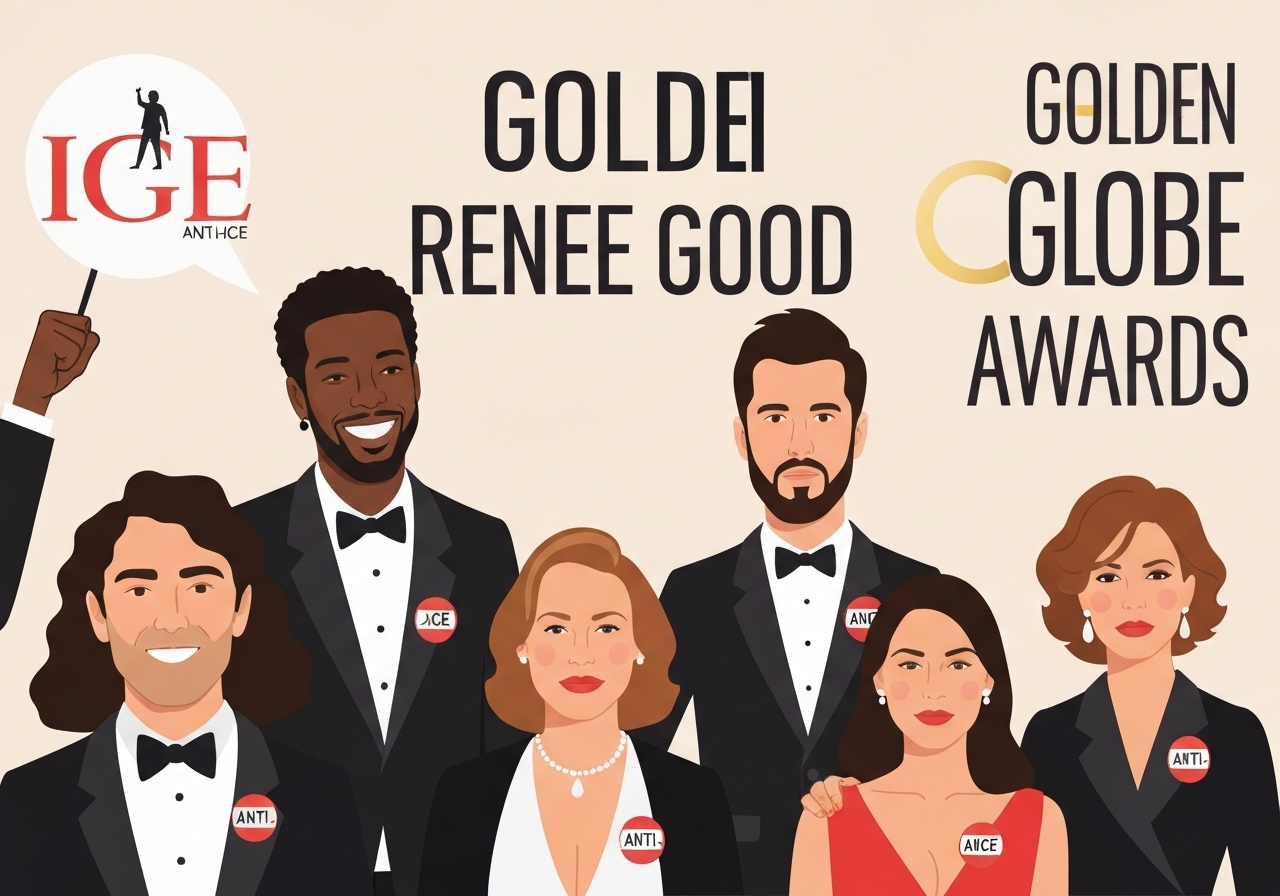
At the 83rd Golden Globes on Sunday, Jan. 11, 2026, multiple celebrities wore black-and-white pins protesting Immigration and Customs Enforcement in tribute to Renee Good, who was shot and killed in her car by an ICE officer earlier that week in Minneapolis. The pins carried short slogans such as “BE GOOD” and “ICE OUT,” bringing a political message onto a high-profile awards stage after a comparatively apolitical ceremony last year. Prominent figures including Mark Ruffalo, Wanda Sykes and Natasha Lyonne displayed the pins on the red carpet, while Jean Smart and Ariana Grande wore them inside the ballroom; Smart kept the pin on as she accepted her award. The demonstrations come amid nationwide protests and an ongoing FBI inquiry into Good’s death.
Key Takeaways
- Several celebrities wore anti-ICE pins at the Golden Globes on Jan. 11, 2026, to honor Renee Good, shot and killed by an ICE officer earlier that week in Minneapolis.
- Pins featured brief messages such as “BE GOOD” and “ICE OUT” and were distributed at pre-Globe parties as a grassroots outreach effort.
- Mark Ruffalo, Wanda Sykes and Natasha Lyonne wore pins publicly on the red carpet; Jean Smart and Ariana Grande wore them inside the ceremony.
- The shooting in Minneapolis prompted protests nationwide and an FBI investigation; the White House defended the ICE officer’s account, saying he acted in self-defense.
- A separate off-duty ICE officer fatally shot Keith Porter in Los Angeles a week before Good’s killing; Border Patrol agents wounded two people in a Portland incident that has also spurred demonstrations.
- Organizers including Nelini Stamp and Jess Morales Rocketto mobilized celebrities and allies, citing a tradition of artists taking public stands on justice issues.
Background
The pins campaign emerged amid heightened scrutiny of immigration enforcement after the killing of Renee Good, reported in the week of Jan. 11, 2026. The incident intensified public debate over ICE and Border Patrol tactics following other recent shootings that activists say show a pattern of lethal encounters. Organizers framed the Golden Globes as an opportunity to elevate Good’s name and draw attention to accountability demands that have animated protests in multiple cities.
Celebrity-led interventions at awards ceremonies have historical precedents and calculated visibility. Activists note the 1973 Oscars appearance by Sacheen Littlefeather, who declined Marlon Brando’s Oscar on his behalf to protest Hollywood’s treatment of Native Americans, as a touchstone. More recently, Hollywood figures have used red carpets and speeches to highlight immigration, labor and gender-justice issues, believing cultural moments reach broader audiences than many grassroots actions alone.
Main Event
On Jan. 11, at the Beverly Hilton in Beverly Hills, Calif., small black-and-white pins circulated among guests at pre-Globe gatherings and were handed out informally at parties in the days before the ceremony. Organizers said they started with outreach to their networks—activists, influencers and a handful of celebrities—who then encouraged peers to accept and wear the pins on the carpet or inside the ballroom.
On the red carpet, actors such as Mark Ruffalo and comedians including Wanda Sykes and Natasha Lyonne visibly wore pins. Inside the ballroom, Jean Smart wore a pin on her dress while collecting the Golden Globe for best performance by a female actor in a musical or comedy series, and Ariana Grande was seen with a pin as well. The appearances were quiet but pointed: the pins were small and unobtrusive, yet legible in photos and on broadcast feeds.
The campaign’s organizers described a deliberately grassroots distribution method: pins placed in purses, handed across tables and asked to be worn informally. The strategy aimed to avoid a single spokesperson moment and instead create multiple subtle signals during a global television event. Organizers pledged to continue distributing pins across awards-season events to keep attention on Good’s name and other people killed in encounters with immigration agents.
Analysis & Implications
The Golden Globes moment underscores how cultural platforms can amplify advocacy agendas at low cost and high visibility. A single image of a well-known figure wearing a succinct slogan can drive social media conversation, news headlines and broader public awareness. For organizers, the goal is less to force immediate policy change than to normalize public recognition of victims and to sustain pressure on elected officials and law-enforcement agencies.
Politically, the episode arrives at a delicate moment. Congressional members have pledged an assertive response and an FBI probe is underway into Good’s killing, while the administration defended the officer’s account that he believed he was in danger. That alignment of legal review and political polarization means protests and symbolic acts are likely to remain part of the public record as investigations proceed.
For law enforcement oversight and immigration policy debates, the visible celebrity intervention may accelerate calls for clearer use-of-force rules, independent oversight and transparency about enforcement operations. Local dynamics matter: Minneapolis is currently hosting a major ICE enforcement operation, which activists cite as context for heightened tensions and repeated protests that have sometimes led to clashes with police.
Comparison & Data
| Incident | Timing (reported) | Location | Agency | Reported Casualties |
|---|---|---|---|---|
| Renee Good shooting | Week of Jan. 11, 2026 (reported) | Minneapolis, Minn. | ICE | One killed |
| Keith Porter shooting | About one week earlier (reported) | Los Angeles, Calif. | Off-duty ICE officer | One killed |
| Portland Border Patrol incident | Early Jan. 2026 (reported) | Portland, Ore. | Border Patrol | Two wounded |
The table summarizes incidents cited by organizers and media reports during the week of Jan. 11, 2026. Activists point to the sequence of shootings and injuries as evidence of systemic problems in immigration enforcement; officials emphasize case-by-case investigations and, in at least one instance, a claim of self-defense by an officer. The juxtaposition of high-profile cultural protest and ongoing probes may increase scrutiny on both local police practices and federal enforcement protocols.
Reactions & Quotes
“We need every part of civil society, society to speak up. We need our artists. We need our entertainers. We need the folks who reflect society.”
Nelini Stamp, Working Families Power (organizer)
Stamp framed the campaign as part of a broader tradition of artistic solidarity and civic pressure. Her comments were offered while describing the organizers’ push to insert the pins into social circles that attend awards events.
“They put it in their purse and they’re like, ‘Hey would you wear this?’ It’s so grassroots.”
Jess Morales Rocketto, Executive Director, Maremoto (advocacy group)
Morales Rocketto described the distribution method as decentralized and relational, relying on personal asks rather than formal endorsements. Organizers credited past collaborations with labor and advocacy leaders for helping reach prominent figures quickly.
Unconfirmed
- Details about the precise sequence of events inside the vehicle that led to the ICE officer shooting Renee Good remain under investigation and are not fully public.
- The full scale and internal scope of the ICE enforcement operation in Minneapolis—beyond it being described by organizers as the agency’s largest to date—has not been independently verified within this report.
- Attribution of responsibility for clashes at certain protests varies by source; comprehensive, independently corroborated accounts tying specific tactics to instigators are incomplete.
Bottom Line
The appearance of anti-ICE pins at the Jan. 11 Golden Globes brought a targeted, symbolic form of protest into a major cultural moment, elevating the name of Renee Good amid ongoing national debate about immigration enforcement. Organizers relied on grassroots distribution and celebrity networks to convert private outreach into public signals that are likely to extend through awards season.
As federal and local inquiries continue, the interplay of investigations, political statements and visible cultural solidarity will shape public understanding and pressure on officials. For policymakers and advocates alike, the episode underscores the continuing role of cultural platforms in framing and sustaining attention on contentious law-enforcement practices.