
Lead
Philadelphia Eagles head coach Nick Sirianni publicly defended wide receiver A.J. Brown following a difficult performance in the Wild Card loss to the San Francisco 49ers on Sunday, January 11, 2026. Brown finished the game with three catches for 25 yards on seven targets and logged two drops, including a costly third-and-5 miscue in the final two minutes. Cameras also captured a brief, heated sideline exchange between Sirianni and Brown late in the second quarter, which Sirianni later downplayed. The Eagles fell 23-19, eliminating Philadelphia from the playoffs.
Key Takeaways
- A.J. Brown had three receptions for 25 yards on seven targets in the Wild Card loss to the 49ers on January 11, 2026.
- Brown recorded two drops in the game and had no catches on two second-half targets as the offense stalled in the final two quarters.
- The most notable drop occurred on third-and-5 with just over two minutes remaining; the drive later stalled and ended Philadelphia’s season.
- Coach Nick Sirianni defended Brown publicly, citing his volume of targets, past production and a history of varied catches.
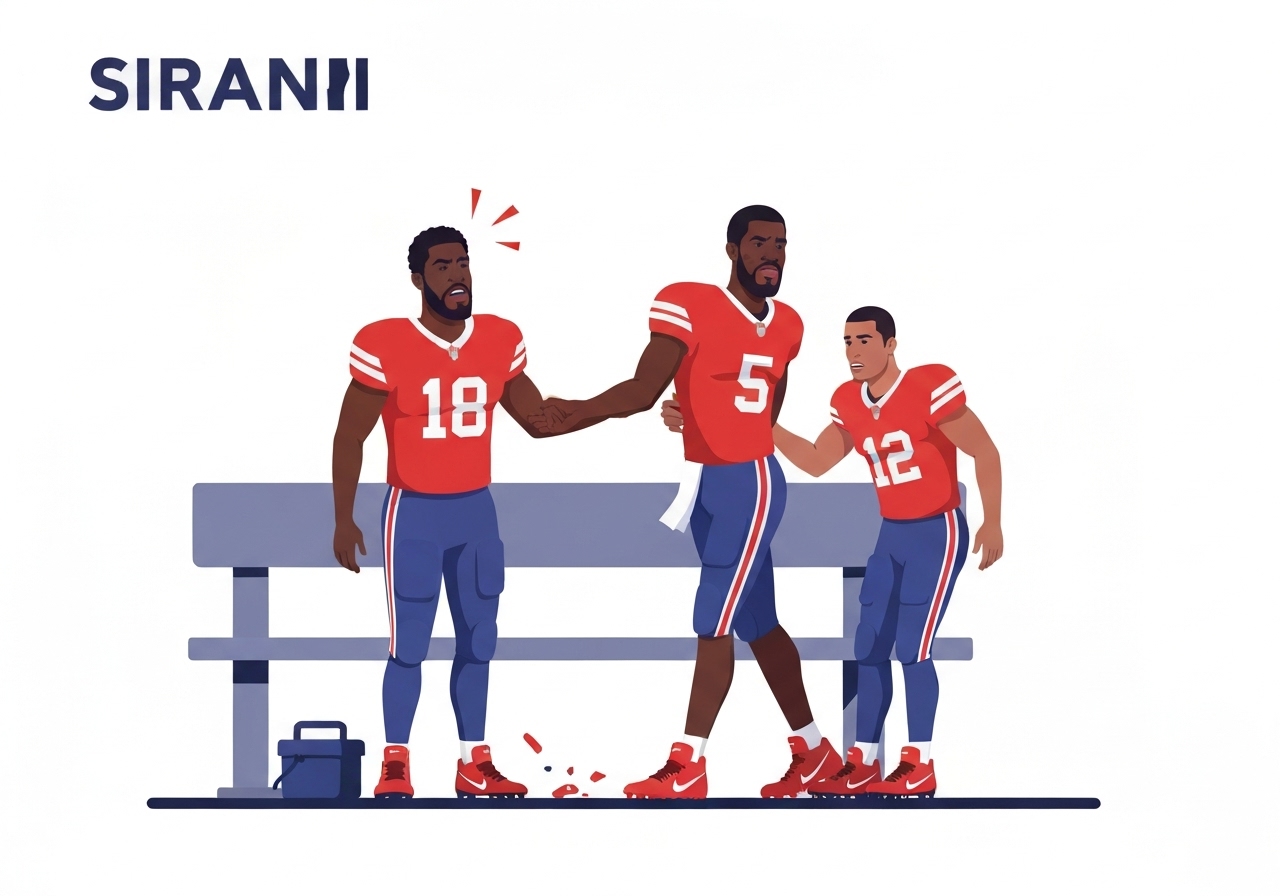
- A sideline dustup between Sirianni and Brown — after Brown and LT Jordan Mailata were slow to exit the field — was visible on television but was described by Sirianni as routine emotion.
- Brown finished the 2025 regular season with 1,003 receiving yards, seven touchdowns and 78 catches across 15 games.
- With the offseason approaching, trade speculation around Brown increased despite the coach’s public support.
Background
The Eagles entered the 2026 postseason relying on a roster built heavily around their passing game, with A.J. Brown serving as a primary target throughout the 2025 campaign. Brown amassed 1,003 receiving yards and seven touchdowns on 78 catches in 15 regular-season games, ranking among the team’s most targeted receivers. Over the season Brown and the coaching staff experienced intermittent tensions; the receiver publicly voiced frustrations at times and was occasionally vocal with local media. The matchup with San Francisco was widely anticipated as a test of the Eagles’ perimeter passing and ball-security under windy conditions at the venue.
The 49ers won the Wild Card game 23-19, a result that exposed late-game offensive lapses for Philadelphia that had sporadically appeared in the regular season. Weather and wind were noted factors during the contest, influencing the flight of deep throws and catches on contested passes. The Eagles’ offensive struggles in the second half mirrored conversations that arose during the season about consistency and decision-making under pressure. Against San Francisco, the combination of contested catches, drops and quick defensive adjustments contributed to the offense failing to convert critical opportunities.
Main Event
Sunday’s contest saw Brown targeted seven times but produce only three receptions for 25 yards, and two recorded drops that shifted momentum at key moments. One pivotal drop took place on a third-and-5 late in the fourth quarter with just over two minutes remaining; the incompletion was followed by a successful fourth-down conversion to Dallas Goedert, but the drive eventually stalled. Brown also failed to record a reception on two second-half targets as the Eagles’ passing game faltered in the final two quarters, continuing a late-offense trend from the regular season.
Television footage captured a tense sideline exchange between Sirianni and Brown near the end of the second quarter after Brown and left tackle Jordan Mailata were slow to exit the field following a third-down incompletion. Sirianni later characterized the interaction as brief and rooted in in-game urgency; he emphasized the emotional nature of their relationship rather than a deeper rift. Brown declined to speak with reporters after the game, offering no public comment to accompany Sirianni’s remarks.
Coach Sirianni defended Brown’s broader body of work while acknowledging the drops, noting the volume of targets and the influence of wind on ball flight as contextual factors. The coach pointed to Brown’s overall catching ability and past production when explaining why a few uncharacteristic drops did not alter his assessment of the player. Still, the late-game miscues contributed directly to the Eagles’ elimination, and analysts in the stadium noted that Philadelphia’s offense lacked a reliable late-quarter execution plan against San Francisco’s defense.
Analysis & Implications
From a roster-management perspective, Brown’s performance and the visible sideline interaction create a complicated postgame narrative. On one hand, Brown’s season totals (1,003 yards, seven TDs, 78 catches) demonstrate consistent high-end production across 15 games. On the other, a low-volume, high-visibility playoff slip — two drops and limited second-half involvement — intensifies questions about reliability in critical moments. Teams weighing trades or contract decisions will factor both the statistical season and playoff visibility into valuation models.
Strategically, the game underlines the sensitivity of pass-heavy offenses to weather and execution: wind-affected deep balls can magnify perceived drop rates and alter quarterback decision-making. The Eagles’ inability to sustain drives late in the game speaks to schematic adjustments the coaching staff may need to adopt for short-yardage and two-minute situations. For opposing defenses, Brown remains a focal point; limiting his targets or forcing contested catches can disrupt Philadelphia’s rhythm, but neutralizing him consistently requires disciplined coverage across the depth chart.
On the cap and trade front, Brown’s age, production and market value make him an asset that could command significant return if Philadelphia elected to trade him. However, teams must also price in emotional and locker-room fit, which scouts often treat qualitatively. Sirianni’s public support attempts to stabilize internal perception, but front-office decision-making in the 2026 offseason will likely involve granular analysis of drop rates, target shares, snap counts and salary-cap scenarios.
Comparison & Data
| Stat | 2025 Regular Season | Wild Card Game (1/11/2026) |
|---|---|---|
| Receptions | 78 | 3 |
| Receiving Yards | 1,003 | 25 |
| Touchdowns | 7 | 0 |
| Targets (game) | — | 7 |
| Recorded Drops (game) | — | 2 |
The table highlights the contrast between Brown’s season output and his single-game playoff performance. While season totals validate Brown as a primary offensive weapon, the Wild Card metrics reveal how a small number of high-profile errors can overshadow a player’s overall value in postseason contexts. Teams and analysts typically examine season-long catch percentage and drop-per-target rates to determine whether a playoff outing is an outlier or part of a trend; in Brown’s case, an outlier assessment would require comparing this game’s drop rate to his season-long target efficiency.
Reactions & Quotes
Coach Sirianni addressed the situation directly in the postgame transcript, framing the interaction and Brown’s performance within the context of emotion and past success.
“He’s got the best hands I’ve ever seen.”
Nick Sirianni, Eagles head coach (team transcript)
In the same session Sirianni contextualized drops as an occasional result of heavy target volume and adverse wind conditions.
“When you get as many targets as he does, you’re going to have some drops.”
Nick Sirianni, Eagles head coach (team transcript)
Sirianni also emphasized his personal relationship with Brown while minimizing the sideline exchange as part of the game’s emotional ebb and flow.
“I love A.J. … We’ve probably gone through every emotion you can possibly have together.”
Nick Sirianni, Eagles head coach (team transcript)
Unconfirmed
- Any formal trade discussions involving A.J. Brown have not been confirmed by the Eagles or other NFL franchises as of this writing.
- The exact degree to which wind caused each drop is not independently verified; official stat logs record drops but do not attribute cause.
- Whether the sideline exchange signals a deeper, long-term rift between Brown and the coaching staff remains unproven and has not been corroborated by team insiders.
Bottom Line
A.J. Brown’s playoff outing and the televised sideline exchange have created a narrative that complicates his offseason outlook, but facts to date blend high season production with one visually consequential game. Coach Nick Sirianni’s public defense underscores the team’s desire for continuity and a belief in Brown’s overall value despite late-game errors. For the Eagles front office, the decision calculus in the 2026 offseason will hinge on whether Brown’s Wild Card performance is treated as an aberration or a signal for change.
Fans and evaluators should watch additional data points — catch rate, drop rate over time, situational target performance and any reliable reporting on internal discussions — before concluding that a roster move is imminent. The team’s official statements and Sirianni’s remarks aim to steady public perception, but the coming months will clarify whether the organization pursues structural changes or recommits to building around Brown.