
Lead
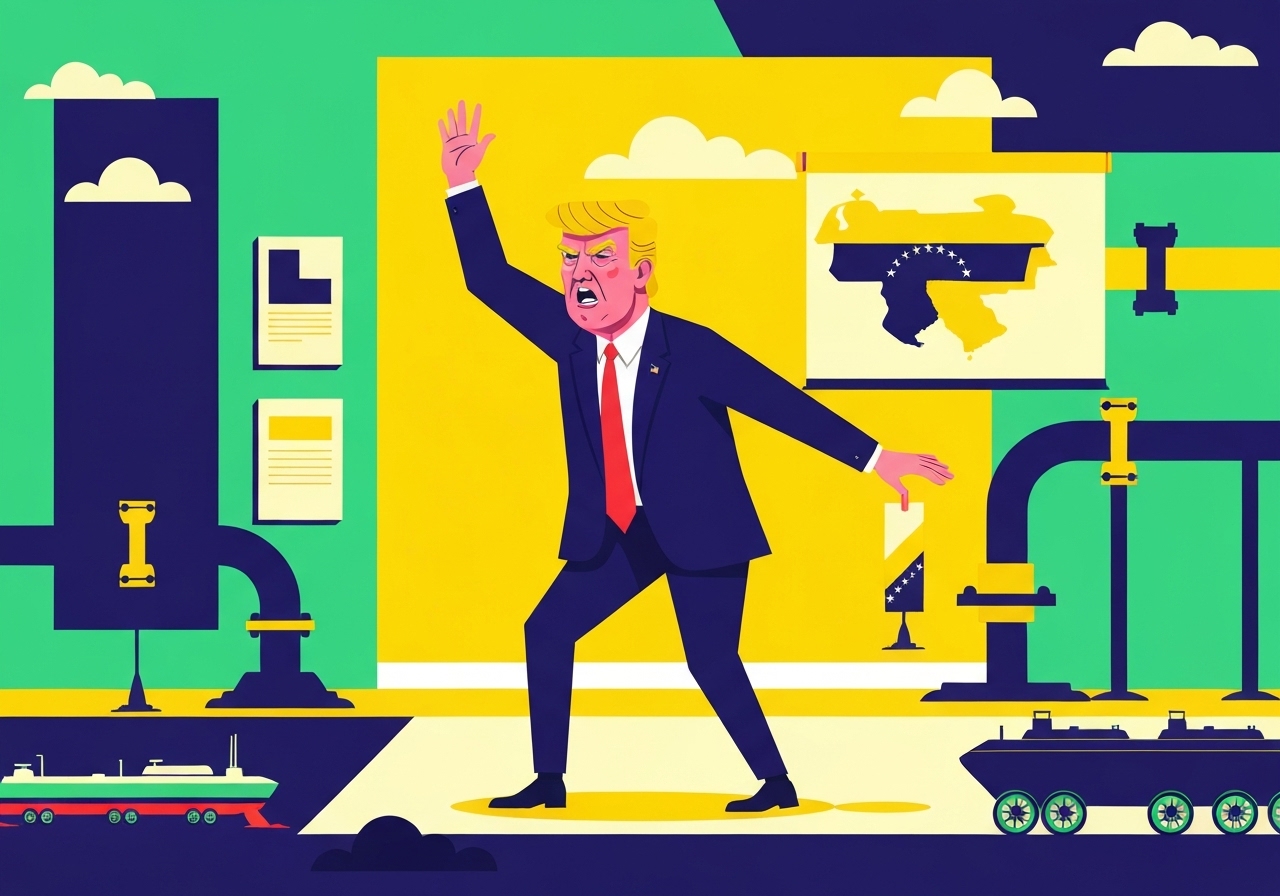
On Jan. 11–12, 2026, President Donald Trump told reporters aboard Air Force One that he might block Exxon Mobil from reentering Venezuela’s oil sector after the company signaled reluctance to rush back. The comments followed a Jan. 9 White House meeting in which Exxon CEO Darren Woods described Venezuela as “uninvestable” in its current state. Trump said he disliked Exxon’s response and suggested the company could be kept out of any U.S.-backed energy push into Venezuela. The exchange highlighted tensions between the White House’s call for rapid investment and oil companies’ demand for legal and commercial protections.
Key Takeaways
- President Trump said on Jan. 11–12, 2026 he might “keep Exxon out” of Venezuela after what he described as an unsatisfactory response from the company.
- Exxon CEO Darren Woods told the president and other executives on Jan. 9 that Venezuela is “uninvestable” without significant reforms to laws and investment protections.
- Venezuela seized Exxon and ConocoPhillips assets in 2007; Caracas still faces arbitration claims amounting to “billions of dollars.”
- Trump has urged U.S. oil firms to invest at least $100 billion in Venezuela’s energy sector and pledged government security support, without detailing the guarantees.
- Chevron remains the only major U.S. oil company currently operating in Venezuela; Exxon said it would consider a technical team visit to assess assets.
- Exxon shares fell by under 1% in Monday morning trading following the president’s remarks.
Background
U.S.-Venezuela energy relations have long been shaped by nationalizations, sanctions and court battles. Caracas expropriated several foreign oil assets in the 2000s; major U.S. firms, including Exxon and ConocoPhillips, have since pursued arbitration and outstanding claims totaling billions of dollars. Sanctions and political standoffs have further complicated commercial reengagement.
The Trump administration has indicated a strategic push to bring U.S. capital back into Venezuela’s vast hydrocarbon sector, citing the country’s position as holder of the world’s largest proven oil reserves. That campaign intensified after a Jan. 3 U.S. operation related to Venezuelan leadership, and the White House has floated security guarantees to lower investment risk for companies willing to return.
Main Event
On Jan. 9, Darren Woods joined other U.S. oil executives at a White House meeting and said Exxon would require “pretty significant changes” before reentering Venezuela for a third time. He listed reforms to commercial frameworks, the legal system and hydrocarbon laws, and asked for “durable” investment protections as preconditions for returning.
Two days later, aboard Air Force One, President Trump told reporters he “didn’t like Exxon’s response” and that he would “probably be inclined to keep Exxon out,” accusing the company of “playing too cute.” The president framed his position as leverage to push firms toward rapid investment in Venezuela under U.S. backing.
White House officials and Trump declined to provide specifics on the security backstops or legal guarantees that would accompany any U.S.-led investment effort. Exxon said it would consider sending a technical team to evaluate Venezuelan fields and infrastructure but did not commit to an immediate reentry. An Exxon spokesperson did not provide an immediate comment to reporters.
Analysis & Implications
A presidential threat to sideline a major U.S. oil company raises legal, commercial and political questions. If the administration were to bar Exxon from U.S.-backed opportunities in Venezuela, the action could invite litigation and complicate ongoing arbitration claims tied to the 2007 seizures. Companies typically seek clear legal frameworks and enforceable protections before committing large capital to countries with histories of expropriation.
The suggestion of keeping Exxon out is also a political lever: it pressures firms to align with White House priorities while signaling to Venezuela and other external actors that Washington intends to shape which companies benefit from any post‑crisis opening. For investors, the credibility of promised U.S. guarantees will matter as much as the size of the $100 billion investment pitch.
Global geopolitics adds another layer. Any major U.S. corporate push into Venezuela alters the position of Russia, China and regional actors who have provided support or financing to Caracas. A rapid reentry by U.S. firms could boost Venezuela’s output, but operational and legal risks—plus the need for repairs and investment—mean production gains would likely be incremental rather than immediate.
Comparison & Data
| Year | Event | U.S. Companies Affected | Notes |
|---|---|---|---|
| 2007 | Venezuela seized assets | Exxon, ConocoPhillips | Companies pursued arbitration; Caracas owes “billions” in claims |
| 2026 | White House meeting; investment push | Exxon, Chevron, others | Trump urges $100 billion investment; Chevron remains operating |
The table summarizes the two anchor points referenced in recent reporting: the 2007 seizures that spawned long‑running legal disputes, and the 2026 political push to attract U.S. capital. While the dollar figure of outstanding claims is described as “billions,” public filings and arbitration documents provide differing totals depending on the case and stage of adjudication.
Reactions & Quotes
Context before and after the exchanges is relevant: company leaders emphasized the need for structural change, while the president framed his remarks as necessary direction for policy and investment. Below are representative remarks reported publicly.
“I didn’t like Exxon’s response. You know we have so many that want it. I’d probably be inclined to keep Exxon out.”
President Donald Trump (remarks aboard Air Force One, Jan. 11–12, 2026)
This quote came as the president responded to reporters about energy companies considering reentry to Venezuela and explicitly named Exxon in his criticism.
“The Venezuelan market is uninvestable in its current state… we’d need pretty significant changes to commercial frameworks, the legal system and hydrocarbon laws.”
Darren Woods, CEO, Exxon Mobil (White House meeting, Jan. 9, 2026)
Woods framed Exxon’s hesitation around structural and legal reforms, and said the company would be willing to send a technical team to assess assets if conditions allowed.
Unconfirmed
- Details of the “guarantees” President Trump referenced—how they would be structured and enforced—have not been released and remain unclear.
- Whether the administration will take formal steps to block Exxon from U.S.-backed opportunities in Venezuela has not been announced and would likely face legal challenges if pursued.
Bottom Line
The exchange between President Trump and Exxon sheds light on a broader tension: the White House wants swift U.S. corporate engagement in Venezuela, while firms demand legal certainty and investment protections before returning. Threats to exclude a major company may work as leverage, but they risk political backlash and legal complications that could slow, not speed, actual investment.
For markets and policy watchers, the key questions are pragmatic: will the administration specify enforceable guarantees, will Venezuela adopt the legal reforms firms require, and how will other international actors respond? Absent clear answers, any large‑scale U.S. reentry into Venezuela’s oil sector will be incremental and contingent on negotiated legal and commercial frameworks.