
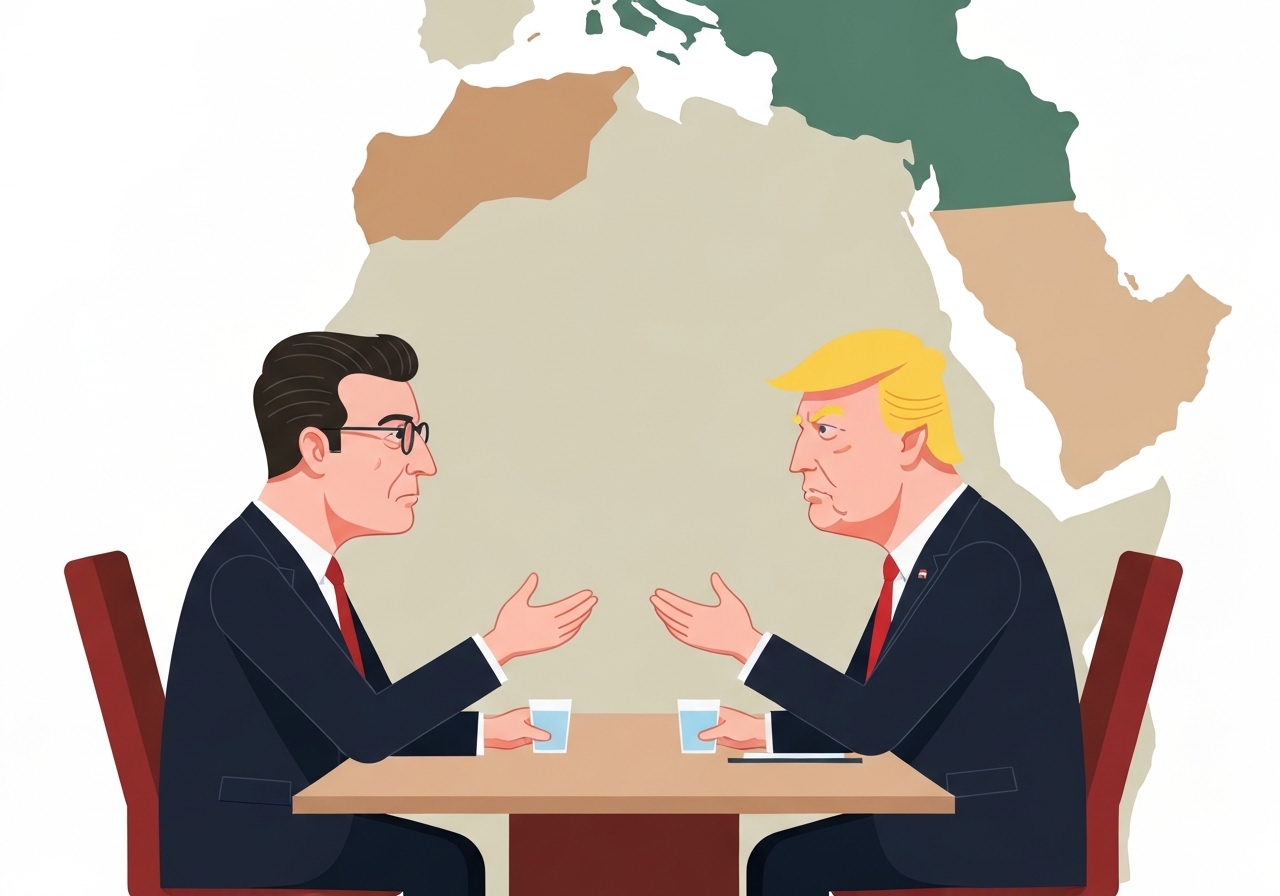
Lead: Prime Minister Sir Keir Starmer is weighing whether to accept an invitation to join US President Donald Trump’s proposed Board of Peace for Gaza, a new body linked to the White House’s 20-point plan to end the Israel–Hamas war. The proposal, discussed this week, would temporarily oversee Gaza’s administration and reconstruction and be composed of international leaders. UK diplomats have asked the US State Department for more details on the board’s remit and membership. The UK government says no formal invitation has yet been received and no decision has been made.
Key takeaways
- The White House’s 20-point plan envisions a Board of Peace to oversee Gaza’s temporary governance and reconstruction following the Israel–Hamas war.
- The Sunday Times reported that Sir Keir had been invited; BBC sources say a formal invitation has not yet been received.
- US media indicate President Trump may announce board members this week, with strong reported international interest.
- Former PM Sir Tony Blair is linked to a separate executive board alongside Jared Kushner and Steve Witkoff; his role has drawn some regional objections.
- UK Foreign Secretary Yvette Cooper reiterated support for the 20-point plan and stressed the need for humanitarian surge and weapons decommissioning from Hamas.
- Starmer has defended active diplomacy as essential to domestic priorities, saying leaders must be “in the room” to tackle global risks that affect the UK.
Background
The Gaza conflict between Israel and Hamas has prompted international efforts to secure a ceasefire and plan post-conflict governance and reconstruction. In September the US circulated a 20-point plan intended to end the fighting and lay out immediate steps for ceasefire, aid access and longer-term administration. The plan includes creating a multinational Board of Peace to provide temporary oversight of Gaza’s civilian administration and coordinate reconstruction funds and logistics.
UK involvement in any international Gaza mechanism is politically sensitive. Sir Keir Starmer’s Labour government recognised the state of Palestine last year, a move that shaped diplomatic relations in the region and at home. Domestically, Starmer has faced criticism over foreign travel and engagement, which he argues is necessary to protect UK interests amid global instability. Past UK leaders, including Sir Tony Blair, have had contentious roles in Middle East initiatives, which colours debate about any British participation now.
Main event
Reports this week, first cited by the Sunday Times and carried by multiple outlets, said Sir Keir had been invited to join President Trump’s Board of Peace for Gaza. Government sources told the BBC that no formal invitation has yet been received and that the prime minister has not decided to accept any seat. US coverage suggests the White House will reveal membership choices imminently and that several world leaders have expressed interest in participating.
President Trump, speaking informally to reporters aboard Air Force One, described the proposed board as “the most important leaders of the most important nations,” adding that “everybody wants to be on it.” He framed the initiative as a central vehicle for international coordination over Gaza’s future, including temporary governance and reconstruction oversight. Separately, US officials have discussed forming an executive group that would work closely with the board; Sir Tony Blair has been reported as linked to that executive tier with Trump advisers Jared Kushner and Steve Witkoff.
UK diplomats have reportedly asked the US State Department for clarifying documents on the board’s legal powers, membership criteria and how it would interact with Palestinian institutions and neighbouring states. Questions persist about mandate duration, accountability mechanisms, and how humanitarian delivery and security functions would be separated. Within Whitehall and Parliament, ministers and MPs are balancing political optics, operational details, and legal implications for any UK role.
Analysis & implications
If the UK were to join the Board of Peace, it would signal a high-profile return to direct, multilateral leadership in Middle East peacemaking. Such participation could give London a seat at strategic discussions on reconstruction funding, governance arrangements and security guarantees. Yet it also risks domestic political blowback from critics who oppose close alignment with the Trump administration or who argue for different approaches to Palestinian representation.
Internationally, the board’s success would hinge on buy-in from key regional actors — Egypt, Jordan, Qatar and Israel among them — and the willingness of donor states to commit substantial reconstruction resources. Objections reportedly raised by some Middle Eastern states to specific individuals (for example, criticism tied to Sir Tony Blair’s past roles) illustrate how personnel choices can complicate otherwise technical mandates. Any perceived imbalance in membership or authority could undermine local legitimacy and hamper aid operations.
Legally and operationally, the board must clarify whether it will have executive control, advisory functions, or a hybrid role tied to UN and Palestinian Authority structures. A heavy-handed temporary administration risks violating sovereignty expectations and could trigger legal challenges or political resistance on the ground. Conversely, a well-scoped coordinating board focused on reconstruction financing, infrastructure and humanitarian logistics could accelerate relief if it respects local actors and international law.
Comparison & data
| Item | Reported/Expected | Status |
|---|---|---|
| Board remit | Temporary oversight, reconstruction coordination | Announced in US 20-point plan |
| UK role | Invitation reported; no formal invite confirmed | Pending |
| Executive group | Sir Tony Blair, Jared Kushner, Steve Witkoff (reported) | Reported, details unclear |
The table summarises public reporting to date: the board’s remit is set out in the 20-point plan, but membership and precise powers remain fluid. Historically, ad hoc international governance bodies have varied from advisory coalitions to interim administrations with strong authority; outcomes depended on clear mandates and regional legitimacy. That precedent underscores why diplomats are seeking granular text on powers, oversight, and sunset clauses before endorsing participation.
Reactions & quotes
Government ministers gave guarded responses in Parliament and to reporters while officials sought further detail from Washington.
“We supported the 20-point plan to achieve a ceasefire in Gaza… there is a huge amount of work to do, including humanitarian surge and support.”
Foreign Secretary Yvette Cooper (response in House of Commons)
President Trump publicly promoted broad international enthusiasm for the initiative while describing how leaders were being chosen.
“Essentially, it’s the most important leaders of the most important nations…Everybody wants to be on it.”
President Donald Trump (remarks aboard Air Force One)
Prime Minister Starmer defended his international engagement to colleagues, framing diplomacy as integral to domestic interests.
“The cost of living crisis will not be solved by isolationism…you have to be in the room to tackle the issues working people care about.”
Prime Minister Sir Keir Starmer (remarks to Labour MPs)
Unconfirmed
- No formal written invitation to Sir Keir has been published; reports of an invite remain unverified by official UK documents.
- Exact membership list and the legal scope of the Board of Peace have not been released publicly; announcements are reported but not yet confirmed in primary documents.
- Claims that some Middle Eastern states formally blocked Sir Tony Blair’s inclusion have been reported in media accounts but lack public diplomatic statements confirming those objections.
Bottom line
The question of whether Sir Keir Starmer will join President Trump’s Board of Peace for Gaza is significant both for UK foreign policy and for international efforts to stabilise Gaza after prolonged conflict. Acceptance would position the UK as an active shaper of post-conflict arrangements but would also expose ministers to scrutiny over alignment with the US-led initiative and the choice of personnel. For now, the core facts are clear: a US 20-point plan exists, reports of invitations have circulated, and UK officials say they are awaiting formal documentation before deciding.
Observers should watch for a formal invitation document, the White House’s published membership list, and clarifying text on the board’s legal authority. Those elements will determine whether the mechanism can marshal reconstruction finance, secure humanitarian corridors and win regional legitimacy, or whether it will face implementation hurdles that limit its impact.
Sources
- BBC News — media report summarising UK government response and White House comments.
- The Sunday Times — media (first reported invitation; paywalled report).
- White House — official (policy announcements and statements by the President).