
Lead
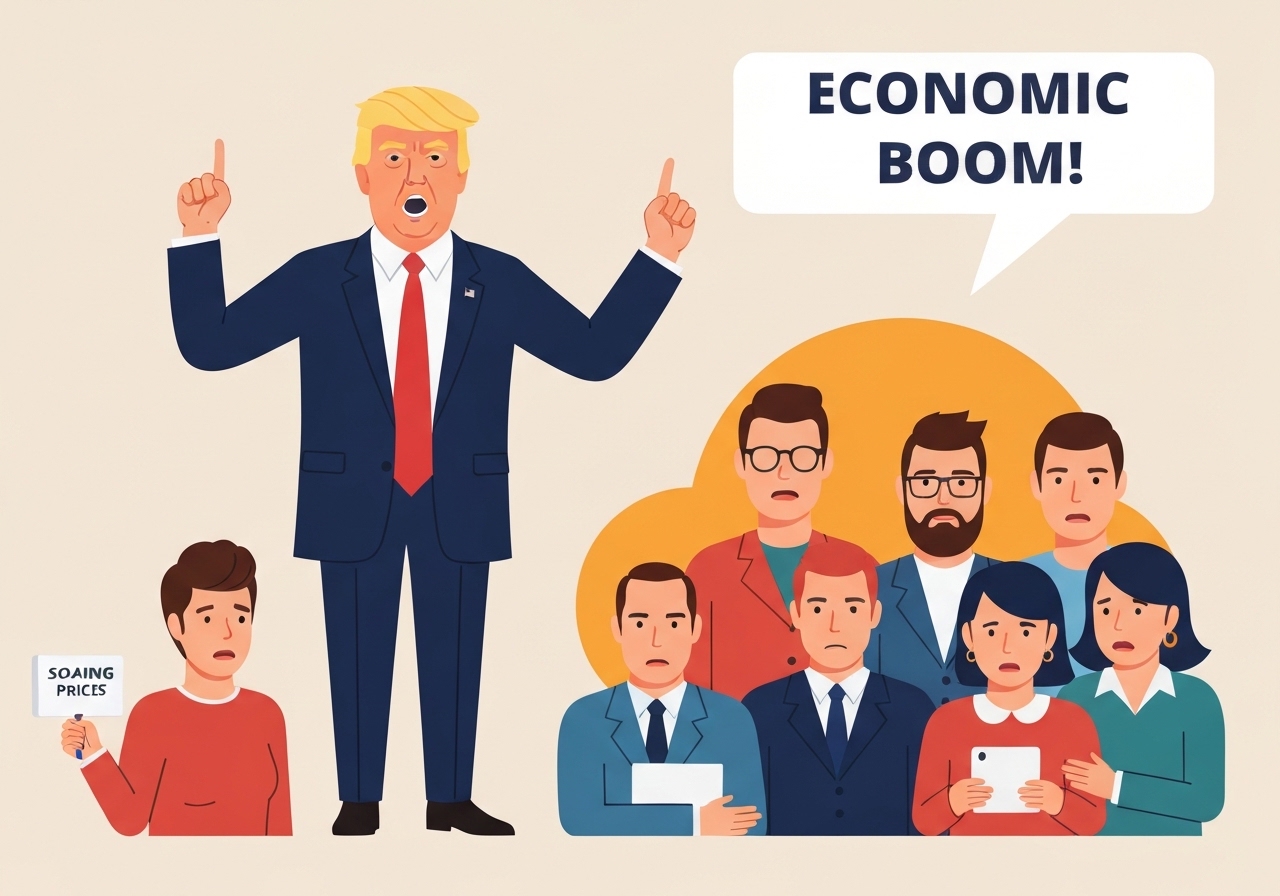
President Donald Trump used a January 13, 2026, appearance in Detroit to press his economic record, calling an “economic boom” underway while previewing additional policy proposals on housing, credit cards and health care. He spoke at the Detroit Economic Club and toured a Ford plant in Dearborn, Michigan, framing trade and energy moves as central to stronger growth. His comments come as public concern about the cost of living remains high: a recent Quinnipiac University poll found majorities of voters rate living costs as a very serious problem. Despite the administration’s optimism, many voters continue to disapprove of Trump’s handling of the economy.
Key Takeaways
- Trump said inflation has been “defeated,” even as consumer inflation stood at 2.7% in December 2025, above the Federal Reserve’s 2% target.
- A Quinnipiac University poll found 64% of registered voters call the cost of living a “very serious problem,” and 57% disapprove of Trump’s economic stewardship.
- Trump outlined proposals to bar large institutional investors from buying more single-family homes and to cap credit card interest at 10% for one year; both ideas have drawn skepticism from analysts and resistance from banks.
- He promised a health care affordability framework to be announced later in the week and to provide more housing details at the World Economic Forum in Davos next week.
- Trump urged the Federal Reserve to lower interest rates and criticized Chair Jerome Powell, whose term ends in May 2026 and who is under a Justice Department probe related to renovation cost testimony.
- During the Michigan visit Trump was heckled at a factory tour; the White House described the heckler as enraged, and the president responded with an expletive and an apparent middle-finger gesture.
Background
The economic debate in the United States remains dominated by household affordability after a period of elevated inflation. Inflation peaked near 9% during 2021–2022 and has declined to mid-single digits or lower since; December 2025’s 2.7% reading is the lowest since mid-2025 but still above the Fed’s 2% objective. Voters continue to list prices and pocketbook issues among their top concerns, shaping political messaging ahead of the 2026 midterm elections.
Trump’s administration has leaned on a mix of tariffs, energy diplomacy and regulatory changes as pillars of its growth argument. Tariff policies enacted by the administration are now facing legal challenges and a Supreme Court test, and critics argue tariffs can raise consumer prices even as proponents say they protect domestic producers. At the same time, the post-pandemic housing market and a shift of investors into single-family rentals have renewed debate about who can buy homes and how that affects affordability.
Main Event
Speaking at the Detroit Economic Club on January 13, 2026, Trump asserted that his economic agenda has launched a new boom and touted lower energy costs tied to diplomacy with oil-producing countries. He emphasized recent trade and tariff moves as central to making the country “stronger and safer and richer,” and pushed back on suggestions those policies raise costs for Americans.
Trump previewed several policy ideas without full details: a ban on large institutional investors purchasing more single-family homes, and a temporary 10% cap on credit-card interest rates. Analysts and banking groups quickly raised questions about the design and feasibility of those proposals, including legal and market consequences if enacted.
On health care, Trump reiterated his preference for sending direct payments to Americans to help with insurance costs and said a health care affordability plan would be unveiled later in the week. He attributed rising premiums in part to the expiration of enhanced Affordable Care Act tax credits and pledged a framework to reduce premiums and drug prices while holding insurers accountable—details, however, were not provided.
The president also renewed public pressure on Federal Reserve Chair Jerome Powell to lower interest rates, calling Powell a “real stiff” and saying a more helpful Fed would make economic management “easier.” Powell, a Trump appointee whose term ends in May 2026, is facing a Justice Department investigation tied to his testimony about cost overruns on the Fed’s headquarters renovation.
Analysis & Implications
Political messaging: The speech is as much about shaping voter perceptions as it is about policy. With a Quinnipiac poll showing substantial public worry about prices, the administration is attempting to reframe economic momentum while offering headline-grabbing proposals intended to signal action on affordability. Whether voters accept the “boom” claim will depend on durable improvements in grocery, housing and energy costs at the household level.
Policy practicality: Several of the administration’s proposals face significant legal, market and implementation hurdles. A 10% cap on credit-card rates would collide with state and federal usury laws, bank contracts and risk management practices; economists warn such a cap could reduce credit availability for higher-risk borrowers. Similarly, restricting institutional purchases of single-family homes raises questions about definitions, enforcement and unintended market responses.
Macroeconomic effect: Even if headline inflation continues to trend down, a reading above the Fed’s 2% goal complicates the central bank’s mandate. The Fed’s path on rates will be influenced by incoming data on wages, consumption and core inflation; political pressure from the White House adds noise but not direct control over Fed decisions. Powell’s legal troubles could become a governance flashpoint if they affect market confidence or prompt leadership changes.
Electoral stakes: Affordability proved decisive in several off-year races in 2025, where voters rewarded candidates who emphasized pocketbook issues. The administration’s ability to translate policy proposals into tangible relief before the 2026 midterms will be central to its political fortunes; offering plans without implementation timelines risks being perceived as rhetoric rather than remedy.
Comparison & Data
| Indicator | Recent Value / Note |
|---|---|
| U.S. headline inflation (Dec 2025) | 2.7% |
| Federal Reserve target | 2.0% |
| Inflation peak (Biden presidency) | ~9% |
| Quinnipiac: cost of living “very serious” | 64% of registered voters |
| Quinnipiac: disapprove of Trump’s economic handling | 57% of registered voters |
| Quinnipiac: who is responsible for economy now | 57% say Trump, 34% say Biden |
These figures show why political leaders emphasize both macro indicators and household-level price movement: headline inflation has softened from its 2021–22 peak, but polls indicate voters still feel strain. That gap between macro progress and pocketbook perception is central to the political debate over whether the economy is improving fast enough for typical households.
Reactions & Quotes
White House and presidential remarks were front and center during and after the visit; reactions from other stakeholders highlighted the contested nature of proposed fixes.
“The Trump economic boom has officially begun. And it’s really begun almost from the beginning.”
President Donald Trump, Detroit Economic Club speech
Trump used this line to frame his broader argument that tariffs, energy diplomacy and deregulation are boosting the economy. Supporters say the rhetoric underscores regained momentum; critics characterize it as premature given persistent affordability concerns.
“If I had the help of the Fed, it would be easier. But that jerk will be gone soon.”
President Donald Trump, on Federal Reserve Chair Jerome Powell
That remark underscores the administration’s public friction with the Fed. Economists say rhetoric does not directly change Fed policy, but it can shape investor expectations and political discussion about central-bank independence.
“In a complete fit of rage, and the President gave an appropriate and unambiguous response.”
White House statement on heckler at Ford tour
The White House defended the president’s reaction after a heckler interrupted a factory tour; critics said the interaction was unbecoming for a presidential visit to a manufacturing plant.
Unconfirmed
- The precise mechanics and legal design of the proposed ban on institutional purchases of single-family homes remain unspecified and unconfirmed.
- Details of the promised health care affordability framework—how direct payments would be structured and funded—were not released and remain unverified.
- The administration’s claims that tariffs have not increased consumer prices are contested; independent, comprehensive estimates of net consumer impact tied to the current tariff set are not yet public.
Bottom Line
President Trump’s Michigan appearance combined upbeat economic rhetoric with a slate of headline policy proposals aimed at affordability. While inflation has moderated from its 2021–22 highs, it remains above the Fed’s objective and broad public anxiety about living costs persists—polls show majorities prioritize affordability as a pressing problem.
The proposals announced or teased are politically salient but face practical and legal questions that will determine whether they become implementable policy or remain campaign messaging. For voters, the key measure will be whether households see sustained relief in food, housing and borrowing costs before the 2026 midterms.