
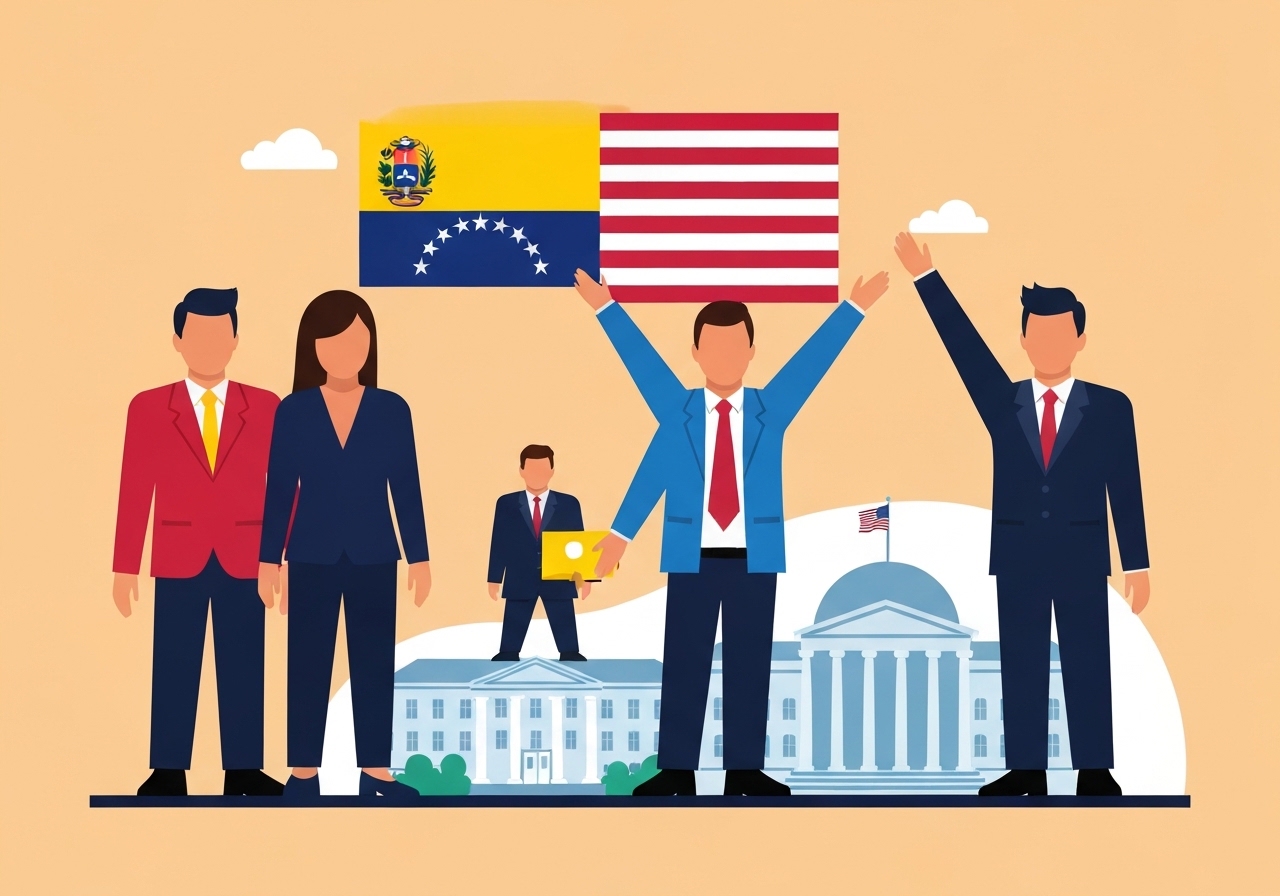
Lead: On Jan. 13, 2026, Venezuela’s interim authorities released several U.S. citizens who had been detained in the country, the U.S. State Department said. The releases came after a U.S. military operation that captured President Nicolás Maduro and transported him to the United States to face drug and related charges. At least three Americans were reported freed by Tuesday night, according to a person briefed on the matter, though officials have provided limited public detail. Rights groups estimate some 800 to 900 political prisoners remain incarcerated in Venezuela.
Key Takeaways
- At least three U.S. citizens were reported released in Caracas and other locations as of the night of Jan. 13, 2026; officials have not published full names or case details.
- The U.S. State Department described the releases as “an important step in the right direction” by Venezuela’s interim authorities in a Jan. 13 statement.
- The releases followed a high-profile U.S. military raid that captured Nicolás Maduro and moved him to the United States to face drug charges and related counts.
- One of the freed Americans had been held at El Helicoide, a major detention complex in Caracas known for holding political detainees.
- Rights organizations estimate between 800 and 900 political prisoners remain in Venezuelan custody, and the interim government has pledged broader releases.
- The initial reporting of the American releases was credited to Bloomberg; multiple accounts cite anonymous, briefed sources for early details.
Background
Venezuela has been governed amid political turmoil since Maduro’s administration consolidated control after contested elections and a prolonged economic crisis. International responses have ranged from sanctions to diplomatic isolation, and the country’s security institutions have detained activists, opposition figures and foreign nationals over the past decade. El Helicoide in Caracas has been a focal point for international concern; human rights organizations repeatedly cite it in documentation of political detentions.
On Jan. 13, 2026, U.S. forces conducted a daring nighttime operation in Caracas that resulted in the capture of President Nicolás Maduro, who was then flown to the United States to face charges including drug trafficking. The seizure marked a dramatic escalation in U.S.-Venezuela relations and set the stage for a period of rapid political change, including the installation of an interim government that has announced plans for detainee releases and transitions in governance.
Main Event
Officials in Washington confirmed that several Americans were freed by interim Venezuelan authorities and returned to U.S. custody or transit points. The State Department issued a brief statement welcoming the releases while declining to provide identifying details about the individuals for privacy and security reasons. A person briefed on events told reporters that at least three Americans had been freed as of Tuesday night; that account was provided on condition of anonymity because of the sensitivity of the diplomacy.
One freed American had been held at El Helicoide, according to a person familiar with that case. El Helicoide has been used for high-profile detentions, and its mention underscores the political dimensions of many incarcerations. Venezuelan interim officials said they planned to free an “important number” of detainees, though they did not supply a timetable or list of names as of Jan. 13.
Media outlets reported the first indications of the releases late Tuesday, citing briefed sources and local contacts; Bloomberg was the earliest outlet publicly credited with the initial report. U.S. and Venezuelan officials appear to be coordinating limited information releases as diplomatic and legal processes unfold related to the extraordinary capture of Maduro and the handling of detainees inside Venezuela.
Analysis & Implications
The release of U.S. citizens has immediate humanitarian and diplomatic significance: it removes specific bilateral tensions and provides a visible sign of cooperation between the interim Venezuelan authorities and Washington. For the United States, securing the safe return of its citizens is a priority that can help stabilize short-term relations and reduce calls for retaliatory action in the aftermath of the raid.
Politically, the detentions and subsequent releases highlight the interim government’s delicate balancing act. Freeing foreign nationals and selected political prisoners can bolster international legitimacy and ease pressure from democratic governments, while rapid, opaque decisions risk domestic backlash from factions that view such moves as capitulations or as insufficiently consultative.
Economically and regionally, the events may alter the calculus for sanctions, trade discussions and migration flows. International partners will closely watch whether releases are limited to symbolic cases or part of a broader, verifiable amnesty. The prospect of Maduro standing trial in the United States also raises legal and diplomatic questions about extradition precedents and how other countries will respond to similar unilateral enforcement actions.
Comparison & Data
| Item | Known Count/Status |
|---|---|
| Americans reported freed (as of Jan. 13, 2026) | At least 3 |
| Estimated political prisoners in Venezuela | 800–900 (rights groups estimate) |
| High-profile Venezuelan location mentioned | El Helicoide, Caracas |
The table summarizes the concrete figures available publicly by Jan. 13. The number of Americans released is preliminary and based on briefed sources; broader detainee totals come from human-rights monitoring organizations and have been reported consistently over recent years.
Reactions & Quotes
“We welcome the release of detained Americans in Venezuela. This is an important step in the right direction by the interim authorities.”
U.S. State Department (official statement, Jan. 13, 2026)
“At least three Americans had been freed as of Tuesday night.”
Person briefed on the events (anonymous)
Unconfirmed
- Complete identities and case details of the Americans freed have not been publicly confirmed by U.S. or Venezuelan officials.
- The total number and names of other detainees the interim government intends to free remain unspecified and unverified.
- Long-term legal outcomes for Nicolás Maduro following his transfer to the United States, including trial dates and potential plea or appeal scenarios, are not yet established.
Bottom Line
The limited release of U.S. citizens on Jan. 13, 2026, represents a concrete but narrow diplomatic gain after a highly unusual U.S. operation that removed Nicolás Maduro from power. The step reduces immediate bilateral friction but leaves broader human-rights and governance questions unresolved, given the large number of political prisoners still reportedly detained.
Going forward, observers should watch for a verified list of released detainees, transparent legal processing for Maduro in U.S. courts, and whether the interim government follows through on promises of wider detainee releases. How regional governments and international institutions respond will shape whether this episode leads to normalization, prolonged instability, or a reconfigured international approach to Venezuela.
Sources
- The New York Times — news report (article provided by user)
- U.S. Department of State — official statement and briefings (official)
- Bloomberg — initial media reporting (news)