
Lead
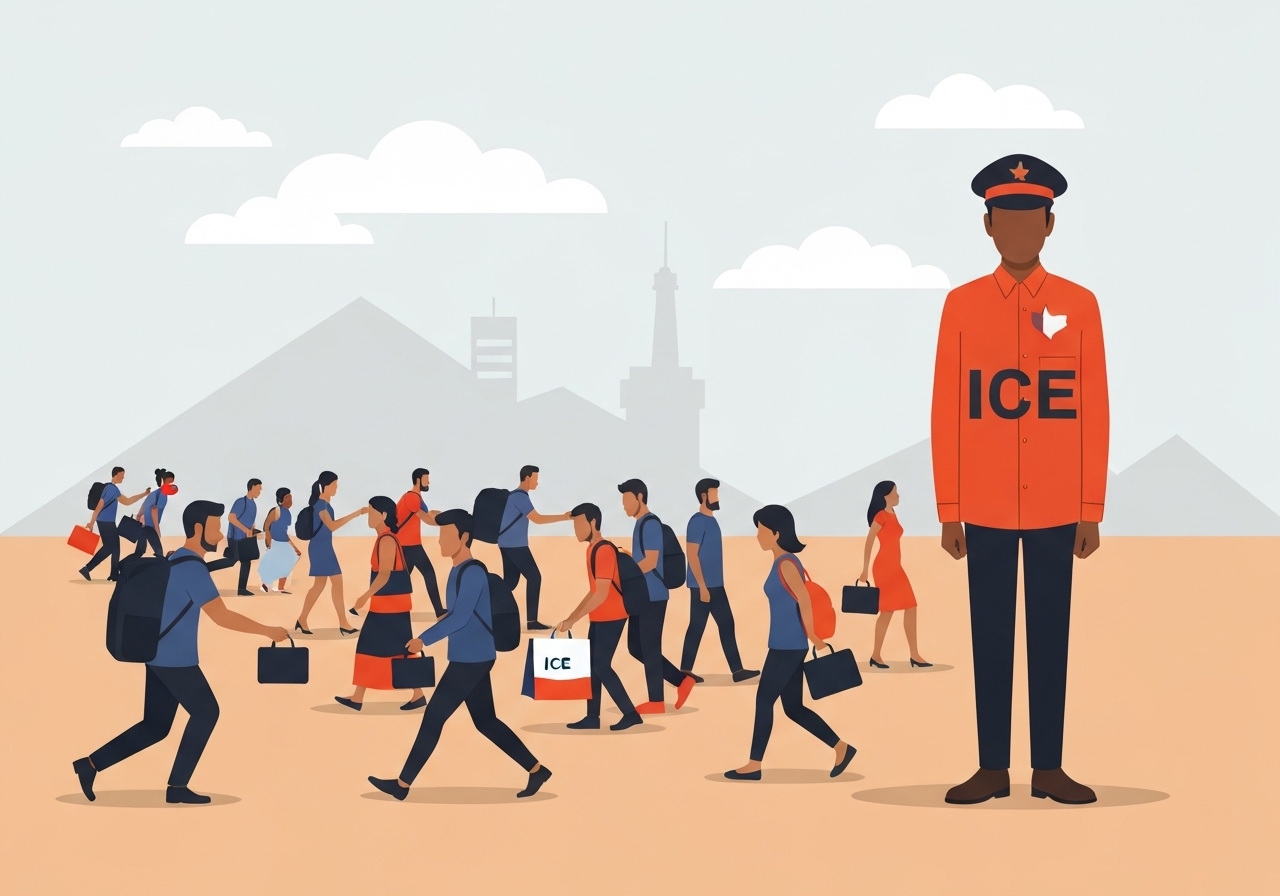
Federal immigration officers in mid-January detained dozens of refugees in Minneapolis who had previously passed U.S. security checks, lawyers and advocates say. The arrests, reported on Jan. 13, 2026, involved mainly Somali arrivals and included children; many detainees were transferred to facilities in Texas. The actions followed a U.S. Citizenship and Immigration Services announcement that it would re-examine thousands of refugee cases. Local advocates describe rapid enforcement activity that has left families separated and communities alarmed.
Key Takeaways
- ICE and federal immigration agents detained dozens of refugees in Minnesota in early January 2026; advocates estimate at least 100 people were detained overall.
- Most detainees are reported to be Somali nationals who had passed initial refugee security screenings before resettlement in the United States.
- Many of those arrested were transferred from Minnesota to detention facilities in Texas, according to Advocates for Human Rights.
- The detentions occurred after a Jan. 9–10, 2026 USCIS announcement to re-examine refugee cases for individuals who have not yet obtained green cards.
- USCIS and ICE did not provide comment to reporters about the arrests and transfers when contacted, per reporting on Jan. 13, 2026.
- Community organizations said children and parents were separated; specific family cases cited include a Somali mother leaving behind a toddler and a household in which a mother and two adult children were taken.
- These events follow policy moves by the Trump administration that restricted refugee admissions and intensified scrutiny of refugee programs since 2017, with a renewed focus on Minnesota in late 2025.
Background
The United States has accepted refugees through a federal screening process that includes security, medical, and resettlement vetting prior to admission. Refugees from Somalia have formed one of the largest diaspora communities in Minnesota, particularly in the Twin Cities region, where resettlement networks and social-service agencies have long worked with newcomers. On his first day in office, President Donald J. Trump implemented broad restrictions on refugee admissions; subsequent policy shifts have tightened screening and reduced refugee flows.
In November 2025 federal officials announced increased scrutiny of refugee-related benefits in Minnesota after state audits alleged fraud involving some members of the Somali community and public benefits programs. Separately, on Jan. 9–10, 2026 U.S. Citizenship and Immigration Services said it would re-examine thousands of refugee cases for people who arrived but have not yet adjusted to lawful permanent resident status. That announcement did not explicitly state that people would be arrested and moved to detention centers, creating confusion among local service providers and immigrants’ advocates.
Main Event
On and before Jan. 13, 2026 federal immigration agents carried out arrests of refugees living in Minneapolis and surrounding areas, according to lawyers representing the detainees and local advocacy groups. The people taken into custody are reported to have completed pre-admission security checks yet remained without green cards; many reportedly were still navigating the adjustment process when detained. Advocates and attorneys said agents did not publicly announce a mass enforcement action and that detentions happened quickly, leaving community groups scrambling to locate family members.
Michele Garnett McKenzie, executive director of Advocates for Human Rights in Minneapolis, told reporters that most of the detainees were being transferred to detention facilities in Texas and that she estimated at least 100 people had been detained. Lawyers working with families described cases including parents separated from young children and multi-generation households disrupted by removals. Local legal clinics and resettlement agencies said they received little notice and limited information from federal agencies about the criteria used for arrests and transfers.
Immigration and Customs Enforcement did not respond to emailed requests for comment, and USCIS officials did not answer specific questions about whether the re-examination directive authorized arrests or transfers. In Minneapolis, tensions briefly flared in at least one encounter between Border Patrol personnel and community members after federal officers approached a vehicle to ask about the driver’s immigration status during related enforcement activity.
Analysis & Implications
These detentions highlight a collision between two federal functions: USCIS’s role in adjudicating immigration benefits and ICE’s enforcement and detention authority. Re-examining past refugee admissions for administrative or security reasons can expose individuals to enforcement actions when agencies coordinate; that dynamic raises legal and humanitarian questions about due process and the timing of reviews versus enforcement steps.
For Minnesota’s Somali community, the arrests risk chilling effects: refugees may avoid accessing public benefits, social services, or legal help out of fear of detention, even when those programs previously were considered safe for eligible arrivals. Community organizations that provide case management, benefits support, and legal assistance face increased burdens locating clients and responding to family separations, with limited federal guidance on prioritization and case status.
Politically, the detentions occur in a broader national debate over refugee policy and border enforcement. The Trump administration’s stated aim to re-examine refugee cases signals a tougher posture that could affect resettlement agencies, state service providers, and municipalities that host large refugee populations. Internationally, high-profile detentions may strain U.S. relations with countries that send refugees and with advocacy groups that monitor refugee protections.
Comparison & Data
| Item | Reported Figure / Detail |
|---|---|
| Date of reporting | Jan. 13, 2026 |
| Local estimate of detained people | At least 100 (Advocates for Human Rights estimate) |
| Description from lawyers | Dozens of refugees arrested; many transferred to Texas |
| Primary national origin reported | Somalia |
The numbers available are uneven: legal representatives describe ‘dozens’ arrested in specific operations, while an advocacy group provided a broader estimate of at least 100 people affected. Public agency responses were limited as of Jan. 13, 2026, which complicates precise tabulation of arrests, transfers, and case statuses. This unevenness underscores the challenge of reconciling on-the-ground reports with official agency records during fast-moving enforcement activity.
Reactions & Quotes
It’s happening very fast. It’s devastating the community.
Michele Garnett McKenzie, Advocates for Human Rights (nonprofit)
McKenzie’s comments frame the reaction from local service providers who say they were given little notice and are now trying to account for clients and make emergency arrangements for children and other dependents.
USCIS announced it would ‘re-examine thousands of refugee cases through new background checks.’
U.S. Citizenship and Immigration Services (official announcement)
The agency’s wording described a review process but did not explicitly state that those subject to re-examination would face arrest or removal, leaving ambiguity about whether the reviews were intended to trigger enforcement actions.
Unconfirmed
- Exact total number of people detained nationwide as part of the re-examination operations remains unverified by federal agencies.
- Specific legal criteria used to select individuals for arrest and transfer have not been publicly disclosed by USCIS or ICE as of Jan. 13, 2026.
- Whether transfers to Texas represent long-term detention pending removal or interim processing has not been confirmed by official sources.
Bottom Line
The January 2026 detentions in Minnesota underscore tensions between administrative immigration reviews and enforcement actions. Refugees who previously completed security screenings may still face detention if agencies decide to reopen cases, which raises legal and humanitarian concerns about notice, family separation, and access to counsel.
For communities and service providers, the immediate priorities are locating detained individuals, arranging care for children and dependents, and securing legal representation. Policy watchers should monitor whether USCIS publishes guidance on the scope of its re-examination and whether ICE clarifies detention and transfer protocols, as those clarifications will determine the scale and legality of similar actions going forward.
Sources
- The New York Times (news report, Jan. 13, 2026)
- U.S. Citizenship and Immigration Services (official agency announcements)
- Advocates for Human Rights (nonprofit advocacy organization)