
Lead
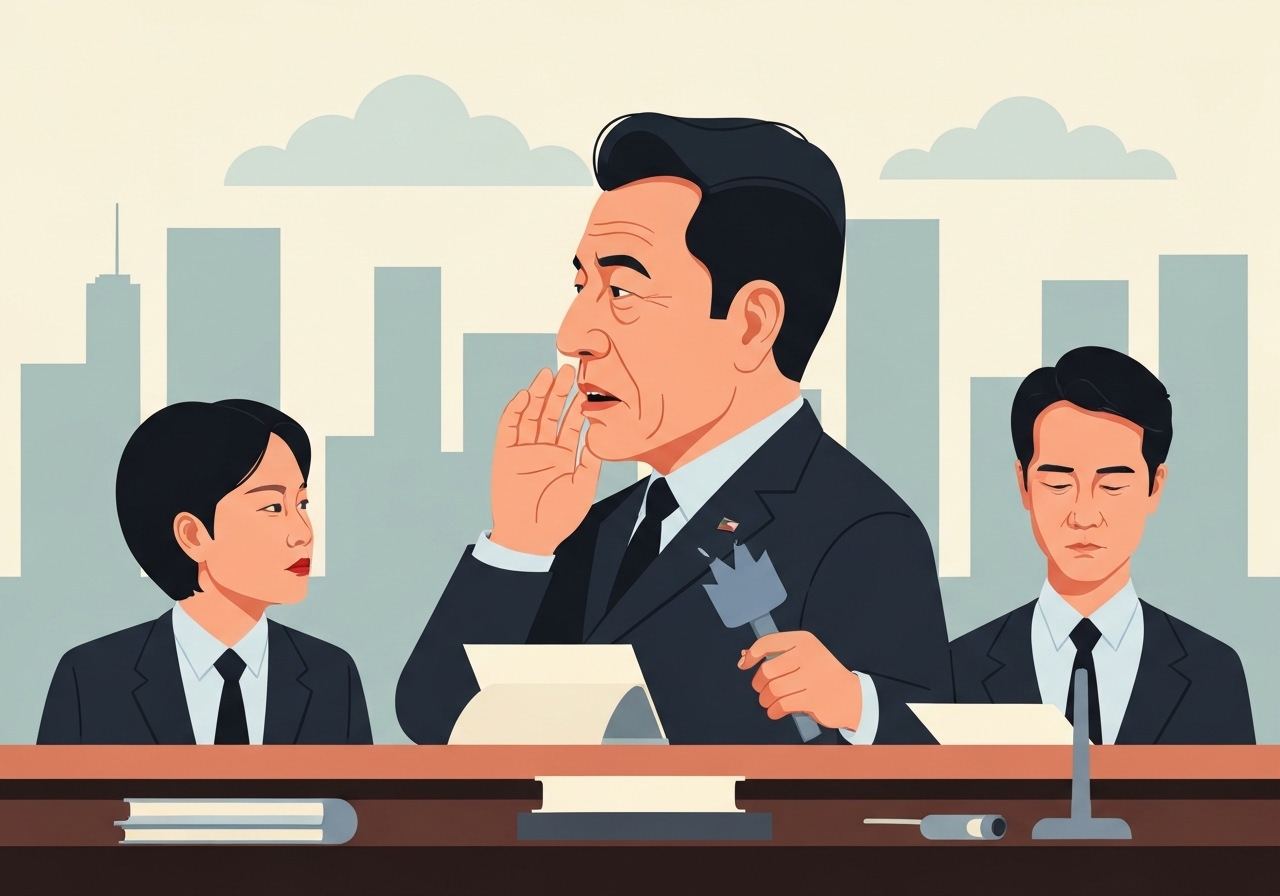
South Korea’s special prosecutor has asked the Constitutional Court to impose the death penalty on former President Yoon Suk Yeol for his Dec. 3, 2024 martial law declaration, saying the move amounted to an insurrection. The request came as closing arguments finished late on Tuesday in Seoul; the court is expected to deliver its judgment on Feb. 19. Yoon denies criminal intent, asserting the decree was within his constitutional authority and aimed at protecting state freedom and sovereignty. If upheld and carried out, an execution would be South Korea’s first since 1997.
Key Takeaways
- The special prosecutor requested the death penalty for Yoon Suk Yeol over a short‑lived martial law order issued on Dec. 3, 2024; the Constitutional Court is set to rule on Feb. 19.
- Prosecutors accuse Yoon of leading an insurrection and say the decree aimed to secure long‑term hold on power by seizing control of the judiciary and legislature.
- Yoon ordered troops to the National Assembly, where soldiers blocked access and clashed with protesters and some lawmakers; the martial law order was effectively overturned within hours after 190 of 300 lawmakers gathered and voted to annul it.
- The martial law order was lifted roughly six hours after it was announced; Yoon maintains the action was lawful and intended to safeguard national sovereignty.
- South Korea retains the death penalty on its books but has not executed anyone since 1997; Amnesty International classifies the country as “abolitionist in practice.”
- Historical parallels cited in court materials and public debate include the 1979 coup and the 1980 nationwide martial law expansion under Chun Doo‑hwan, which led to the Gwangju suppression.
Background
The confrontation began late on Dec. 3, 2024, when then‑President Yoon announced a martial law decree and mobilized troops toward the National Assembly amid heated clashes between security forces and protesters. Lawmakers and many opposition figures quickly condemned the move as unconstitutional; 190 of the Assembly’s 300 members convened and voted to annul the decree within about three hours. Yoon lifted the order roughly six hours after its announcement, but the action triggered criminal charges that prosecutors say amount to insurrection.
Prosecutors, led by special counsel Cho Eun‑suk, contend the decree was not an emergency response but an attempt to neutralize the judiciary and legislature to retain power. Yoon and his legal team maintain the declaration fell within presidential authority and was intended to protect public order and national sovereignty amid what he described as anti‑state activity by opposition figures. The case has reopened long‑standing debates in South Korea about executive power, civilian control of the military, and the legal limits of emergency measures.
Main Event
On Dec. 3, 2024, in a late‑night address, Yoon ordered military units toward the National Assembly. Soldiers and special forces attempted to block or enter the chamber; confrontations with some lawmakers and protesters were reported. Within hours, a parliamentary quorum was achieved and 190 lawmakers voted unanimously to annul the martial law decree, effectively stopping the order’s implementation.
Prosecutors say evidence presented during the trial shows the martial law declaration was planned with the objective of consolidating Yoon’s control over state organs. In closing arguments, the special counsel argued that the decree constituted an insurrection because it sought to subvert constitutional checks and seize authority from other branches. Yoon responded in court that his actions were defensive, taken to “safeguard freedom and sovereignty,” and denied any intent to subvert democracy.
The defense emphasized the short duration of the order and the fact it was rescinded, arguing that no lasting usurpation occurred and that presidential immunity does not cover crises measures aimed at national security. The prosecution countered that the content and sequence of orders, troop movements, and communications indicate an intent beyond routine emergency response. The court will reconcile those competing accounts before the Feb. 19 ruling.
Analysis & Implications
If the court upholds a conviction that carries the death penalty, it would mark a watershed moment for South Korean law and politics. Practically, the state has not carried out an execution since 1997, so implementation would require executive and administrative steps that would be politically fraught domestically and draw immediate international scrutiny. The decision would likely deepen political polarization and prompt legal and diplomatic debates about capital punishment and rule‑of‑law norms.
On a legal level, the case tests the boundaries of presidential powers under the constitution, particularly whether martial law declarations can be prosecuted as insurrection when they are brief or rescinded. A conviction could produce a tighter judicial check on emergency powers, while an acquittal or lighter sentence could set a different precedent about the latitude afforded to presidents during crises. Either outcome will influence how future administrations weigh military options in political conflicts.
Internationally, the prospect of executing a former elected president would attract significant attention from allies, human rights organizations and multilateral bodies. Amnesty International’s designation of South Korea as “abolitionist in practice” highlights the normative friction: executions are legally possible but have been dormant for decades. A ruling that leads toward capital punishment could affect trade, security partnerships and South Korea’s human rights reputation.
Comparison & Data
| Year | Event | Outcome |
|---|---|---|
| 1979–1980 | Military coup and nationwide martial law expansion under Chun Doo‑hwan | Martial law, violent suppression (Gwangju); later trials |
| 1996 | Chun Doo‑hwan sentenced to death for 1979 coup | Sentence commuted to life imprisonment |
| 1997 | Last recorded execution in South Korea | No executions since |
| 2024 Dec. 3 | Yoon’s martial law declaration and troop deployment to National Assembly | Order overturned; charged with insurrection |
The table shows the historical rarity of state executions and the exceptional nature of criminal proceedings against a former president for emergency powers. Statistics on executions and death sentences are limited; South Korea retains capital punishment in law but has observed a de facto moratorium since 1997. Past cases, such as the trial of Chun Doo‑hwan, demonstrate that high‑profile prosecutions can result in severe sentences that are later commuted, a pattern that could inform expectations in the Yoon case.
Reactions & Quotes
“The declaration was within the bounds of constitutional authority and meant to safeguard freedom and sovereignty,”
Yoon Suk Yeol, former President (statement in court)
Yoon’s remark frames the decree as a defensive measure; his lawyers stressed the brief duration and subsequent rescission as evidence against criminal intent.
“The order was issued with the purpose of remaining in power for a long time by seizing the judiciary and legislature,”
Special Counsel Cho Eun‑suk (closing argument)
Cho’s assertion summarizes the prosecution’s central claim that the decree amounted to an insurrection rather than a bona fide emergency response.
“South Korea is abolitionist in practice—we retain the death penalty but have not carried out executions since 1997,”
Amnesty International (country classification)
Human rights groups have said any move toward execution would prompt international condemnation and renewed scrutiny of capital‑punishment practices.
Unconfirmed
- Allegations of systematic collusion between opposition party members and North Korea remain unproven in public court records and require further evidence to substantiate.
- Precise intent behind communications among presidential aides and military commanders during the Dec. 3 actions is still under examination; some internal messages have not been made public.
- Long‑term legal consequences if the death sentence is imposed—such as whether it would be carried out or commuted—depend on executive and political decisions that are not yet determined.
Bottom Line
The prosecution’s request for the death penalty elevates a short‑lived but dramatic December 2024 episode into a case with deep legal and political ramifications. Beyond the immediate fate of a former president, the trial scrutinizes the permissible scope of emergency powers, the civilian control of the military, and the resilience of South Korea’s democratic institutions.
With the Constitutional Court scheduled to rule on Feb. 19, observers should expect intensified domestic political debate and international attention regardless of the outcome. The ruling will shape legal precedent on martial law, influence how future leaders approach crises, and test the country’s informal moratorium on executions.
Sources
- CNBC — news report on trial and prosecutor’s request (media)
- Amnesty International — classification and commentary on death penalty practice (human rights organization)
- Gwangju Uprising (overview) — historical background on 1980 events and casualties (reference overview)