
Lead
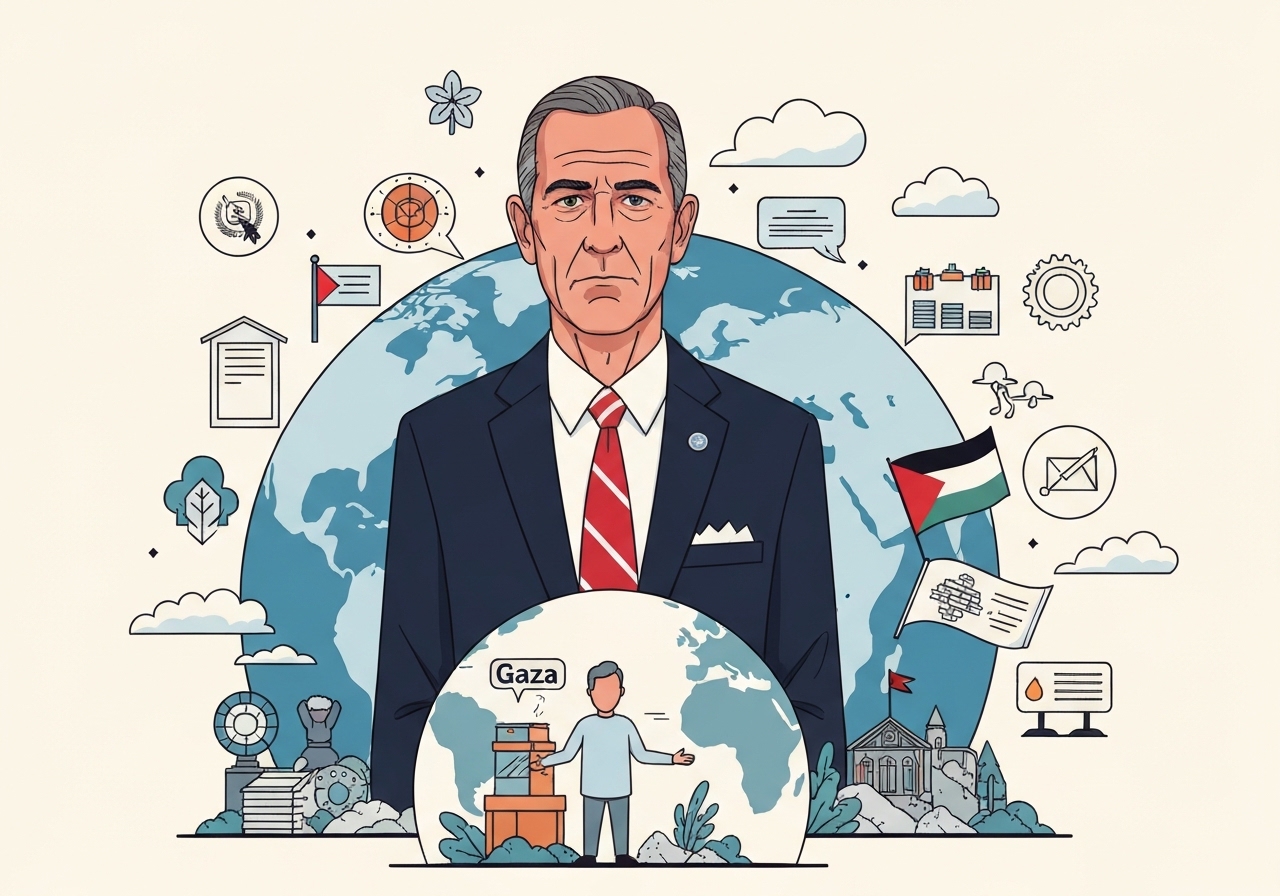
Steve Witkoff, US special envoy to the Middle East, announced on Wednesday the start of “phase two” of a 20-point plan to end the war in Gaza, moving the effort from a ceasefire toward demilitarization, technocratic governance and reconstruction. The announcement, posted on social media, says a transitional administration will be formed to govern Gaza while an international stabilisation presence oversees security. The US statement warned that Hamas must meet obligations including the immediate return of the final deceased hostage, with unspecified consequences for non-compliance. Local reporting from central Gaza underlines that the plan’s timetable and administrative details remain unresolved amid continuing humanitarian emergency.
Key Takeaways
- Steve Witkoff (US special envoy) said the 20-point plan is entering “phase two,” focused on demilitarization, technocratic governance and reconstruction.
- The proposal calls for a transitional administration for Gaza and an international stabilisation force; Israel has proposed Nickolay Mladenov to lead the oversight Board of Peace.
- The Gaza Government Media Office reports Israel has violated the ceasefire more than 1,190 times since October, causing over 400 Palestinian fatalities and limiting aid deliveries.
- The ceasefire ordered the allowance of 600 aid trucks per day; aid agencies and the UN say deliveries remain insufficient for the humanitarian needs.
- Gaza’s health authorities reported at least 15 bodies brought to hospitals in 24 hours, 13 recovered from rubble; a medical staff member at Nasser Hospital was killed near Khan Younis.
- Since the war began in October 2023, more than 71,400 Palestinians have been killed and over 171,000 wounded, according to local health authorities.
- More than 80% of buildings in Gaza have been damaged or destroyed, raising major reconstruction and logistics challenges.
Background
The 20-point plan was unveiled in September as a US-led framework intended to end the fighting and stabilise Gaza after months of conflict that began in October 2023. It sets out a phased process: an initial ceasefire; a second phase of demilitarization and interim governance; and a longer-term reconstruction sequence. The plan envisages a “Board of Peace” to oversee transition tasks and an international stabilisation force to provide security guarantees.
Stakeholders include the United States as broker, Israel, Palestinian authorities in Gaza, regional actors, and international humanitarian organisations. Israel has signalled support for elements of the proposal while reserving security prerogatives; Palestinian groups have expressed mixed reactions, and Hamas has not issued an immediate response to this week’s phase-two announcement. Humanitarian agencies and legal experts have repeatedly warned that restrictions on aid access contravene obligations of an occupying power and of ceasefire terms.
Main Event
On Wednesday, Steve Witkoff posted that the plan is transitioning from a focus on holding a ceasefire to pursuing full demilitarization, setting up a technocratic interim administration, and initiating large-scale reconstruction. He said the US expects Hamas to meet its obligations, including the prompt return of the last deceased hostage, and warned of “serious consequences” if it fails to comply. The post did not provide a detailed timeline or a clear legal status for the proposed transitional body.
Al Jazeera reporting from Deir al-Balah noted that Palestinian spokespeople had at times signalled willingness to cede day-to-day governance under arrangements similar to those described in the plan, but local reporters emphasised that the precise composition, mandate and authority of the provisional administration are still unclear. Questions also remain about who will fund and manage reconstruction, how building clearance will proceed, and how return and resettlement of displaced families will be handled.
Israel’s government has not issued an immediate response to Witkoff’s phase-two announcement; last week Prime Minister Benjamin Netanyahu indicated that Nickolay Mladenov, a former UN Middle East envoy, would chair the oversight board. International organisations, including the UN and leading humanitarian groups, continue to demand unfettered access for food, shelter materials, and debris‑clearing equipment to support recovery and prevent further civilian suffering.
Analysis & Implications
The plan’s emphasis on demilitarization presents immediate political and operational obstacles. Achieving verifiable disarmament of an armed group inside a densely populated and besieged territory requires robust verification mechanisms, a credible international security presence, and guarantees that security vacuums will not emerge. Without clear sequencing and on‑the‑ground capacity, demilitarization may be contested or partially implemented, risking renewed violence.
Establishing a technocratic transitional administration raises questions about legitimacy and authority. Technocratic governance can accelerate basic service delivery but may lack local political legitimacy if residents and Palestinian institutions are not meaningfully consulted. The plan’s success will depend on who sits on the interim body, how local civil society and municipal actors are included, and whether the body can operate under Israeli security constraints and continued humanitarian access limitations.
Reconstruction needs are vast: with over 80% of buildings damaged or destroyed, reconstruction will require large, sustained funding, import of construction materials, coordination to clear unexploded ordnance and rubble, and guarantees of safety for reconstruction workers. Donor coordination and long-term commitments are essential; otherwise, temporary fixes could entrench displacement and vulnerability, especially with harsh winter conditions affecting tent camps and makeshift shelters.
Finally, the plan’s regional and diplomatic implications are substantial. A visibly effective transition could reduce regional tensions and create pathways for normalisation and recovery; conversely, partial implementation, continued ceasefire breaches, or stalemate could harden positions and trigger international criticism. Monitoring, impartial verification and humanitarian guarantees will be decisive variables.
Comparison & Data
| Metric | Reported figure |
|---|---|
| Palestinian deaths (since Oct 2023) | More than 71,400 |
| Palestinian wounded | More than 171,000 |
| Ceasefire violations reported | Over 1,190 (since ceasefire began in October) |
| Ceasefire aid target | 600 aid trucks per day |
| Buildings damaged/destroyed in Gaza | Over 80% |
The figures above come from local health authorities, the Gaza Government Media Office and on-the-ground reporting. They illustrate the scale of human and infrastructure loss and underline the gap between humanitarian needs and current aid flows. Any planning for demilitarization, governance or reconstruction will have to be calibrated against these baseline conditions and the logistical limits on access and materials.
Reactions & Quotes
“The 20-point Gaza plan is moving from ceasefire to demilitarization, technocratic governance, and reconstruction.”
Steve Witkoff, US special envoy (social media post)
Witkoff framed the second phase as the transition from a cessation of hostilities to structural changes in security and governance. The post served as the main public notice of the shift, but did not supply detailed implementation steps or timelines.
“The durability of the ceasefire itself remains a key variable. Any deterioration could delay or even ruin these plans.”
Tareq Abu Azzoum, Al Jazeera reporter in Deir al-Balah
Local reporting emphasised that persistent ceasefire breaches and constraints on aid are central risks to the plan’s feasibility. Officials and aid workers on the ground warn that continued hostilities and restrictions on deliveries would obstruct governance and reconstruction tasks.
“Nickolay Mladenov would lead the oversight board tasked with supervising the Palestinian technocratic government in Gaza.”
Statement attributed to Israeli Prime Minister Benjamin Netanyahu (public announcement)
Netanyahu’s naming of a chair for the oversight board is a political signal about Israeli involvement in the plan’s governance architecture; the legal basis and international endorsement of that role remain to be clarified.
Unconfirmed
- The exact composition, legal authority, and selection process for the transitional administration remain unconfirmed and have not been publicly published.
- Timelines for demilitarization, reconstruction funding, and phased withdrawal or deployment of any international stabilisation force have not been specified.
- It is not independently verified whether Israel will fully enable the daily 600-truck aid flow ordered under the ceasefire or how quickly clearance and logistics bottlenecks can be resolved.
Bottom Line
The US announcement that the Gaza plan is entering “phase two” outlines an ambitious shift from a ceasefire to demilitarization, technocratic interim governance and large-scale reconstruction. The proposal addresses core needs—security arrangements, interim administration and rebuilding—but lacks publicly available operational specifics on composition, timelines, verification, and funding.
Key variables that will determine success are the durability of the ceasefire, credible verification mechanisms for demilitarization, inclusive arrangements for interim governance, and rapid, sustained humanitarian access for reconstruction. Absent those elements, the plan risks partial implementation or collapse, leaving acute humanitarian and political problems unresolved.