
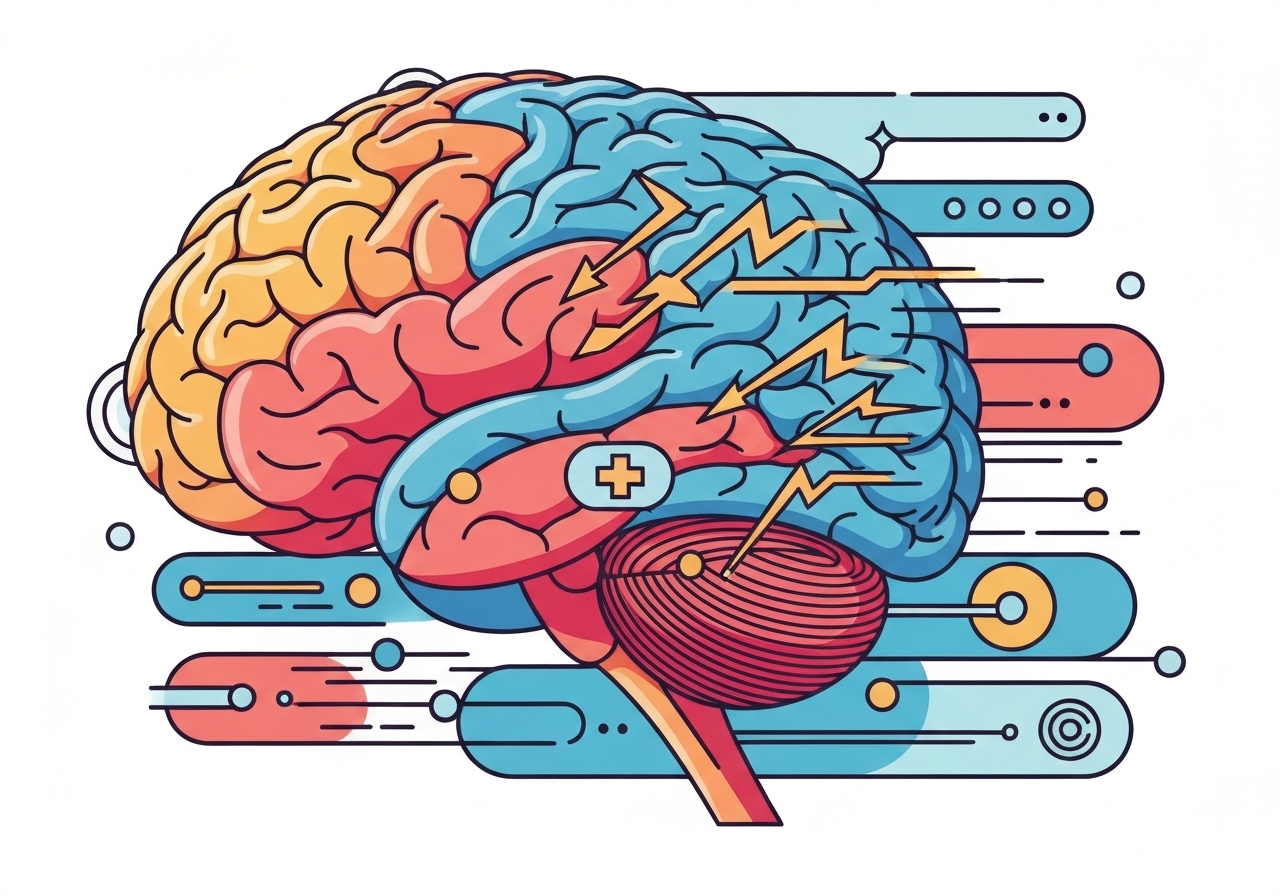
Lead: A randomized, placebo-controlled trial reported on 15 January 2026 shows that SAINT, a five-day, MRI-guided transcranial magnetic stimulation protocol developed at Stanford, produced a rapid clinical benefit for many people with treatment-resistant depression. The trial enrolled 48 participants at Stanford and found 50% remission at one month in the active arm versus about 21% in the sham arm. Several participants described swift relief of core depressive symptoms within days, enabling renewed engagement in daily life. Investigators say the results add precision and measurable biomarkers to neuromodulation approaches for severe depression.
Key takeaways
- Study design: a randomized, double-blind trial published in World Psychiatry compared SAINT versus a sham procedure in 48 adults with treatment-resistant depression, with outcomes assessed at one month.
- Primary outcome: 50% of the 24 participants who received SAINT achieved remission by one month, compared with nearly 21% of 24 participants who received the placebo procedure.
- Treatment format: SAINT uses individual MRI and functional connectivity mapping to target the left dorsolateral prefrontal cortex and delivers ten 10-minute sessions per day for five consecutive days.
- Mechanistic signal: EEG recordings showed reductions in beta power in the left anterior cingulate region, and greater reductions correlated with larger clinical improvements.
- Regulatory and access status: the US Food and Drug Administration cleared SAINT in September 2022; as of January 2026 it is offered at 17 US clinics and covered by Medicare in hospital outpatient settings, but most private insurers do not routinely cover it.
- Cost and reach: without insurance, a single SAINT course can range roughly from $16,000 to over $30,000; only about 0.7% of Americans estimated to need TMS actually receive it.
- Prior evidence: earlier open trials reported high remission rates, including a 21-participant uncontrolled study with a 90.5% remission figure, which motivated the current randomized test.
Background
Treatment-resistant depression, commonly abbreviated TRD, describes major depressive disorder that has not responded adequately to one or more validated treatments. Clinicians and investigators estimate that nearly one third of the roughly 332 million people living with depression worldwide meet criteria for TRD, making it a substantial public health problem. Historically, major depression therapies emerged serendipitously or from repurposing drugs and procedures, but SAINT was designed through an engineering approach that combines neuroimaging and targeted stimulation.
The work traces to Stanford Universitys Brain Stimulation Lab, established in 2015 to develop faster, more precise noninvasive neuromodulation. The SAINT protocol blends structural and functional MRI to find the individual spot in the left dorsolateral prefrontal cortex most strongly connected to the subgenual cingulate, an area linked to mood regulation, and then applies concentrated magnetic pulses to that site over a single five-day course.
Main event
The randomized trial enrolled 48 adults with persistent depressive symptoms despite prior treatments. Each participant underwent structural and resting-state functional MRI to identify a personalized stimulation target, then received either active SAINT or a matched sham procedure that reproduced sensation without delivering the full magnetic field. Clinical assessments and EEG were conducted before and after the five-day course, with primary clinical outcome measured at one month.
Results reported on 15 January 2026 indicate remission in half of the active group versus nearly 21% in the sham group at one month. Investigators also observed a relationship between reduction in beta-frequency EEG power in the left anterior cingulate and clinical improvement, suggesting a plausible neural signal associated with response. Some participants described changes within days, reporting restored enjoyment of activities and clearer thinking after the treatment week.
Side effects were generally short lived and variable: some participants felt minimal sensation, others reported transient scalp discomfort or brief painful snaps as stimulation pulses were delivered. The study excluded participants who were acutely suicidal or had attempted suicide in the prior year, a common safety measure in experimental trials but one that limits immediate generalizability to that highest-risk subgroup.
Analysis & implications
The trial advances several arguments in favor of personalized neuromodulation. First, the use of individual MRI connectivity maps moves beyond generic placement to a precision approach, analogous to image-guided interventions in other medical specialties. That precision may explain why a condensed five-day regimen produced rapid effects for many participants compared with conventional TMS schedules that require weeks of treatment.
Second, the EEG findings, if replicated, could become a biomarker to predict who is most likely to benefit and when to intervene. The study found that higher pre-treatment beta power in the left anterior cingulate predicted greater clinical improvement, and that responders showed larger beta reductions after treatment. However, experts caution that these signals remain preliminary and may reflect a generic correlate of symptomatic improvement rather than a SAINT-specific mechanism.
Third, the practical implications hinge on access, reimbursement and longer-term durability. SAINT is currently concentrated in a limited number of clinics and is often not covered by private plans, which constrains patient access despite FDA clearance. The steep out-of-pocket cost for an uncovered course would place this therapy out of reach for many, even as investigators aim to expand clinic capacity and insurance coverage.
Finally, the heterogeneity in neurobiology underscored by the trial suggests psychiatry may need to refine diagnostic and treatment algorithms so patients receive biologically matched options earlier in their care pathways. But changing clinical practice and payer policies will likely take years of additional evidence, replication across diverse populations, and head-to-head comparisons with other standard treatments.
Comparison & data
| Metric | SAINT (active) | Sham | Prior uncontrolled SAINT |
|---|---|---|---|
| Participants | 24 | 24 | 21 |
| Remission at 1 month | 50% | ~21% | 90.5% (no control) |
| Treatment schedule | 10×10-min daily sessions for 5 days | Matched sham | Same intensive protocol |
The table summarizes core outcomes and protocol differences. The randomized design strengthens confidence that the observed treatment effect is not solely placebo, though the sample size remains modest. The uncontrolled trial reported much higher remission, which can reflect selection, placebo effects or other biases that randomization aims to reduce. Larger multisite trials and head-to-head comparisons with conventional TMS and other modalities will be important to define relative effectiveness and cost-effectiveness.
Reactions & quotes
The trial shows we can bring mental health treatment into the same precision medicine framework as other specialties, combining MRI and targeted stimulation to personalize care.
Dr Brandon Bentzley, Magnus Medical cofounder and SAINT developer
Seeing clinically meaningful improvements in people who had failed multiple prior treatments is an important message of hope for patients and clinicians alike.
Dr Ian Kratter, lead author and clinical assistant professor, Stanford University School of Medicine
The EEG findings are intriguing but should be interpreted cautiously until replicated in larger and more diverse samples.
Dr Paul Holtzheimer, professor of psychiatry, Dartmouth Geisel School of Medicine
Unconfirmed
- Longevity of benefit after a single five-day SAINT course varies across reports; durable remission for months to years has been seen in some patients but is not yet consistently demonstrated in randomized settings.
- Whether reductions in beta-range EEG power represent a mechanism unique to SAINT or a general marker of symptomatic improvement remains unresolved.
- Generalizability to racially and socioeconomically diverse populations or to patients with multiple co-occurring psychiatric conditions has not been established by this study.
- Whether SAINT can safely and effectively be used as a first-line intervention for broader major depression has not been tested.
Bottom line
This randomized trial provides encouraging evidence that a personalized, accelerated TMS protocol can produce rapid remission in a meaningful fraction of people with treatment-resistant depression. The combination of MRI-guided targeting and intensive stimulation produced stronger short-term outcomes than sham in this sample, and EEG signals offer a candidate biomarker to refine patient selection.
Important caveats remain: the sample size is moderate, follow-up beyond one month is variable, and access barriers including limited clinic availability and uneven insurance coverage restrict real-world impact. Policy makers, payers, and researchers should prioritize replication, multisite trials, longer-term follow-up, and comparative effectiveness work to determine where SAINT fits into the treatment landscape and how to expand equitable access.
Sources
- CNN (news report summarizing trial results and interviews)
- World Psychiatry (peer-reviewed journal publishing the randomized trial)
- US Food and Drug Administration (regulatory clearance information, official)
- Stanford University Brain Stimulation Lab (academic research group)
- Magnus Medical (company holding SAINT license, industry)