
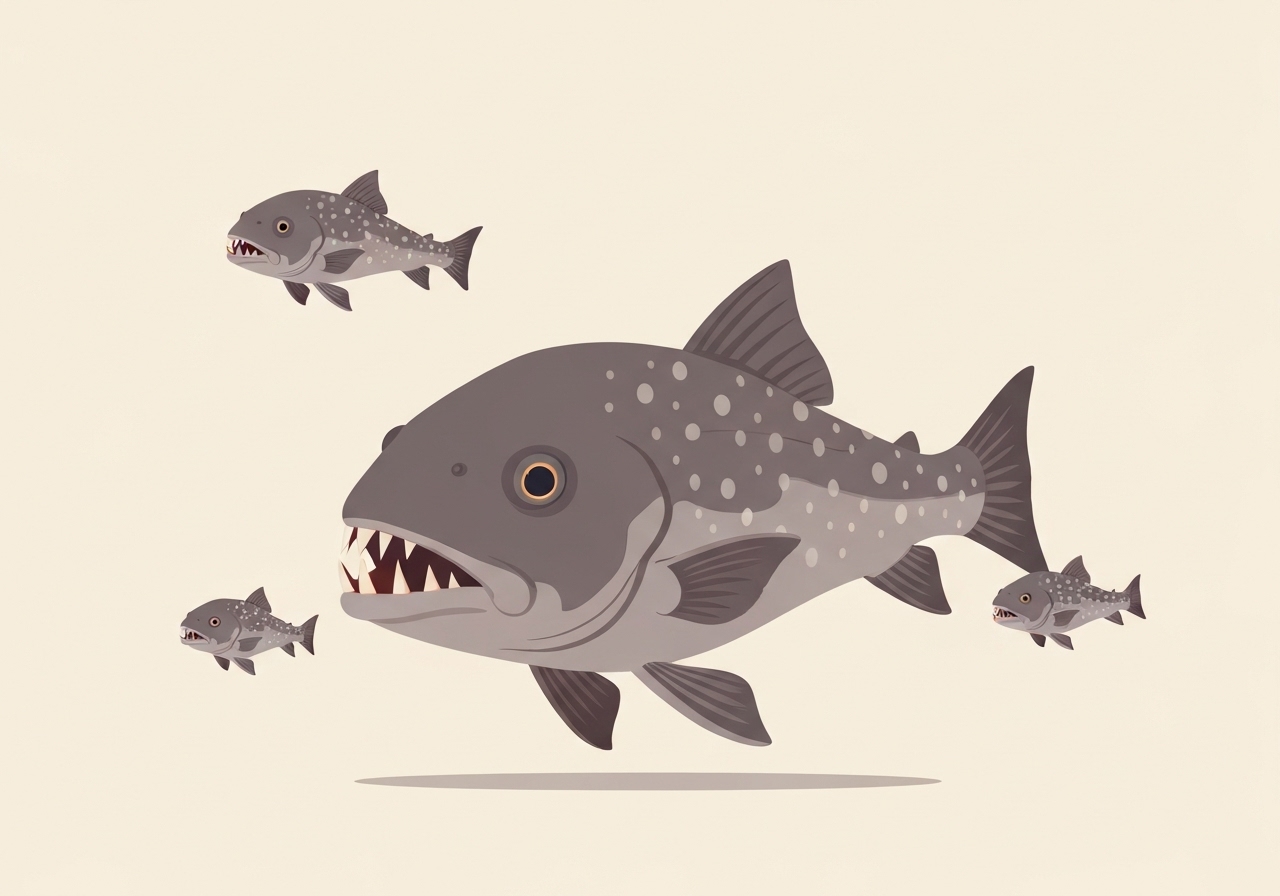
— Researchers report that adult male spotted ratfish (Hydrolagus colliei) collected near San Juan Island in Puget Sound, Washington, develop a row of true teeth on a forehead structure called the tenaculum used during mating. A study published in the Proceedings of the National Academy of Sciences finds these teeth form from the same dental tissue that makes oral teeth, a result that challenges assumptions about where teeth can develop on vertebrate bodies.
Key takeaways
- Adult male spotted ratfish possess hooked, tooth-bearing protrusions on a forehead appendage called the tenaculum.
- Micro-CT scans and tissue analyses show the tenaculum contains a dental lamina, the same tissue that makes mouth teeth.
- The finding was reported in a PNAS paper published Sept. 5, 2025, based on specimens from Puget Sound near San Juan Island.
- Fossil comparisons indicate related ancient chimaeras also had toothed forehead structures.
- Researchers say this suggests tooth-forming programs can be deployed outside the oral cavity in vertebrate evolution.
Verified facts
Spotted ratfish are chimaeras, an ancient group of cartilaginous fishes that diverged from sharks millions of years ago. Adults typically reach about two feet in length; males develop a small, white, peanut-shaped bump between the eyes that becomes hooked and barbed during courtship.
The research team collected and examined hundreds of Hydrolagus colliei from waters around San Juan Island in Puget Sound. Using micro-CT imaging and histological sampling, they tracked the tenaculum’s development and identified a dental lamina in that structure — the tissue layer responsible for generating teeth in the mouth.
Genetic and tissue-level evidence indicated the tenaculum’s tooth rows are biologically comparable to oral teeth, rather than being mere skin denticles. The study also cites fossil specimens of related chimaeroid fishes showing similar forehead dentitions, linking the feature to the group’s evolutionary history.
Context & impact
The discovery broadens the recognized locations where vertebrate dentition can arise. Tooth development has long been studied as an oral phenomenon; locating a dental lamina on the forehead implies the underlying developmental program can be redeployed to new body regions.
That redeployment has implications for understanding morphological innovation in deep time. If tooth-forming cells shifted position in early vertebrate lineages, some spiky structures preserved in fossil records might represent hidden dental tissues rather than keratin or denticles alone.
Practically, the finding refines how biologists interpret unusual bony or dental features in fossils and living species, and it may guide future studies of the genetic controls that position tooth-forming tissues.
Official statements
“This feature flips the long-standing assumption that teeth are strictly oral structures,”
Karly Cohen, University of Washington Friday Harbor Labs
“We can pair experimental data with paleontology to show how a preexisting tooth program was coopted for reproduction,”
Michael Coates, University of Chicago
Unconfirmed
- Whether the developmental shift that placed dental tissue on the tenaculum occurred once early in chimaeroid evolution or multiple times independently remains open.
- How widespread extra-oral teeth are among other vertebrate lineages is still speculative and will require targeted surveys.
Bottom line
The PNAS study documents a clear case of true teeth forming on a forehead mating organ in male spotted ratfish, showing that the tooth-making toolkit can operate beyond the mouth. The result prompts a re-evaluation of how developmental programs can be redeployed across body regions and how paleontologists interpret spiky structures in fossils.