
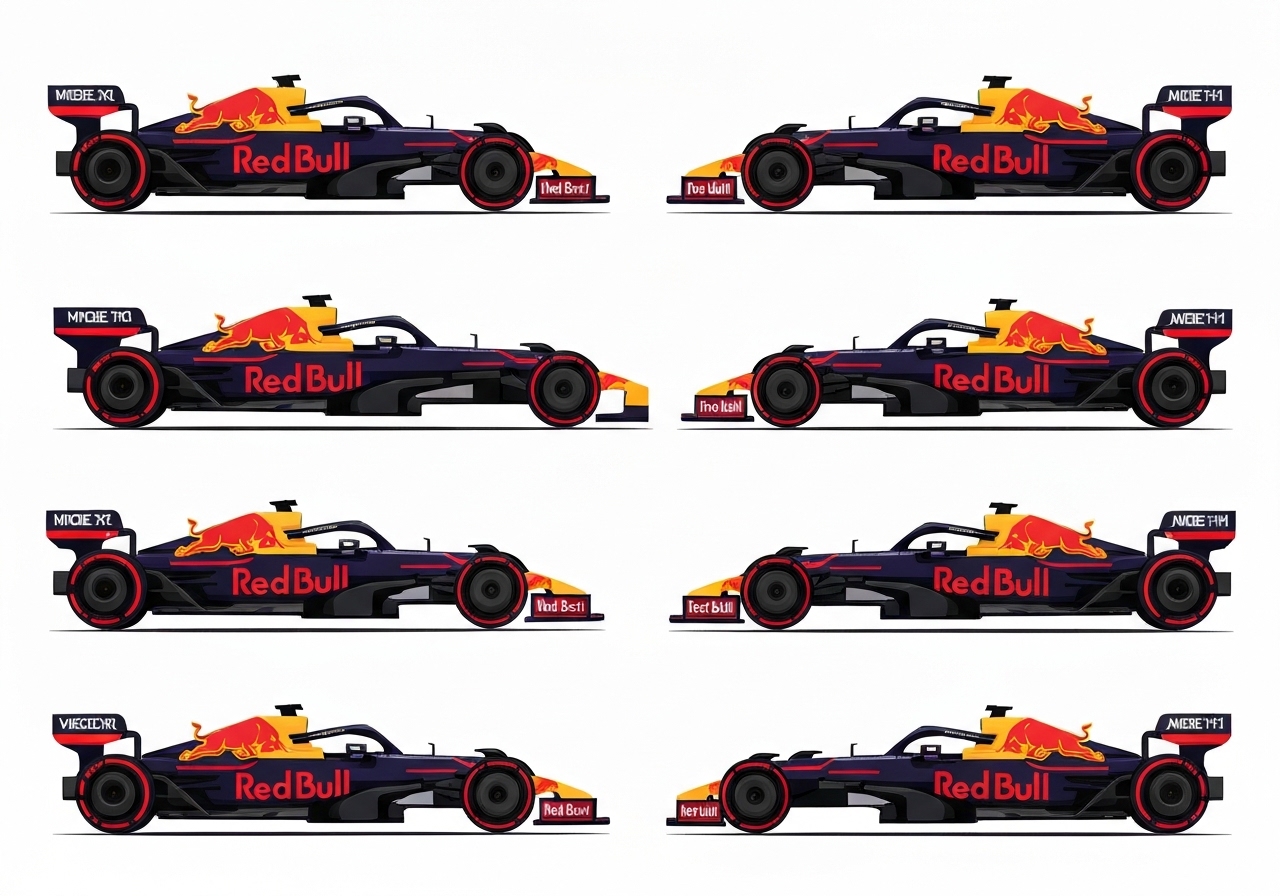
Red Bull revealed the full livery for its 2026 challenger this week during a joint launch with sister outfit Racing Bulls in Detroit, Michigan. The unveiling comes only weeks before pre-season running begins and ahead of sweeping technical rule changes for the sport. The presentation also underscored the team’s new technical partnership with Ford: Red Bull Ford Powertrains will supply power units to both Red Bull and Racing Bulls in 2026. The car will be driven by four-time world champion Max Verstappen and rookie-promoted team mate Isack Hadjar.
Key Takeaways
- The livery was presented at a shared event in Detroit, Michigan, in the run-up to 2026 pre-season testing.
- 2026 marks Ford’s first season as a formal technical partner with Red Bull; the power unit operation is branded Red Bull Ford Powertrains.
- Max Verstappen remains the lead driver; Isack Hadjar joins Red Bull after a standout rookie year with Racing Bulls.
- The reveal arrives weeks before a major technical regulation change for Formula 1 that will affect car aerodynamics and packaging.
- Red Bull showcased multiple angles and details of the new visual identity, emphasizing sponsor placements and aero-conscious livery elements.
Background
Red Bull has a long history of high-profile launches timed to create momentum ahead of testing and the championship season. The team’s reveal in Detroit came as the sport prepares for the 2026 rules package, which tightens aerodynamic freedoms and alters powertrain integration—factors that influence how teams present liveries and sponsor art. Historically, launch events also serve as commercial platforms: new partners are introduced publicly alongside design rollouts to maximize exposure.
Ford’s entry as a named partner and power unit supplier represents a strategic shift for both companies. Red Bull brings championship-winning track expertise and an established brand; Ford contributes engine-development resources and legacy automotive credibility. The Racing Bulls sister team functions as a feeder and showcase program, making the joint launch a way to underline the operational link between the two squads.
Main Event
The launch in Detroit focused on photographic angles and close-up views rather than a full technical-spec breakdown. Attendees and media were shown the car from multiple perspectives, highlighting the revised nose, sidepods and livery placement designed to work with the 2026 aerodynamic constraints. Branding treatments appear to be arranged to preserve sponsor visibility while following tighter aero packaging rules.
Officials from Red Bull and Racing Bulls attended the event alongside representatives associated with the Ford partnership. Organizers stressed the collaboration on power unit development and integration, though detailed technical disclosures about the Red Bull Ford Powertrains package were limited in the public presentation. The team said public-facing material would emphasize visual identity while some engineering specifics remain subject to on-track validation during testing.
Driver representation at the launch reinforced the lineup for the coming season. Max Verstappen will continue as the team’s experienced lead, bringing established championship credentials. Isack Hadjar, promoted after a strong rookie campaign with Racing Bulls, joined the main team for the first time, signaling Red Bull’s intent to balance proven performance with young talent development.
Analysis & Implications
The livery reveal is more than aesthetics: in 2026, design interacts closely with aero packaging, so visual treatment reflects engineering choices. Teams must now place sponsors and liveries within narrower bodywork envelopes, which can affect how logos read on television and how paint layers influence cooling and weight. Red Bull’s presentation therefore offers a first look at how a top team is adapting branding to new technical limits.
Ford’s partnership shifts the competitive and commercial landscape. As a named powertrain partner, Ford’s engineering input and capital could alter development pace and reliability profiles across the season. For sponsors and stakeholders, the Ford tie-up expands marketing narratives into the U.S. market and beyond, which likely influenced staging the event at the United States home of Ford in Detroit.
Driver dynamics also have sporting implications. Verstappen’s continuity secures a championship benchmark; Hadjar’s promotion tests Red Bull’s talent pipeline at the highest level. If Hadjar adapts quickly, Red Bull will strengthen its depth for both constructors’ results and long-term succession planning. Conversely, any early-season reliability or integration setbacks with the new powertrain could expose vulnerabilities during the crucial opening rounds.
Comparison & Data
| Feature | 2025 (previous) | 2026 (new) |
|---|---|---|
| Primary partner | Red Bull (existing partners) | Red Bull Ford Powertrains (new named partner) |
| Lead driver | Max Verstappen | Max Verstappen |
| Second seat | — (Racing Bulls drivers) | Isack Hadjar (promoted) |
| Livery emphasis | Traditional wide panels | Narrower graphic zones to suit 2026 aero packaging |
The table highlights the key visible shifts rather than internal engineering metrics. While championships are decided on lap times and reliability, these publicly visible changes foreshadow deeper technical updates behind the panels. Further on-track testing will reveal how visual choices reflect cooling, airflow and component packaging decisions.
Reactions & Quotes
“This joint launch with Racing Bulls signals the start of an exciting chapter as we integrate Ford into our powertrain programme.”
Red Bull Racing (official statement)
“Partnering with Red Bull brings our engineering heritage to the forefront of modern Formula 1 powertrains.”
Ford Motor Company (official statement)
“Moving up to the main team is a huge step — I can’t wait to learn and help extract performance from the new car.”
Isack Hadjar (driver remarks)
Unconfirmed
- Exact technical specifications of the Red Bull Ford Powertrains unit remain internal and were not released publicly at the launch.
- Details on aerodynamic trade-offs between paint placement and cooling apertures are yet to be validated on-track during pre-season tests.
Bottom Line
The Detroit launch offered a polished first look at Red Bull’s 2026 livery while underscoring the larger strategic shift represented by the Ford partnership. Visually, the car signals adaptation to the new aero rulebook; commercially, it amplifies Red Bull’s global positioning by tying in an established automaker.
Sporting implications hinge on two axes: how well the new powertrain integrates under race conditions, and how effectively Isack Hadjar transitions to the main seat alongside a proven benchmark in Max Verstappen. Early testing and the opening rounds will be decisive in separating appearance from on-track performance.
Sources
- Formula1.com — Media coverage of the Red Bull 2026 livery reveal and launch event.