
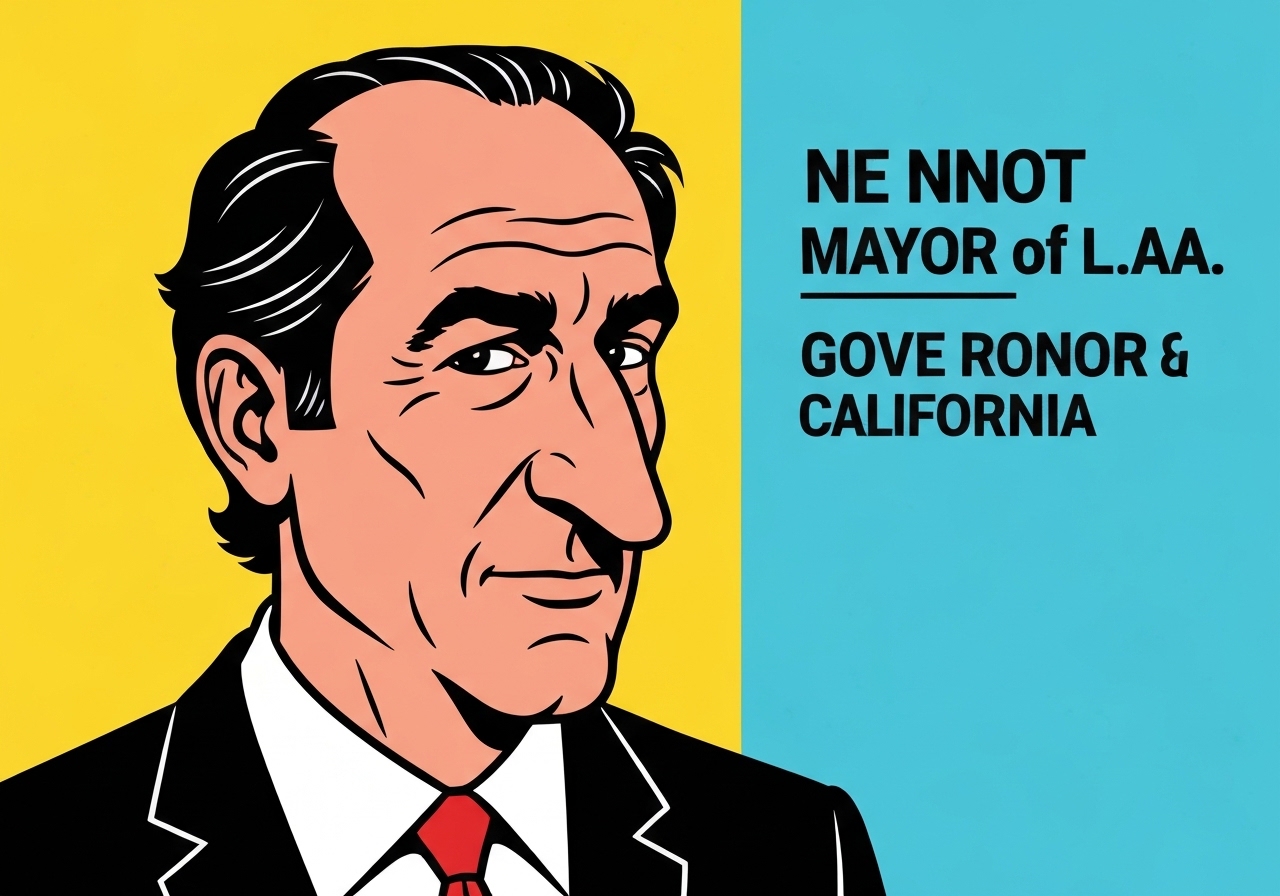
Rick Caruso announced on Friday, January 16, 2026, that he will not enter the race for Los Angeles mayor or seek the California governorship, ending months of speculation. The 66-year-old developer said the decision followed “many heartfelt conversations” with family and that he will continue public service through nonprofit work rather than elected office. Caruso said he will focus on his nonprofit Steadfast LA and other philanthropy tied to fire recovery in the Palisades and Eaton Canyon. His withdrawal reshapes the 2026 L.A. mayoral field and removes a potential high-profile contender from a wide-open gubernatorial contest.
Key Takeaways
- Announcement timing: Caruso publicly declined running on Jan. 16, 2026, after weeks of travel and meetings with state and local leaders.
- Nonprofit focus: He said he will prioritize Steadfast LA, which is working on Palisades and Eaton fire recovery efforts.
- 2022 record: In 2022 Caruso spent $100 million of his own money on a mayoral bid, outspending Karen Bass roughly 11-to-1 and losing by nearly 10 percentage points.
- Political labels: A former Republican, Caruso registered as a Democrat in 2022, a history that analysts say could complicate statewide appeal in some Democratic strongholds.
- Consultant reactions: Advisers such as Mike Murphy called the choice a family and quality-of-life decision rather than a pure electability issue.
- Local impact: His exit largely cements a 2026 Los Angeles field that includes incumbent Karen Bass, Austin Beutner, and potential entrants like Lindsey Horvath.
- Statewide landscape: Several leading Democrats, including Sen. Alex Padilla and Atty. Gen. Rob Bonta, have already declined to run for governor, leaving an unsettled Democratic primary.
Background
Rick Caruso rose to prominence as a developer of high-profile retail destinations such as The Grove and the Americana at Brand. Over decades he built a public profile that combined business success with episodic public service, including a stint as president of the Los Angeles Police Commission in the 2000s and an appointment to the Department of Water and Power board in 1984 at age 26. His 2022 mayoral campaign marked a major personal investment in politics: he poured approximately $100 million of his own wealth into that contest and ran as a moderate challenger to then-mayoral opponents.
Since the 2022 loss to Karen Bass, Caruso amplified public critiques of the mayor’s performance on public safety and emergency response, particularly after the Palisades fire in 2023. Political operatives and donors watched closely as Caruso met with labor leaders, community groups and statewide figures while weighing both mayoral and gubernatorial bids. Those travels and meetings, observers say, set expectations that he might enter a statewide contest, even as some veteran consultants cautioned that a governor’s race is exceptionally demanding.
Main Event
On Jan. 16, 2026, Caruso posted that he would not place his name on any ballot this cycle, attributing the choice to family discussions and a desire to continue public service outside elected office. He emphasized continuing work through Steadfast LA, a nonprofit coordinating private-sector resources for fire recovery efforts in the Palisades and Eaton Canyon. The announcement followed public hints and a January 7 exchange where Caruso had suggested he was leaning toward running when asked whether not running was a possibility.
Advisers and consultants said the decision crystallized after a period of intense deliberation. Political consultant Mike Murphy, who had been advising Caruso, described the call as rooted in family and quality-of-life concerns, not primarily in unfavorable electability metrics. Others in Caruso’s orbit had signaled donor and consultant confidence in at least competitive polling for both mayoral and gubernatorial possibilities, making the withdrawal notable to insiders.
The practical effect in Los Angeles is immediate: with Caruso out, moderate challengers such as former LAUSD Superintendent Austin Beutner retain clearer space to consolidate anti-incumbent voters focused on quality-of-life and public safety. On the left, candidates like Rae Huang and unconventional entrants such as Spencer Pratt continue to complicate Mayor Bass’s path to re-election. At the state level, Caruso’s non-entry leaves a scattershot Democratic field that includes Rep. Eric Swalwell, former Rep. Katie Porter, and former mayor Antonio Villaraigosa, as well as billionaire Tom Steyer and several Republicans vying for attention.
Analysis & Implications
Caruso’s withdrawal reduces the likelihood of a high-cost, high-profile showdown in Los Angeles that could have reshaped fundraising and media dynamics in 2026. His 2022 spending demonstrated that personal wealth can dramatically amplify a campaign’s reach, and his absence means that those dollars are less likely to flood the local airwaves this cycle. For moderates who hoped a centrist, well-funded challenger might unseat Mayor Bass, the path is now narrower but still contested by Beutner and possible Supervisor Lindsey Horvath.
Statewide, the decision also signals the difficulty of assembling the coalitions and stamina required for a California governor’s bid. Consultants quoted the governor’s race as second only to a presidential campaign in complexity, an implicit admission that even well-funded newcomers face steep organizational and ideological hurdles across the state’s diverse regions. Caruso’s party-switch history—from Republican to Democrat in 2022—would have been a focal point in deep-blue precincts skeptical of political converts.
Politically, the move may shift donor energy and media attention toward established and declared candidates, changing early primary narratives. It also underscores a broader trend: a number of potential high-profile candidates have declined gubernatorial runs this cycle, suggesting heightened risk aversion among prominent figures. For municipal politics, the result may produce a more conventional contest centered on local governance records and emergency response performance rather than a personality-driven, high-spend battle.
Comparison & Data
| Year | Office | Personal spending | Result |
|---|---|---|---|
| 2022 | Los Angeles Mayor | ~$100 million | Lost to Karen Bass by ~10 percentage points |
| 2026 | Potential LA Mayor/Governor | Did not run | Withdrew Jan. 16, 2026 |
Caruso’s 2022 expenditure was one of the largest self-funded municipal campaigns in recent U.S. history and demonstrated how personal wealth can alter campaign dynamics. The 2026 withdrawal removes a potentially large funding source from both city and state fields; political scientists note that high-dollar entrants often change opponent strategy and media framing, so his absence will materially affect messaging, advertising and early polling trajectories.
Reactions & Quotes
“It wasn’t a winnability thing. It was a family, quality-of-life thing.”
Mike Murphy, Political Consultant (adviser to Caruso)
Murphy, who had been advising Caruso, said he was surprised but framed the decision as personal rather than political. He added that internal polling and outreach had shown competitive signals in both possible races.
“Running for California governor is one of the hardest things you can do in politics — second only to running for president.”
Tim Rosales, Political Consultant
Rosales, who works primarily with Republican campaigns, said he had heard expectations from donors and consultants that Caruso might jump into the governor’s race but had no direct insight into the developer’s final calculus.
“A lot of smart people have decided it may not be a good job.”
Rob Stutzman, Political Consultant
Stutzman highlighted the long list of high-profile figures who declined to run for governor this cycle, underscoring perceived downside risks of the office.
Unconfirmed
- Reports that internal polling definitively showed no path to victory have not been released publicly; claims about specific poll numbers remain unverified.
- Suggestions that Caruso’s decision was prompted by a single private donor’s urging have not been corroborated by named sources.
- Rumors that other major donors will reallocate large sums away from Los Angeles contests after his exit are speculative and not yet supported by announced commitments.
Bottom Line
Rick Caruso’s decision to stay off the 2026 ballot removes a wealthy and high-profile option from both a crowded Los Angeles mayoral contest and an unsettled gubernatorial field. The move shifts strategic calculations for moderates and moneyed backers who had been preparing for a potentially expensive, personality-driven campaign. In Los Angeles, it likely consolidates anti-incumbent energy around remaining challengers such as Austin Beutner and potential entrants like Lindsey Horvath, while Mayor Karen Bass faces continued scrutiny over emergency response and public safety.
At the state level, Caruso’s absence leaves a fragmented Democratic primary and a still-open general-election landscape in which fundraising, messaging and candidate fitness for a statewide electorate will determine front-runners. Observers should watch how donors and labor groups reallocate resources and whether Caruso’s nonprofit work influences local recovery efforts and civic discourse without him on the ballot.
Sources
- Los Angeles Times (news reporting)
- Rick Caruso on X (official social post)