
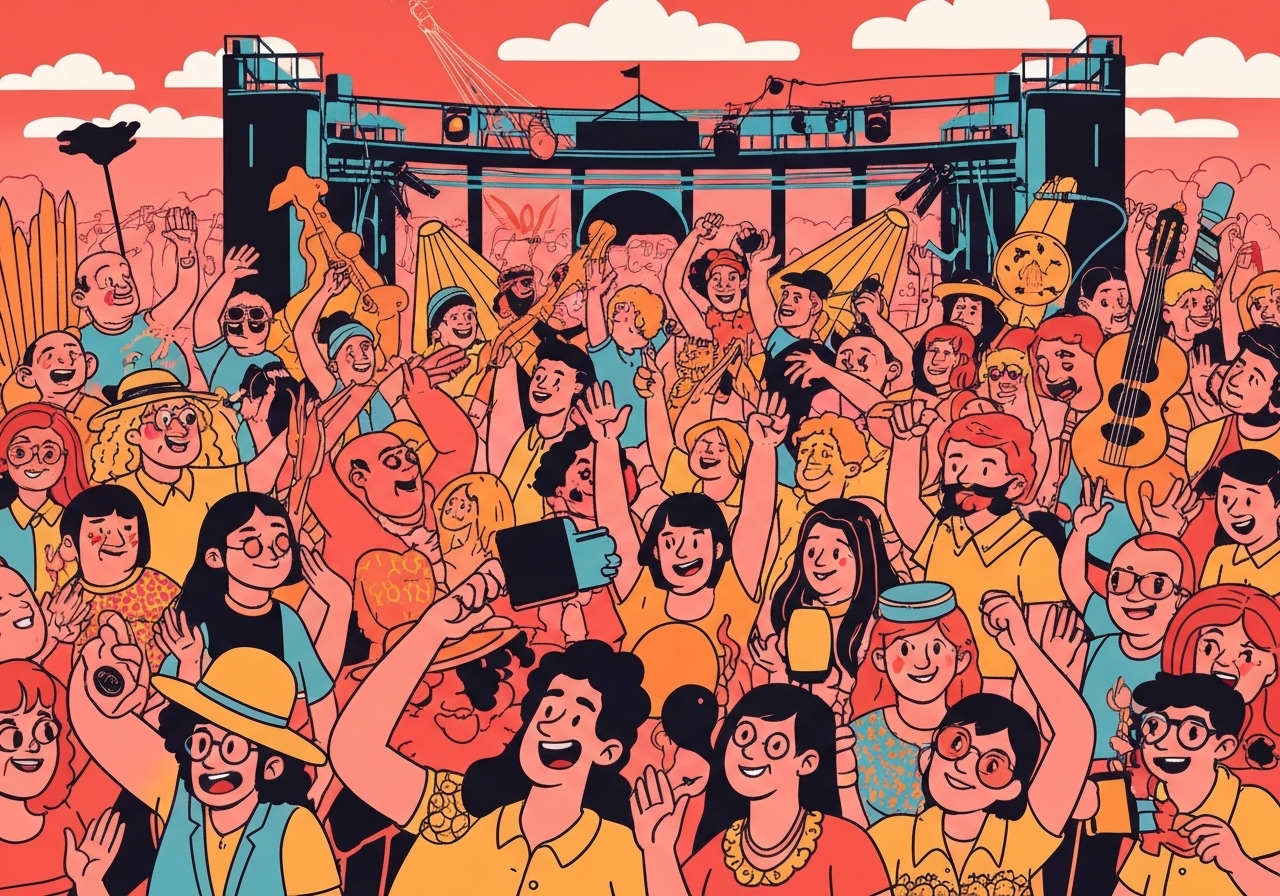
Lead: On Saturday, Jan. 17, 2026, thousands gathered at San Francisco’s Civic Center Plaza for a free public memorial honoring Grateful Dead co‑founder Bob Weir. The event, preceded by a short procession up Market Street, brought fans from across the United States and as far as London, Tokyo and Bangkok to celebrate a musician and community figure who helped define the city’s musical identity. Speakers, video tributes and onstage performances — including a closing sing‑along led by John Mayer — paid tribute to Weir’s six decades as a performer and activist. The gathering served as a communal farewell after a year in which Weir continued to perform despite a recent cancer diagnosis.
Key Takeaways
- Thousands of fans attended the public memorial at Civic Center Plaza on Jan. 17, 2026; many had traveled nationally and internationally to pay respects.
- Weir’s family donated 10,000 long‑stemmed roses for distribution, with members of the Wharf Rats volunteer group handing out many of them.
- Speakers included San Francisco Mayor Daniel Lurie and Speaker Emerita Nancy Pelosi; performers and video tributes featured artists such as John Mayer, Joan Baez, Willie Nelson and Trey Anastasio.
- Weir, born in San Francisco in 1947, co‑founded the Grateful Dead in the mid‑1960s; the band performed more than 320 concerts in the city across about two dozen venues, the mayor noted.
- The public memorial followed a three‑day Golden Gate Park series last summer by Dead & Company that marked the Grateful Dead’s 60th anniversary and drew tens of thousands of attendees.
- Organizers staged the ceremony to begin at 1 p.m.; a procession moved up Market Street from Seventh to Ninth streets before the program.
- Weir died at age 78 after a battle with cancer and underlying lung issues, his family said; he had continued to perform into his final months.
Background
Bob Weir was born in San Francisco in 1947 and was a founding member of the Grateful Dead, which emerged in the mid‑1960s alongside other figures of the Haight‑Ashbury counterculture. The original lineup included Jerry Garcia, Phil Lesh, Ron “Pigpen” McKernan and Bill Kreutzmann; over decades the band grew into a networked cultural phenomenon known for extended improvisation and a devoted touring community known as Deadheads. San Francisco served as both the band’s creative laboratory and its civic home, hosting hundreds of shows across many venues and anchoring the group in the city’s identity.
Musically, Weir was known for inventive rhythm work, unusual time signatures and chord voicings that drew from jazz influences such as McCoy Tyner, according to fellow musicians and commentators. Beyond performance, Weir’s family and friends described him as an activist and advocate for environmental causes, animal welfare and human rights — a public persona that shaped how many fans and civic leaders remembered him. The Dead’s communal approach to concerts, touring and fan organization produced durable subcultures like the Wharf Rats, a sober Deadhead contingent formed in 1986, which later helped distribute roses at memorial events.
Main Event
The memorial at Civic Center Plaza began with a procession from near the Westfield Mall up Market Street to the plaza, where a stage had been set for a 1 p.m. ceremony. By midday, the grassy quad facing Bill Graham Auditorium was filled with attendees; women in white peasant dresses and tie‑dye tops handed out roses at street corners while groups of fans gathered near the Civic Center BART entrance in preparation for the march. Organizers made logistical adjustments to municipal transit, with Muni rerouting or altering some stops around downtown during the gathering.
Speakers and performers traced both personal memories and civic narratives. San Francisco Mayor Daniel Lurie framed the weekend’s Golden Gate Park concerts as a “homecoming” for a band that helped shape the city’s culture, noting more than 320 local shows over the years. Speaker Emerita Nancy Pelosi highlighted Weir’s blend of curiosity and compassion and invited the crowd to participate — even asking people to shout their favorite Dead song before offering her own good‑humored assessment of Weir’s onstage presence.
Musical tributes blended onstage performances and a video montage. John Mayer performed the Grateful Dead’s “Ripple” to close the ceremony; a tribute video included messages from sports figures and fellow artists such as members of the San Francisco 49ers, Willie Nelson, Sammy Hagar, Wynonna Judd and Trey Anastasio. Longtime Dead drummer Mickey Hart recalled the band’s sense of family and urged those present to keep the music and communal ethos alive.
Analysis & Implications
The memorial illustrated how popular music can operate as civic memory: Weir’s life and the Grateful Dead’s trajectory are woven into San Francisco’s modern identity, and public ritual — processions, roses, communal singing — functioned as a mechanism for collective mourning and affirmation. For a city that markets itself on creativity and countercultural legacy, the event reaffirmed the symbolic link between place and sound that tourism promoters, cultural institutions and civic leaders have long relied on.
At another level, the gathering highlighted the institutional reach of a fan subculture that has matured into intergenerational networks. Groups like the Wharf Rats mobilized volunteers and resources, demonstrating how long‑standing fan communities provide logistical support during public remembrances and help translate private grief into public ceremony. That organizational depth matters for future preservation efforts, local programming and potential commemorative projects tied to the Dead’s history.
Politically, high‑profile participation by civic leaders signaled the extent to which Weir’s legacy straddles art and public life. Pelosi and Mayor Lurie’s remarks reiterated an understanding of the Dead not simply as entertainers but as civic actors whose activities shaped urban social fabric. Going forward, the memorial may prompt renewed interest in preserving physical and archival sites associated with the band, raising questions about historic designation, philanthropy and who controls the narrative of a countercultural past now memorialized in civic space.
Comparison & Data
| Event | Reported/Noted Attendance |
|---|---|
| Farewell to Jerry Garcia (Polo Field, Golden Gate Park, Aug. 1995) | Approximately 20,000 (reported) |
| Bob Weir public memorial (Civic Center Plaza, Jan. 17, 2026) | Thousands (plaza filled; many attendees from nationwide and international locations) |
The 1995 farewell to Jerry Garcia is frequently cited as a benchmark public memorial for the Dead, with roughly 20,000 people at the Polo Field. While organizers of the Weir memorial did not publish an exact headcount, the Civic Center Plaza was described as filled and drew attendees who had traveled long distances. Those differences reflect venue capacity, the logistics of urban plazas versus park fields, and the changing nature of livestreaming that extends reach beyond in‑person attendance.
Reactions & Quotes
City and national figures framed Weir’s influence in civic and cultural terms.
“San Francisco and the Grateful Dead are inseparable,”
Mayor Daniel Lurie
Mayor Lurie emphasized the band’s long relationship with the city and referenced the 320+ local concerts as evidence of that connection. His remarks tied the recent Golden Gate Park concerts to a broader narrative of return and civic recognition.
“He helped create a sound that became a language, a culture, a community,”
Speaker Emerita Nancy Pelosi
Pelosi framed Weir’s contribution as cultural and communal, urging the crowd to acknowledge music as a collaborative and evolving practice. Her brief quoted line underscored how public officials translate artistic legacies into civic values.
“At the heart of it all, this was never just a band — it was a family,”
Mickey Hart
Hart recalled the internal bonds of the group and urged those present to sustain the musical refrain; his wording reinforced the notion of an enduring communal responsibility among remaining members and fans.
Unconfirmed
- Exact overall attendance figures for the Civic Center Plaza memorial were not released; contemporary reports describe the plaza as filled but do not provide an official headcount.
- Details about the precise timeline and medical specifics of Weir’s cancer diagnosis beyond the family statement that he was diagnosed last summer remain private and were not publicly disclosed.
Bottom Line
The public memorial for Bob Weir on Jan. 17, 2026 functioned as both a personal farewell and a civic ritual that reasserted the Grateful Dead’s central place in San Francisco’s cultural identity. Thousands of attendees, cross‑generational performers and civic leaders converged to honor a musician whose career blended technical innovation, communal performance and public advocacy.
Beyond the immediate ceremony, the event underscores how fan communities and municipal institutions negotiate memory in urban space. Expect follow‑on activity in the months ahead — from archival initiatives and potential commemorative proposals to continued conversation about how the city preserves and interprets the Dead’s legacy.
Sources
- San Francisco Chronicle — local newspaper report on the memorial (primary source for event details, Jan. 17, 2026).
- Grateful Dead (official site) — band history and archival context (official band resource).