
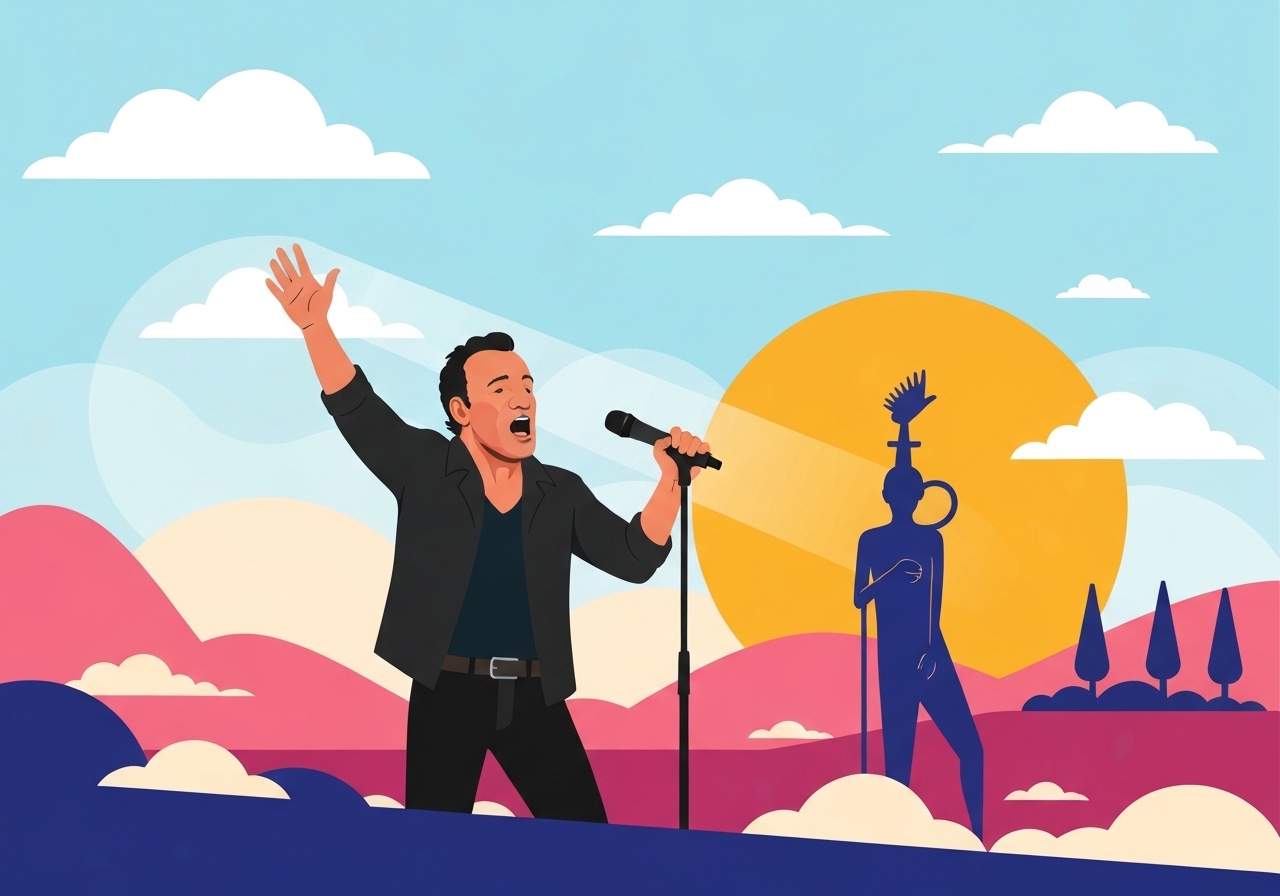
Lead: On Jan. 18, 2026, Bruce Springsteen made a surprise appearance at the Light of Day Winterfest in Red Bank, New Jersey, where he publicly criticized the Trump administration’s deployment of ICE officers in U.S. cities and dedicated a performance of “The Promised Land” to Renee Good, a Minneapolis mother of three who was shot and killed by an ICE agent on Jan. 7. He framed the episode as a test of American legal and civic norms, urging the audience to respond to what he described as militarized federal action in domestic cities. Springsteen quoted Minneapolis Mayor Jacob Frey’s blunt admonition for ICE to leave the city and connected the dedication directly to Ms. Good’s death.
Key Takeaways
- Bruce Springsteen spoke at Light of Day Winterfest in Red Bank, N.J., on Jan. 18, 2026, condemning recent ICE deployments to U.S. cities.
- He dedicated “The Promised Land” to Renee Good, a U.S. citizen and mother of three who was shot by ICE agent Jonathan Ross on Jan. 7, 2026, in Minneapolis.
- The agent, Jonathan Ross, fired after Ms. Good’s car moved forward and then turned right; the administration described the vehicle as having been “weaponized.” (Claims under investigation.)
- Springsteen urged listeners to uphold the rule of law and reject what he termed heavily armed federal action inside American cities.
- The remarks cited Mayor Jacob Frey’s public rebuke of ICE, amplifying local-official concern about federal operations in Minneapolis.
- The incident and the artist’s response have intensified debates over federal law enforcement roles and civil liberties in protest contexts.
Background
Renee Good, identified by authorities as a U.S. citizen and mother of three, was shot and killed in Minneapolis on Jan. 7, 2026, by an ICE agent, Jonathan Ross. Local and federal officials have given differing initial accounts: the Trump administration has characterized the incident as a response to a vehicle used as a weapon, while critics and community advocates question the use of lethal force and call for a full, transparent inquiry.
In the weeks before Springsteen’s appearance, the Trump administration announced expanded ICE deployments in several U.S. cities, a move framed by supporters as law-enforcement support and by opponents as aggressive federal intervention. Minneapolis became an immediate flashpoint because of the fatal shooting and because city leaders, including Mayor Jacob Frey, publicly demanded the agency’s withdrawal following the incident.
Main Event
At the Light of Day Winterfest on Jan. 18, Springsteen opened his remarks by saying the country was undergoing an unprecedented test of its values and institutions. He criticized the deployment of heavily armed federal officers to cities and spoke of the necessity of the rule of law in protecting citizens’ rights. Video shared online captured his appeal to the audience to send a message to the president about those deployments.
Springsteen then invoked the Minneapolis case directly, dedicating his rendition of “The Promised Land” to Renee Good. He described her as a mother and American citizen, and framed the dedication as both a memorial and a call to public attention. The song — about striving for a better life — was presented as a tribute to Ms. Good’s memory rather than a political slogan.
The Minneapolis shooting remains the center of an evolving administrative and public inquiry. Officials report Jonathan Ross fired his weapon after Ms. Good’s vehicle moved forward and turned; Ross was positioned near the front of the car when he discharged his firearm. Local advocates and some city leaders challenge the administration’s characterization and seek clearer, independently reviewed evidence about the interaction.
Analysis & Implications
Springsteen’s intervention illustrates how prominent cultural figures can amplify local incidents into national debates. His use of a high-profile concert to highlight the Minneapolis shooting broadens public attention beyond local news cycles, pressuring officials on investigative transparency and policy choices. Celebrity statements do not substitute for legal process, but they can shift public salience and political momentum.
The broader policy question centers on the scope and tactics of federal immigration enforcement inside municipalities. Deployments of ICE officers to cities where local leadership has resisted certain federal actions complicate intergovernmental relations and may prompt legal and legislative scrutiny over jurisdiction, rules of engagement, and oversight mechanisms. If such deployments continue, they could trigger new local ordinances, state actions, or court challenges aimed at delimiting federal authority in domestic policing roles.
For Minneapolis specifically, the shooting adds strain to ongoing debates about policing, accountability, and community safety. The case could influence local elections, mobilize advocacy groups, and shape prosecutorial and oversight decisions. Nationally, if similar incidents recur, they might spur congressional hearings or policy proposals that seek to clarify or constrain federal immigration-enforcement tactics in urban settings.
Comparison & Data
| Date | Event |
|---|---|
| Jan. 7, 2026 | Renee Good shot and killed by ICE agent Jonathan Ross in Minneapolis |
| Jan. 18, 2026 | Bruce Springsteen condemns ICE deployments and dedicates song to Ms. Good at Red Bank, N.J. |
The two-date table highlights the rapid sequence: the fatal shooting occurred on Jan. 7 and within 11 days the case had become both a local controversy and a subject of national discourse after Springsteen’s public dedication. That speed underscores how incidents involving federal agents can quickly escalate beyond investigative timelines into public and political arenas.
Reactions & Quotes
Official and civic responses have varied. Some federal officials have defended the agent’s actions as responding to an immediate threat; city leaders and community members have demanded fuller transparency and independent review.
“We are living through incredibly critical times,” Springsteen said, urging listeners to defend the rule of law and oppose what he described as militarized incursions into American cities.
Bruce Springsteen (musician)
Springsteen also quoted Mayor Jacob Frey, highlighting the mayor’s public demand that ICE leave Minneapolis following the shooting.
Mayor Jacob Frey (Minneapolis official)
Observers from civil-rights organizations have called for an independent investigation into the facts surrounding the shooting, while some administration spokespeople reiterated the agency’s account that the vehicle posed a threat. These reactions frame the dispute as both factual — what exactly occurred at the scene — and normative — what federal forces’ role should be in local contexts.
Unconfirmed
- Whether Ms. Good’s vehicle was intentionally used as a weapon remains contested and has not been independently validated in publicly released evidence.
- Details about the precise sequence of movements and communications between the ICE agent and Ms. Good during the encounter are not yet fully disclosed.
- Any pending departmental or criminal charges related to the shooting had not been reported publicly as of Jan. 18, 2026.
Bottom Line
The Jan. 7 killing of Renee Good and Bruce Springsteen’s Jan. 18 response have together pushed a local tragedy into a national conversation about federal enforcement tactics, accountability, and the boundaries of police authority. Springsteen’s public denunciation amplified calls for transparency and highlighted the political stakes of federal deployments in cities that have objected to such operations.
In the near term, the critical developments to watch are the results of investigative reviews, any formal charging decisions, and whether mayoral, state, or congressional actors pursue policy or oversight changes in response. The episode underscores how quickly a single use-of-force event involving federal agents can reshape public debate and policy attention.
Sources
- The New York Times — Media report on Springsteen’s remarks and the Minneapolis shooting (Jan. 18, 2026)