
Lead
On the night of 19 January 2026, two high-speed trains collided near Adamuz in southern Spain, killing at least 39 people and injuring dozens more. The Madrid-bound train, carrying about 300 passengers, derailed just before 20:00 local time and struck a southbound service on an adjacent track. Authorities said all survivors had been removed from the wreckage but warned the toll could rise as recovery and identification continued. Prime Minister Pedro Sánchez called it a “night of deep pain for our country.”
Key Takeaways
- Fatalities: At least 39 people confirmed dead after the collision on 19 January 2026.
- Passengers: The Madrid-bound Iryo service carried roughly 300 passengers at the time of the accident.
- Injuries and hospitals: About four dozen people were hospitalised, with 12 in intensive care.
- Time and place: The collision occurred just before 20:00 local time near Adamuz in southern Spain.
- Apparent mechanics: Officials report the rear of the Madrid-bound train derailed and parts struck an oncoming southbound train.
- Speeds reported: Authorities said the trains were travelling at about 205 km/h and 110 km/h on a stretch with a 250 km/h limit.
- Equipment and checks: The Iryo train involved is under four years old and had an inspection four days before the crash, according to the operator.
Background
Spain operates one of the world’s largest high-speed rail networks. The infrastructure administrator Adif reports nearly 4,000 km of high-speed track, making Spain Europe’s largest high-speed system and second globally after China. High-speed rail is a widely used, competitively priced mode of intercity travel in Spain; Renfe reported over 25 million high-speed passengers in 2024 alone.
Since 2020, Spain opened its high-speed routes to private operators. Iryo, a joint venture involving Italy’s Ferrovie dello Stato Italiane, Air Nostrum and Globalvia, began competing on major routes in late 2022 and expanded services thereafter. The rail sector’s safety record is generally strong, but Spain has experienced deadly crashes in the past, most notably the 2013 derailment in the country’s north-west that killed 80 people.
Main Event
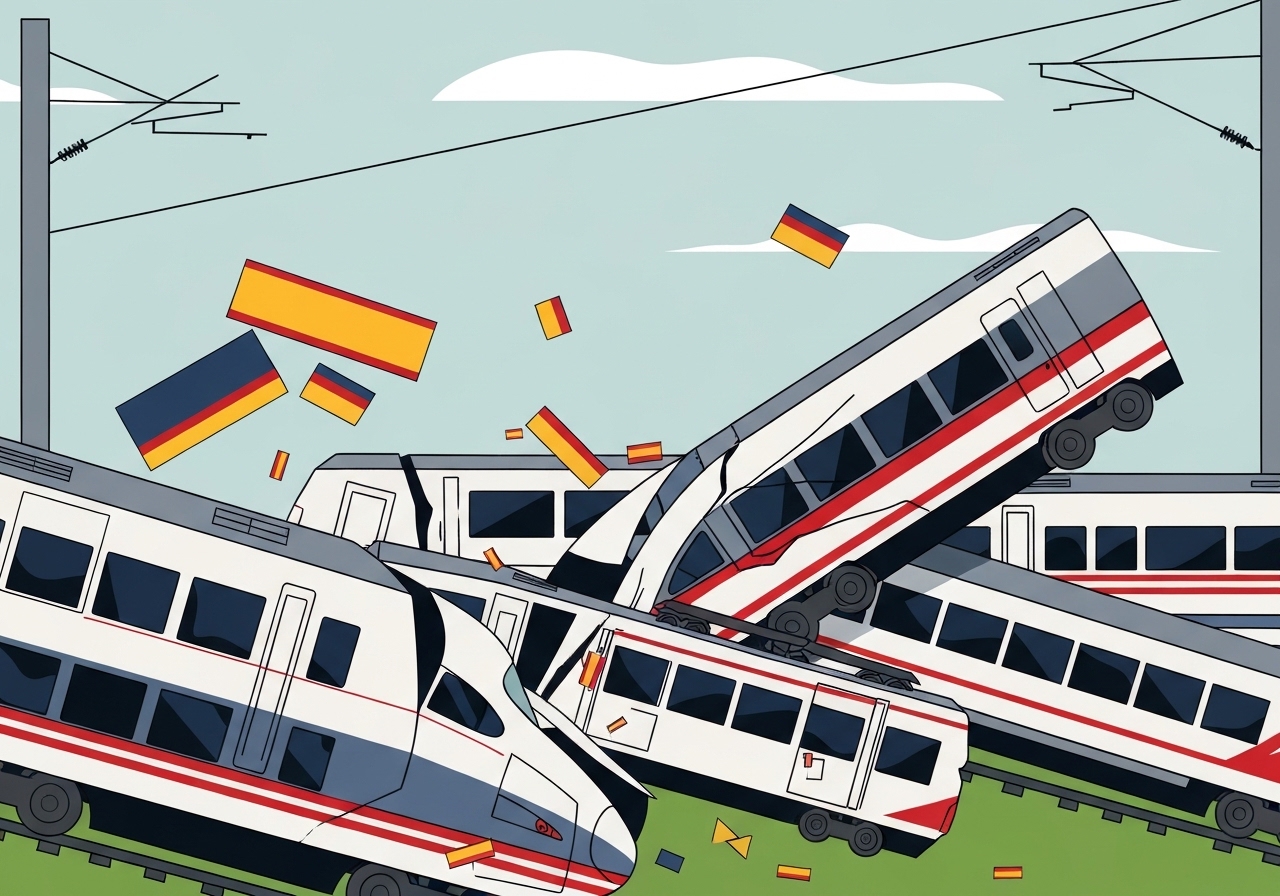
Officials reported the sequence began just before 20:00 on 19 January when the rear section of the Madrid-bound Iryo train left the rails. Transport Minister Óscar Puente said derailed portions appeared to collide with a southbound train on the adjacent track, producing the most severe damage to the first two carriages of the southbound service. Those carriages were reportedly knocked off the track and fell down a roughly 4-metre slope.
Rescue teams worked through the night to extract passengers. Authorities said all survivors had been taken from the trains by early Monday, and recovery teams were focusing on retrieving and identifying the dead. Local officials expanded the search perimeter after finding bodies carried hundreds of metres from the immediate wreckage, reflecting the violent impact described by responders.
Eyewitness accounts describe chaotic scenes inside the trains: luggage falling, sudden braking, power outages and passengers running to help the injured. One passenger on the Madrid-bound service described a rapidly changing, chaotic environment; a passenger on the opposite train said the collision felt “like an earthquake” before lights went out and staff called for medical professionals to assist in specific cars.
Analysis & Implications
Investigators face a complex task: establishing why the Madrid-bound train derailed on a straight section of track that Adif said had been renovated in May. Transport Minister Óscar Puente called the circumstances “truly strange,” noting the track’s recent maintenance. Determining whether infrastructure failure, rolling stock defect, maintenance lapse or an operational error played a role will require technical examination of rails, train components, signalling logs and on-board data recorders.
Early public statements from operators and officials have sought to rule out some causes while preserving investigative neutrality. Renfe’s president said excessive speed was unlikely, citing reported speeds of 205 km/h and 110 km/h at the time on a 250 km/h-rated section. Still, speed alone may not explain an abrupt derailment on a straight, recently renovated track, and investigators will examine axle, wheel and suspension systems, along with track geometry and any track obstructions.
The political and operational fallout may be substantial. Spain’s high-speed rail is a major public asset and a popular travel mode; a deadly accident of this scale will trigger scrutiny over safety oversight, inspection regimes and the process used to certify competing operators. If technical or regulatory gaps are identified, policymakers could face pressure to tighten oversight, accelerate signalling upgrades or revise maintenance and inspection protocols nationwide.
Comparison & Data
| Metric | Spain (2026) | Notable past crash (2013) |
|---|---|---|
| High-speed track length | ~4,000 km | — |
| Passengers on Renfe high-speed (2024) | 25 million+ | — |
| Deaths in 2026 Adamuz crash | 39 (confirmed) | 80 (2013 derailment) |
| Speed limit on stretch | 250 km/h | — |
The table places the January 2026 crash in context: Spain’s network is extensive and heavily used, and while fatal accidents are rare, past incidents have produced substantial casualties. Comparing the 2013 event underscores how differing causes—excessive speed in that case versus an unclear trigger here—shape both immediate rescue needs and longer-term reforms.
Reactions & Quotes
National leaders, local officials and rail operators responded swiftly. Prime Minister Pedro Sánchez framed the accident as a national tragedy and pledged support for victims and families.
“A night of deep pain for our country.”
Pedro Sánchez, Prime Minister (statement)
Transport Minister Óscar Puente emphasised the unusual circumstances on a straight, recently renovated stretch of track and noted that the presence of an opposing train greatly increased the number of casualties.
“If a train hadn’t been coming in the opposite direction, we likely would not be talking about any victims at all.”
Óscar Puente, Transport Minister (press briefing)
Regional leader Juanma Moreno described the scale of the impact seen by search teams and the need to extend the recovery area.
“The impact was so incredibly violent that we have found bodies hundreds of metres away.”
Juanma Moreno, Head of Andalusian Government (statement)
Unconfirmed
- Exact mechanical cause: No definitive cause (track defect, vehicle failure or external obstruction) has been confirmed by investigators.
- Final casualty figure: Officials warned the death toll could change as identification and recovery continue.
- Role of signalling or human error: Whether signalling faults or staff actions contributed remains under investigation and unverified.
Bottom Line
The Adamuz collision of 19 January 2026 is one of Spain’s deadliest rail incidents in recent years and raises immediate questions about how a modern high-speed train derailed on a straight, recently renovated section of track. While preliminary statements by operators and ministers have provided initial facts—times, speeds, numbers of passengers and casualties—determining root causes will require methodical technical and forensic work.
The accident will likely prompt policy and regulatory scrutiny of inspection standards, operator certification and infrastructure oversight for Spain’s high-speed network. For families and communities affected, the immediate priorities remain rescue, identification and support; for the wider public and policymakers, the priority will be a transparent, thorough investigation that yields clear lessons to prevent similar tragedies.
Sources
- The Guardian — Media report with on-scene reporting and official statements (journalism).
- Adif — Spanish infrastructure administrator; network statistics (official source).
- Renfe — National rail operator statements and passenger statistics (official/operator).