
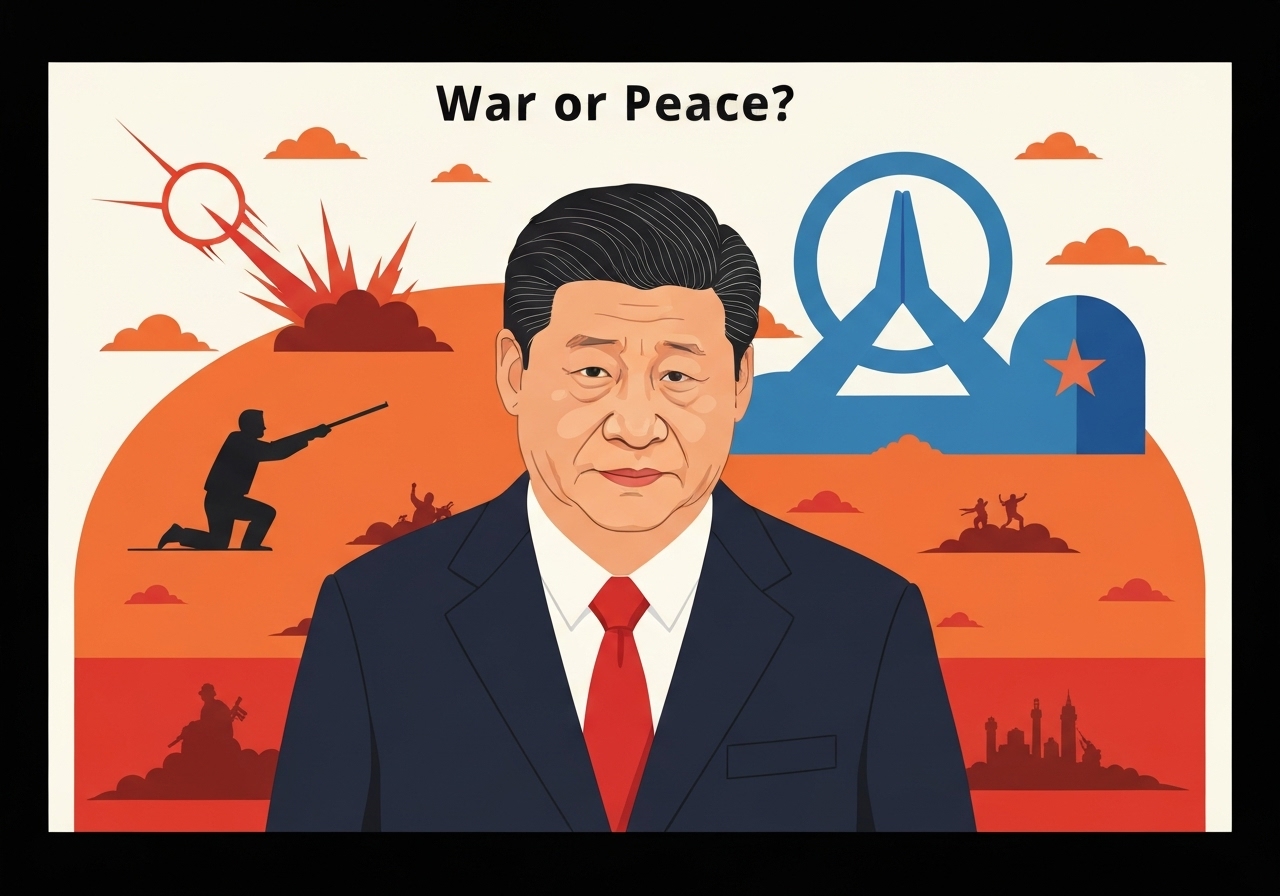
On Sept 3, 2025 in Beijing’s Tiananmen Square, President Xi Jinping staged a large military parade attended by about 50,000 people and by foreign leaders including Russia’s Vladimir Putin and North Korea’s Kim Jong Un, using the event to display advanced weaponry and to call on nations to choose ‘peace or war,’ a message that analysts say signals Beijing’s intent to project both hard power and a competing vision for global order.
Key Takeaways
- The parade on Sept 3 in Beijing drew about 50,000 attendees and featured nuclear-capable missiles, hypersonic systems, underwater drones and combat aircraft.
- Xi positioned his display alongside Vladimir Putin and Kim Jong Un, amplifying a message that challenges US-led norms and alliances.
- Earlier in the week Xi unveiled a ‘global governance initiative’ in Tianjin, aimed at reshaping international institutions and increasing influence for the Global South.
- Chinese officials framed the parade as defensive and commemorative, while analysts underscore its demonstration of growing offensive capabilities.
- Observers warn the spectacle may deepen a bifurcated international order and push US partners in Asia closer to Washington.
- Domestic considerations, including economic pressure and a desire to rally nationalist support, are likely factors behind the timing and scale of the display.
Verified Facts
The event took place on Sept 3, 2025 in Tiananmen Square and followed a regional summit in Tianjin where Xi closed meetings attended by leaders such as Indian Prime Minister Narendra Modi. State media broadcast the parade nationwide while jumbotrons displayed the procession to the crowded square.
Attendees and footage showed strategic systems on display: long-range missiles the state describes as capable of penetrating advanced defenses, new classes of combat drones, underwater unmanned systems and high-speed aircraft. Chinese officials described the lineup as evidence of modernization and defensive readiness; outside analysts noted the parade offered a clear view of China’s industrial capacity to produce advanced arms.
Xi used his public remarks and summit diplomacy to promote a ‘global governance’ framework that, according to Chinese officials, aims to broaden representation at multilateral bodies and influence rules on finance, trade, technology and security. Expert commentary cited in reporting links that initiative to Beijing’s long-term goal of diluting US-dominant institutions.
| Item | Detail |
|---|---|
| Date | Sept 3, 2025 |
| Location | Tiananmen Square, Beijing |
| Approx. attendance | 50,000 |
| Notable guests | Vladimir Putin, Kim Jong Un, leaders from Iran, Pakistan, Belarus, Myanmar |
| Related summit | Tianjin summit and global governance initiative |
Context & Impact
For Xi, pairing a diplomatic push in Tianjin with a highly visible military parade serves two related goals: to offer an alternative vision of international order and to demonstrate the hardware that backs Beijing’s diplomacy. The combination is designed to appeal to countries that feel disadvantaged in the current system while signaling capability to rivals.
In practical terms, the parade is likely to influence alliance calculations across Asia and beyond. US partners observing Chinese force projection and Xi’s outreach may accelerate defense cooperation with Washington and deepen security ties, even as some Global South states entertain closer economic and political relations with Beijing.
Domestically, analysts note the event also plays to a domestic audience. With economic growth softening and unemployment persistent, a major display of national strength can consolidate political support and divert public attention toward national pride and strategic ambition.
Policy implications include heightened risk of regional miscalculation, renewed focus on deterrence measures by the US and its allies, and increased diplomatic competition over institutions such as the UN, financial messaging systems, and technology governance.
‘Only when all countries treat each other as equals can common security be upheld,’ said Xi in public remarks at the event.
Statement carried by Chinese state media
Unconfirmed
- Extent and terms of any direct military logistics or operational integration between China and Russia or North Korea beyond symbolic solidarity; specific force-sharing arrangements have not been publicly confirmed.
- Whether the parade timing signals an imminent operational plan regarding Taiwan; analysts disagree and no authoritative evidence indicates a change in operational intent.
- Claims that the display will immediately shift voting patterns at the United Nations or instantly dismantle existing alliances; these outcomes are speculative.
Bottom Line
Xi’s pairing of a diplomatic initiative with a large military parade was a deliberate signal that China seeks both greater influence in global governance and the hard power to back its ambitions. The move sharpens strategic choice for other countries: align more closely with Beijing’s vision, reinforce ties with the US and its partners, or attempt to navigate between the two. In the near term expect intensified diplomatic competition, closer security coordination among US allies in Asia, and continued debate over how to deter escalation while avoiding unnecessary confrontation.