
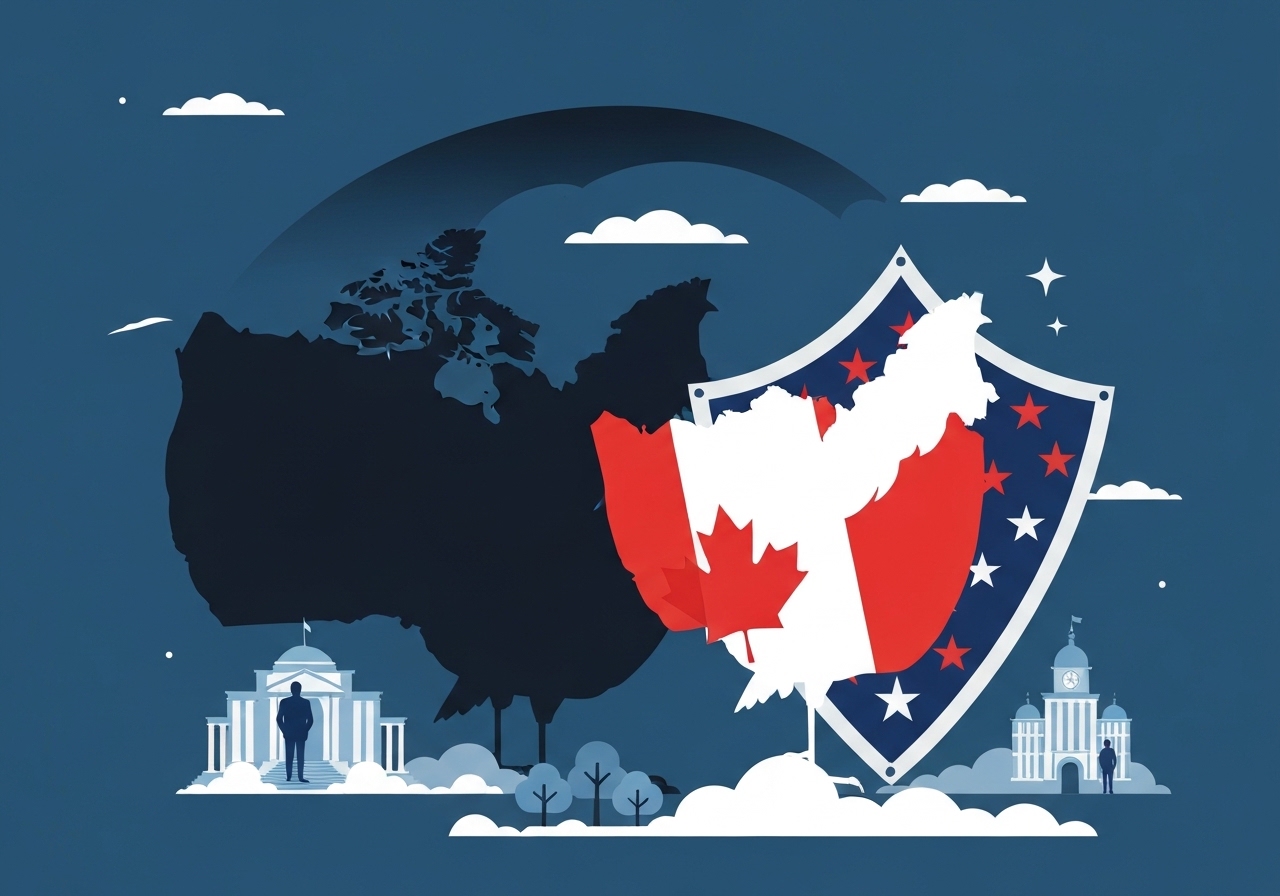
Lead: On Jan. 22, 2026, Prime Minister Mark Carney returned from the World Economic Forum in Davos and addressed his cabinet in Quebec City, outlining a clearer, more independent direction for Canada. He framed the country as an example of openness and security at a time of rising protectionism, urging middle powers to coordinate a course distinct from the world’s superpowers. Carney — a former central banker who became prime minister in 2025 — drew sustained international attention after a 30-minute address in Davos that earned an unusually long standing ovation.
Key Takeaways
- On Jan. 22, 2026, Mr. Carney set out Canada’s course in Quebec City while his cabinet met inside a British-built fortress more than 200 years old.
- Carney’s 30-minute Davos speech prompted an exceptional standing ovation at the World Economic Forum, elevating his profile as an international statesman.
- He urged middle powers to form a distinct path away from reliance on superpowers and framed Canada as a model of openness paired with security.
- Carney contrasted Canada’s pluralistic institutions and broadly shared prosperity with the “rupture” he says is reshaping the global order under President Trump.
- The prime minister’s message signals a potential diplomatic pivot emphasizing multilateral coalitions among like-minded middle powers.
Background
Mark Carney came to the prime ministership in 2025 after a career in central banking and global finance, notably at the Bank of England and the Bank of Canada. His technocratic reputation initially defined him, but his recent speeches have recast him as an active political voice on the world stage. The World Economic Forum in Davos — a gathering of political and economic leaders — provided a high-visibility platform where Carney framed what he described as an irreversible strain in the postwar global order.
Canada’s geopolitical posture has long been shaped by its economic ties to the United States, but also by its role as a multilateral partner in NATO, trade agreements and peacekeeping. Debates about sovereignty, trade dependence and national identity have deep roots in Canadian politics; Carney’s pivot came amid these ongoing domestic conversations and a more confrontational U.S. foreign policy under President Trump. The idea of middle powers coordinating more closely reflects a broader international search for alternatives to a binary great-power alignment.
Main Event
At Davos this week, Carney delivered a roughly 30-minute address that resonated with many attendees and concluded with sustained applause. The speech was widely reported as unusually candid for a sitting prime minister at that forum, calling attention to what he characterized as a durable fracture in international norms linked to shifts in U.S. policy. Delegates and commentators described the reception as exceptional for the forum’s typically restrained atmosphere.
Less than 24 hours after Davos, Carney returned to Ottawa and traveled to Quebec City to speak where his cabinet was meeting. Speaking inside an old British fortification, he emphasized Canada’s commitment to remain both open to the world and secure at home. He framed Canada as a pluralistic democracy that protects vulnerable populations while seeking broadly shared economic prosperity.
Carney explicitly urged other middle powers to cooperate in charting an independent course rather than leaning exclusively on the policies or protections of superpowers. He contrasted that stance with leaders who, he suggested, either curry favor with larger powers or avoid confrontation for fear of reprisals. The remarks were presented as both a value statement and a strategic orientation for Canada’s foreign policy.
Analysis & Implications
Politically, Carney’s speeches at Davos and in Quebec City mark a notable rebranding from technocrat to geopolitical actor. That repositioning can broaden Canada’s diplomatic options, allowing Ottawa to pursue issue-based coalitions on trade, climate, and technology standards with like-minded states. Building such coalitions, however, requires concrete policy instruments — trade diversification, investment in supply-chain resilience, and targeted diplomacy — that go beyond rhetorical leadership.
Economically, any deliberate move to lessen relative dependence on a single partner would be a long-term undertaking. Canada’s trade and investment links with the United States remain substantial; shifting markets and forging alternatives will take sustained negotiation and likely transitional costs. Domestically, the strategy may enjoy broad appeal among constituencies that value sovereignty and multicultural openness, but it could also provoke pushback from sectors that rely heavily on U.S. market access.
Internationally, Carney’s call for middle-power coordination could influence other countries with similar profiles — for instance, members of the G7 outside the U.S., parts of the European Union, Japan, Australia and select emerging economies. The effectiveness of such an alignment will depend on whether these partners are willing to translate dialogue into shared policies and whether Canada can offer concrete leadership without overcommitting its limited diplomatic and economic resources.
Comparison & Data
| Aspect | Carney (2025–26) | Recent Canadian Norm |
|---|---|---|
| Professional background | Central banker, global finance | Career politicians / varied |
| International posture | Advocate for middle-power coordination | Close alignment with traditional allies |
| Public profile | Raised after Davos 30-minute address | Traditionally lower-profile on global stage |
The table highlights contrasts between Carney’s profile and prior Canadian practice: his finance and central-bank background, a high-profile Davos moment, and an emphasis on coalition-building among middle powers. These differences matter for how Ottawa might prioritize trade diversification, diplomatic initiatives and multilateral engagement.
Reactions & Quotes
Canada should show the world that openness and security can be pursued together, even when global norms are under strain.
Prime Minister Mark Carney (paraphrased)
The address was unexpected in its bluntness and has broadened the conversation among mid-sized democracies about alternatives to binary great-power alignments.
Independent foreign policy analyst (paraphrased)
Business and trade groups will be watching whether Ottawa pairs rhetoric with new measures to reduce exposure to single-market risks.
Trade-sector representative (paraphrased)
Unconfirmed
- Whether Carney has specific formal agreements underway to create a new middle-power coalition — no public multilateral pact has been announced yet.
- Any immediate, concrete changes to Canada’s trade or defence posture in the coming weeks remain unannounced and subject to internal cabinet deliberations.
- How the White House or President Trump will respond to this rhetorical shift was not addressed in Carney’s public remarks and remains uncertain.
Bottom Line
Mark Carney’s consecutive speeches in Davos and Quebec City have repositioned him as a prominent voice advocating that Canada pursue a distinct, principled course in a fracturing global order. His message appeals to audiences that value pluralism, shared prosperity and rules-based cooperation while signaling willingness to explore new multilateral partnerships among middle powers.
The practical impact of that repositioning will depend on whether Ottawa converts rhetoric into policy: trade diversification, diplomatic initiatives and targeted investments to reduce strategic dependence. Observers should watch for specific policy proposals from Carney’s government and for signals from potential partners about their readiness to join a coordinated middle-power approach.
Sources
- The New York Times — News report on Carney’s Davos speech and Quebec City remarks (news)
- World Economic Forum — Forum hosting Davos sessions and speaker programs (official organization)
- Reuters — International photo and wire agency (news agency)