
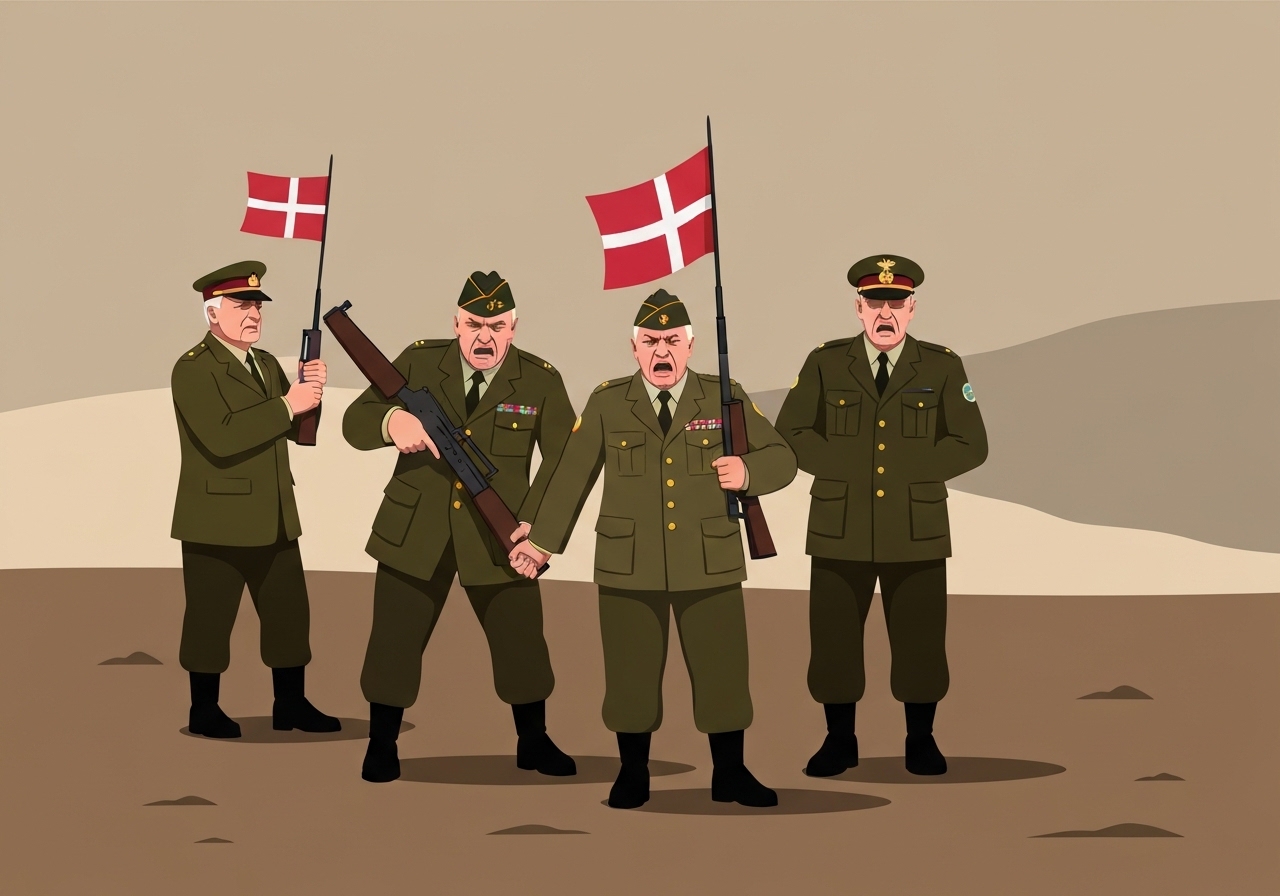
Lead: Danish veterans who served alongside US troops say they feel shocked and betrayed after US President Donald Trump publicly threatened to pursue ownership of Greenland and later signaled a negotiated framework following talks on Jan. 24, 2026. The remarks and the subsequent U-turn have strained ties between Denmark, its autonomous territory Greenland, and longstanding US partners. Veterans in Greenland and Denmark report fear and dismay that an ally would pose a geopolitical threat to their homeland. The episode has prompted diplomatic pushback in Europe and renewed debate about military basing and sovereignty in the Arctic.
Key Takeaways
- President Donald Trump publicly suggested the US might seek “right, title, and ownership” of Greenland before saying a framework had been formed after Jan. 24 meetings; details remain unclear.
- Danish veterans highlight historical cooperation: Denmark sent nearly 20,000 personnel to Afghanistan via ISAF and lost at least 41 soldiers there and eight in Iraq, notable figures given Denmark’s ~6 million population.
- Greenlandic veterans and organizations — including Veteranprojekt Grønland — say threats to Greenland feel like an attack on those who fought beside US troops after 9/11.
- A verbal understanding between Trump and Dutch Prime Minister Mark Rutte (reported in connection with the talks) reportedly calls for updated terms to the 1951 defense agreement and a commitment to bar Chinese and Russian investments in Greenland.
- The US already operates Pituffik Space Base in northwestern Greenland under the 1951 agreement; officials discussed expanding US infrastructure and possibly designating some land with special status.
- European leaders convened an emergency EU-level discussion; Sweden’s Deputy Prime Minister warned, “We’re not out of the woods,” reflecting continuing regional unease.
- Social media responses from NATO-country veterans underscored allied sacrifices in Afghanistan and other missions, pushing back on claims that allies did not contribute on the front lines.
Background
Denmark and the United States have a long record of military cooperation within NATO, UN peacekeeping and US-led operations. Following the September 11, 2001 attacks, Denmark deployed forces to Afghanistan and joined ISAF; over the subsequent years nearly 20,000 Danish personnel served in that theater. The Danish military suffered heavy human costs for its size — at least 41 fatalities in Afghanistan and eight in the Iraq conflict — a toll veterans and families often cite in discussions of alliance reciprocity.
Greenland is an autonomous territory within the Kingdom of Denmark with strategic importance in the Arctic. A bilateral defense arrangement dating from 1951 (updated in subsequent decades) governs the US military presence on the island, including the Pituffik Space Base in northwestern Greenland. Throughout the Cold War the US maintained a larger footprint on the island, drawing down infrastructure as perceived threats receded.
Main Event
The episode began when President Trump publicly floated the idea of acquiring Greenland and, according to reports, used language invoking “right, title, and ownership.” The statement triggered alarm in Nuuk and Copenhagen and drew condemnation from veterans and political leaders alike. Within hours, Trump appeared to step back, announcing he had “formed the framework of a future deal” after meetings on Jan. 24, 2026, with counterparts including Dutch Prime Minister Mark Rutte — a move described by US officials as a shift toward negotiation rather than coercion.
Despite the apparent retreat, veterans say the initial rhetoric felt profoundly disrespectful. Gerth Sloth Berthelsen, a Greenland-born Danish veteran who served alongside Americans in North Macedonia in 1996–1997 and who now works in a non-combat army role, said the public threat undermined trust and left communities unsettled. Other Greenlandic veterans, including Salik Augustinussen and Kununguak Iversen, wrote or spoke publicly to emphasize that Greenlanders answered allies’ calls to arms after 9/11 and should not be treated as bargaining chips.
Officials and sources familiar with the discussions told reporters that the verbal framework would reopen talks about the 1951 defense agreement and could limit Russian and Chinese investment in Greenland while increasing NATO’s role on the island. One NATO official confirmed that proposals on the table included expanding US military infrastructure and discussing land designated with special status, though no written agreement had been produced as of Jan. 24.
Analysis & Implications
Diplomatically, the episode exposes tensions between transactional, high‑level rhetoric and the long-term reciprocity that underpins alliances. For small partners like Denmark and Greenland, past military contributions — disproportionate in per capita terms during Afghanistan and Iraq — create expectations of mutual respect. When those expectations are breached publicly, political costs include domestic backlash, closer EU coordination, and reputational damage for the US among longtime partners.
Strategically, Greenland sits on vital Arctic approaches and hosts important early‑warning and space-tracking facilities. Any change in basing arrangements or sovereign status would have cascading implications for regional defense planning, Arctic governance, and relations with Russia and China. The reported aim to bar Chinese and Russian investment signals a geoeconomic component to military talks and reflects wider Western anxiety about Arctic influence.
For veterans and local communities, the morale impact is immediate. Veterans who served with US troops interpret the episode as a personal slight; organizations such as Veteranprojekt Grønland are emphasizing community support and rehabilitation programs to address anxiety. Politically, Danish leaders will face pressure to protect Greenlandic autonomy while managing alliance relations and potential security tradeoffs tied to expanded NATO or US access.
Comparison & Data
| Conflict | Approx. Danish personnel deployed | Danish fatalities |
|---|---|---|
| Afghanistan (ISAF, 2001–2021) | ~20,000 | 41 |
| Iraq (post-2003 deployments) | Several thousand | 8 |
These figures highlight the relative burden Denmark carried in post‑9/11 coalition operations given a national population near 6 million. Comparisons tweeted by NATO ally service members also reminded audiences that several European nations sustained prolonged commitments and losses in Afghanistan, underscoring the alliance’s shared history of military cooperation.
Reactions & Quotes
Veteran responses have been direct and emotional. Before presenting the quotes below, note that each comment was made publicly by a named veteran or official and has been paraphrased for brevity and context.
“It’s very disrespectful.”
Gerth Sloth Berthelsen, Greenland‑born Danish veteran
Berthelsen said the rhetoric from Washington has sown fear and unease among Greenlandic and Danish communities and that many who served with Americans feel their sacrifices are being disregarded.
“If the US president decides to let the military go invade Greenland, you are attacking me and my family.”
Salik Augustinussen, Greenlandic veteran (open letter)
Augustinussen warned that threats to Greenland resemble an intra‑allied attack for those who fought alongside US and NATO forces after 9/11, invoking Article 5’s lone invocation following the 2001 attacks as a point of historical solidarity.
“We’re not out of the woods.”
Ebba Busch, Sweden Deputy Prime Minister (EU summit comment)
European leaders reacted with alarm and convened emergency discussions; some officials emphasized that the diplomatic fallout could persist even after the US signaled a negotiation-oriented shift.
Unconfirmed
- No written agreement or public text of the so‑called framework existed as of Jan. 24, 2026; specific legal commitments remain unverified.
- Reports that the framework would permanently transfer sovereign Greenlandic land to the United States are not confirmed; discussions reportedly focused on basing access and special status options.
- Attribution of all meeting details to a single interlocutor (for example, that the NATO chief and Mark Rutte acted interchangeably) has inconsistent reporting and requires further clarification.
Bottom Line
The incident has done more than produce headlines: it tested the reciprocal trust that undergirds NATO and bilateral defense relationships. For Greenlandic and Danish veterans who fought beside American troops, the rhetorical shock has real social and political consequences — from community morale to how Copenhagen negotiates security and foreign investment in the Arctic.
In the short term, expect continued diplomatic engagement to clarify any revised defense arrangements and to reaffirm Greenland’s autonomous status. Longer term, the episode is likely to accelerate European coordination on Arctic policy, increase scrutiny of foreign investment in Greenland, and prompt deeper conversations about how alliances balance strategic interests with respect for partner sovereignty.
Sources
- CNN — news outlet reporting on veterans’ reactions and the Jan. 24, 2026 discussions (primary reporting referenced)