
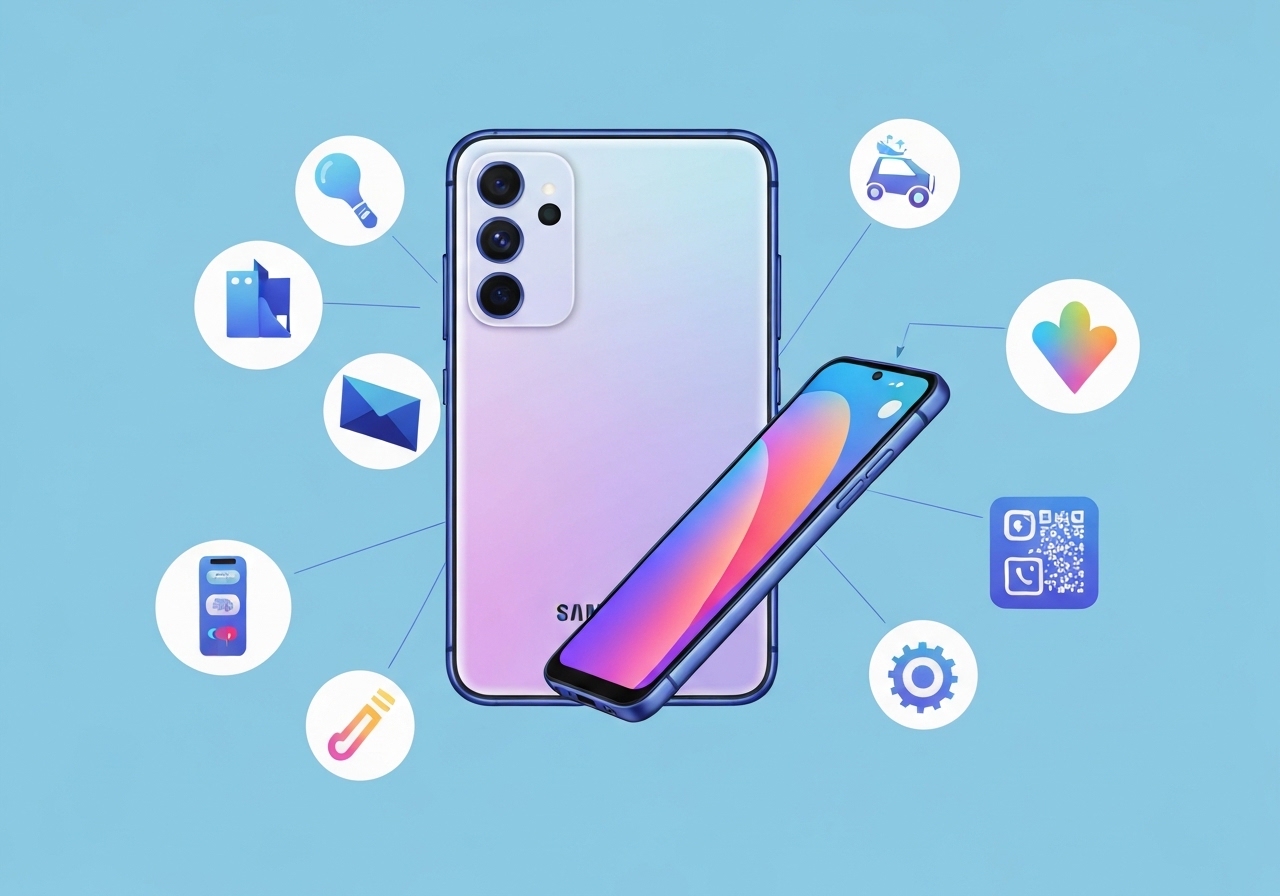
Lead: Samsung’s Galaxy S26 lineup is widely expected to arrive in late February running One UI 8.5, and a stream of leaks points to several features that could persuade an iPhone user to swap platforms. Rumored highlights include a Privacy Display, Qualcomm’s Snapdragon 8 Elite Gen 5, deeper Google Gemini integration, and a possible Galaxy TriFold debut. Early indications suggest the S26 could close some long-standing gaps with the iPhone while introducing Android-first functionality.
Key Takeaways
- Launch timing: The Galaxy S26 family is rumored to be announced at Samsung’s late February Unpacked event and will ship with One UI 8.5.
- Privacy Display: Leaks indicate a built-in privacy screen feature that blocks side viewing angles without a physical protector.
- Processor: U.S. S26 models are expected to use Qualcomm’s Snapdragon 8 Elite Gen 5, which Qualcomm has promoted as their fastest mobile SoC to date.
- Google AI access: Samsung may bundle free access to Google Gemini tools—similar to prior Galaxy offers that included months of AI service.
- Scam detection: Reports suggest Google’s Scam Detection could reach Samsung devices, offering proactive AI screening beyond simple number flags.
- Glass and durability: A next-generation Gorilla Glass is rumored, potentially reducing the need for third-party screen protectors.
- Cameras: Modest hardware tweaks are expected—larger main-aperture and a new 3x telephoto sensor—while image-processing gains may come from the new chipset.
Background
Samsung’s S-series has long been a focal point in the smartphone calendar, and leaks traditionally accelerate in the weeks before Unpacked. This year is no different: images, insider posts, and early hands-on reports have built a running picture of what to expect. The rumored One UI 8.5 preview suggests visual cues borrowed from modern iOS design languages while keeping Android customization at the fore.
Competitive pressure is high. Apple continues to push camera, video and system-on-chip performance with recent iPhone iterations—most notably the iPhone 17 Pro Max—while Google has focused on on-device AI and safety features for Pixel phones. Samsung’s S26 launch is positioned at the intersection of those trends: better AI features, incremental camera upgrades, and distinct hardware innovations to differentiate from both Pixel and iPhone families.
Main Event
Privacy Display is among the most-discussed S26 rumors. Multiple posts attributed to a well-known leaker and short video snippets show a mode that darkens side viewing angles so content is visible only to the person directly in front of the screen. For commuters and crowded public spaces, that could replace aftermarket privacy films as a built-in convenience.
On the silicon front, the Snapdragon 8 Elite Gen 5 is expected to power all U.S. S26 variants. Early benchmarks and vendor statements emphasize improvements in power efficiency, graphics rendering, and on-device AI workloads—areas that directly affect battery life, gaming, and advanced camera processing. Qualcomm’s public messaging frames the chip as a major uplift in mobile compute.
Samsung’s software tie-ins may lean heavily on Google’s AI ecosystem. The Galaxy Z Fold 7 launch offered six months of Google AI One Pro in some regions; similar or expanded Gemini access is widely anticipated for the S26 series. That package would give users extra cloud-based Gemini functionality and could be a material perk for consumers comparing ecosystems.
Other hardware rumors include an upgraded Gorilla Glass formulation intended to boost scratch and drop resistance, and camera changes such as a wider-aperture main lens and a new 3x telephoto sensor. These camera tweaks appear incremental rather than revolutionary, with much of the expected image-quality gains coming from chip-level processing improvements.
Analysis & Implications
If Privacy Display arrives as described, it would be a clear example of Samsung shipping a convenience feature ahead of Apple. That kind of parity-plus innovation is significant: it reduces friction for users who value privacy and spend time in public transit or offices. For consumers ambivalent about ecosystems, discrete features like this can outweigh app- and service-related switching costs.
The inclusion of the Snapdragon 8 Elite Gen 5 could materially change the S26’s competitiveness. Improved on-device AI and battery efficiency would not only bolster everyday responsiveness but also enable richer camera and assistant features without relying on the cloud. For professionals who rely on sustained performance—photojournalists, mobile gamers, power users—chip-level gains translate directly into user experience.
Expanded access to Google Gemini or related AI subscriptions would deepen the practical advantage for Android on AI-driven tasks. If Samsung pairs hardware capable of local AI workloads with a generous cloud AI trial, it creates a two-pronged offer: immediate on-device smarts and extended cloud features. That combination could be persuasive for users prioritizing AI tools in daily workflows.
However, camera leadership remains a contentious battleground. The iPhone 17 Pro Max and Galaxy S25 Ultra have been judged closely by reviewers; the S26 needs not only hardware parity but also software processing that convincingly edges out Apple. If Samsung focuses on novelty (e.g., 8K video) rather than improving commonly used modes like 4K HDR and selfie quality, it may miss the moment to convert experienced iPhone photographers.
Comparison & Data
| Feature | Rumored S26 | iPhone 17 Pro Max (current) |
|---|---|---|
| Privacy display | Built-in, leaked demo | No built-in equivalent |
| Processor (U.S.) | Snapdragon 8 Elite Gen 5 (rumored) | Apple A-series chip |
| AI/cloud offers | Likely Gemini access (months included) | Apple AI services via iCloud/subscriptions |
| Scam detection | Rumored to adopt Google’s system | Limited to number-based warnings |
The table summarizes public claims and widely reported features; it does not assert final specifications. Context matters: software integrations, regional model differences, and carrier offers will shape real-world value.
Reactions & Quotes
“We designed the new chip to deliver significant improvements in on-device AI and sustained performance.”
Qualcomm (official statement)
“Scam Detection on non-Pixel devices could expand protections for millions of users,”
Android Authority (report)
“Privacy Display limits side viewing so content remains private in public spaces,”
Ice Universe (leaker post)
Each of these reactions frames different stakes: Qualcomm highlights performance, reporting outlets stress ecosystem expansion, and leakers visualize user-facing interaction models. Taken together, they explain why speculation has been tightly focused on usability and safety as well as raw specifications.
Unconfirmed
- Whether Samsung will ship the Galaxy TriFold in the U.S. at Unpacked is not confirmed and may be announced later.
- The exact length and scope of any Google Gemini trial bundled with the S26 remain speculative until Samsung’s launch offer is published.
- Claims about the new Gorilla Glass making protectors obsolete are based on leaks and have not been validated by independent testing.
- Specific camera hardware changes—exact aperture values and sensor models—have not been officially confirmed by Samsung.
Bottom Line
For many iPhone users, switching requires more than one standout spec; it requires a compelling combination of hardware, software and services. The Galaxy S26 rumors suggest Samsung is pursuing exactly that mix: incremental camera and glass improvements, a faster SoC for local AI, built-in privacy features, and attractive AI service bundles.
If those rumors prove accurate, Samsung could close several practical gaps that keep some users tied to Apple’s ecosystem—especially in AI-driven features and commuter-friendly privacy. But final judgments should wait for official specifications, independent performance testing, and carrier/region pricing and offers.
Sources
- Mashable (news feature summarizing leaks and hands-on impressions)
- Qualcomm (official corporate/press information on Snapdragon chips)
- Android Authority (reporting on Scam Detection and Android ecosystem developments)
- Ice Universe (leaker posts and short-form previews)
- CES (event coverage noting early Galaxy TriFold hands-on demos)