
Lead
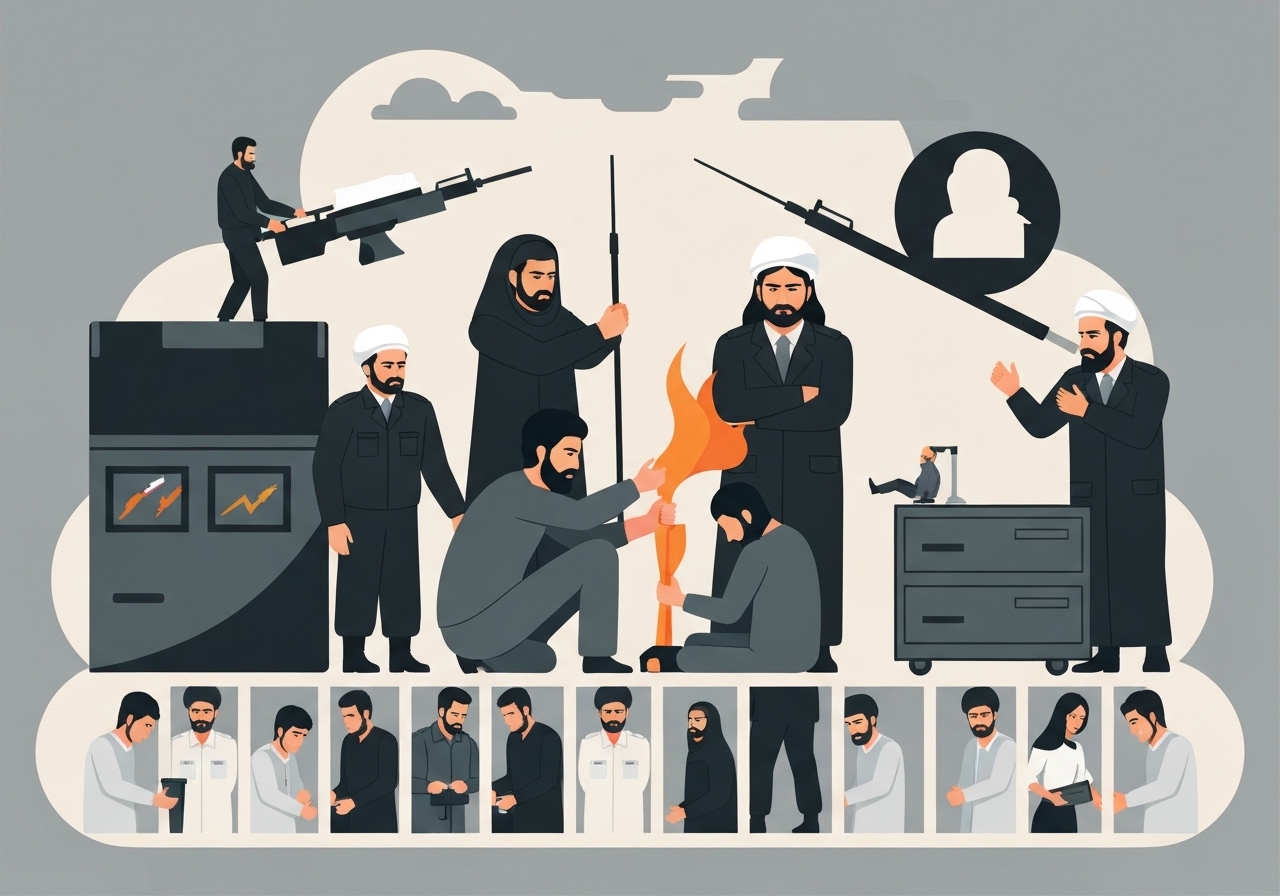
In January 2026 Iranian security forces carried out a nationwide crackdown on mass protests, with concentrated violence in Tehran, Karaj and Isfahan. Witness videos and accounts collected by reporters show live fire from police rooftops, strikes at marches and urban clashes that left many dead or wounded. Officials inside Iran reportedly say a January 9 directive ordered security bodies to extinguish the unrest by any means necessary. Internet and phone disruptions hampered communication even as hundreds of clips and testimonies circulated abroad.
Key takeaways
- Protests began in late December 2025, initially as a bazaar strike in Tehran, then expanded into mass demonstrations across the country by early January 2026.
- On Jan. 9, 2026, Iran’s supreme leader instructed the Supreme National Security Council to crush the unrest, according to two Iranian officials briefed on the directive.
- Security forces were recorded firing from elevated positions in Tehran; in Karaj an attendee was reportedly struck in the head by live ammunition; in Isfahan residents described alleyway barricades amid gunfire and explosions.
- The government imposed broad internet and phone restrictions during the unrest, but reporters authenticated hundreds of videos and eyewitness accounts shared by Iranians who bypassed controls.
- Riots and arson accompanied many protests: government buildings, commercial properties, mosques and police facilities were reported damaged or set ablaze in multiple locales.
- The death toll rose sharply after mid-January; exact casualty figures remain contested and incompletely verified at the time of reporting.
- External commentary — including reported threats of foreign intervention — helped shape both domestic dynamics and international attention to the unrest.
Background
The demonstrations traced back to late December 2025 when a strike in Tehran’s bazaar spread into wider public grievances. Longstanding economic pressures — including a plunging currency, inflation and employment strain — provided a backdrop for growing public discontent. Those economic grievances interlaced with political frustrations over governance, accountability and past episodes of state force in 2019 and other years, creating a volatile environment for collective action.
As demonstrations swelled in early January, episodes mixed peaceful marches and localized riots. Protest goals were heterogeneous: some demonstrators called for economic relief and reforms, others escalated into attacks on symbols of state authority. Iran’s security architecture — including the police, Revolutionary Guard-affiliated units and centrally coordinated security councils — has historically taken a dominant role during large-scale unrest, and those institutions mobilized rapidly this winter.
Main event
In the opening weeks of January 2026, security forces moved into cities where crowds had formed. In Tehran, multiple videos collected by reporters show shots fired from the roof of a police station into a nearby demonstration; in Karaj footage and local reports document at least one person hit in the head by live ammunition while marching. In Isfahan and other cities, residents reported building barricades and taking shelter as gunfire and explosions echoed through neighborhoods.
On Jan. 9 the supreme leader is reported to have ordered the Supreme National Security Council to suppress the unrest. Two Iranian officials briefed on the directive told reporters that deployments were to use lethal force if needed; those accounts say orders included strict rules of engagement aimed at ending demonstrations quickly. State forces then executed a visible, forceful response across multiple provinces.
Authorities also instituted broad communications restrictions. Internet blackouts and phone disruptions limited real-time sharing inside Iran, yet some citizens used workarounds to send videos and eyewitness descriptions abroad. Journalists and researchers who collected and authenticated those materials say the footage shows direct confrontations and the use of live fire against crowds in several locations.
Analysis & implications
The scale and character of the crackdown have immediate political costs for Tehran. Heavy-handed responses can deter short-term demonstrations but risk deepening popular resentment and delegitimizing state institutions over the medium term. For rulers who rely on coercion and elite loyalty, prolonged unrest raises questions about sustainment: persistent economic stressors and social grievances can produce recurring cycles of mobilization.
Internationally, the crackdown complicates Iran’s diplomatic position. Graphic evidence of lethal force increases pressure from human-rights organizations and democratic governments to demand investigations, sanctions or other measures. At the same time, reported public encouragement or threats of outside intervention can harden domestic political narratives that portray unrest as foreign-instigated, which the state may use to justify harsher measures.
Economically, renewed instability threatens investment, trade and the informal economy; sustained disruptions to the bazaar and urban commerce could deepen recessionary trends. Security operations and the prospect of sanctions or diplomatic isolation also carry fiscal and logistical costs that will affect recovery and daily life.
Comparison & data
| Date | Location | Reported action |
|---|---|---|
| Late Dec. 2025 | Tehran (bazaar) | Strike initiates wider public protests |
| Early Jan. 2026 | Multiple cities | Mass demonstrations and some riots |
| Jan. 9, 2026 | Nationwide | Reported directive to security council to crush protests |
| Mid–late Jan. 2026 | Tehran, Karaj, Isfahan | Documented use of live fire; internet restrictions imposed |
The table above maps the outbreak, escalation and state response in a condensed timeline. Reporters authenticated hundreds of citizen videos that show locality-specific incidents; however, comprehensive quantitative counts of injuries and fatalities remain incomplete pending independent verification.
Reactions & quotes
“Security forces were deployed with orders to shoot to kill and to show no mercy,”
Two Iranian officials briefed on the Jan. 9 directive (reported)
That description, provided to reporters by two officials, was not accompanied by a publicly released written order; the officials said the instruction guided the intensified operations that followed.
“They were firing from the roof; we ran into the alleys to hide,”
Tehran resident (video witness)
Recorded eyewitness accounts like this one were shared on social platforms and collected by journalists despite the communications blackout; such firsthand clips formed part of the evidence pool used to reconstruct events.
“A forceful response now risks longer-term political and economic isolation for Iran,”
Regional analyst (comment)
External analysts warn that the immediate tactical goals of repression may come at strategic cost, deepening isolation and complicating diplomacy.
Unconfirmed
- Exact casualty totals and a comprehensive fatality breakdown remain unverified; independent counts are incomplete and vary across sources.
- The precise wording and formal, written text of the Jan. 9 directive have not been publicly released; reporting is based on accounts from two officials.
- Reports that a foreign leader explicitly threatened military intervention were cited in coverage; the direct communications and their interpretation have not been independently confirmed.
Bottom line
The January 2026 crackdown marks a decisive, violent response by Iran’s security apparatus to protests that began as economic and civic grievances. Video evidence and insider accounts portray a coordinated deployment of lethal force alongside communications blackouts — a combination that has significant human-rights and political consequences.
Short-term, the operations may suppress visible protests; medium- and long-term, however, the use of lethal force risks entrenching opposition attitudes, inviting international scrutiny, and exacerbating economic distress. Observers should watch for independent casualty verification, domestic political realignments, and international diplomatic or economic responses in the coming weeks.
Sources
- The New York Times — news report, collected and authenticated eyewitness video materials and interviews