
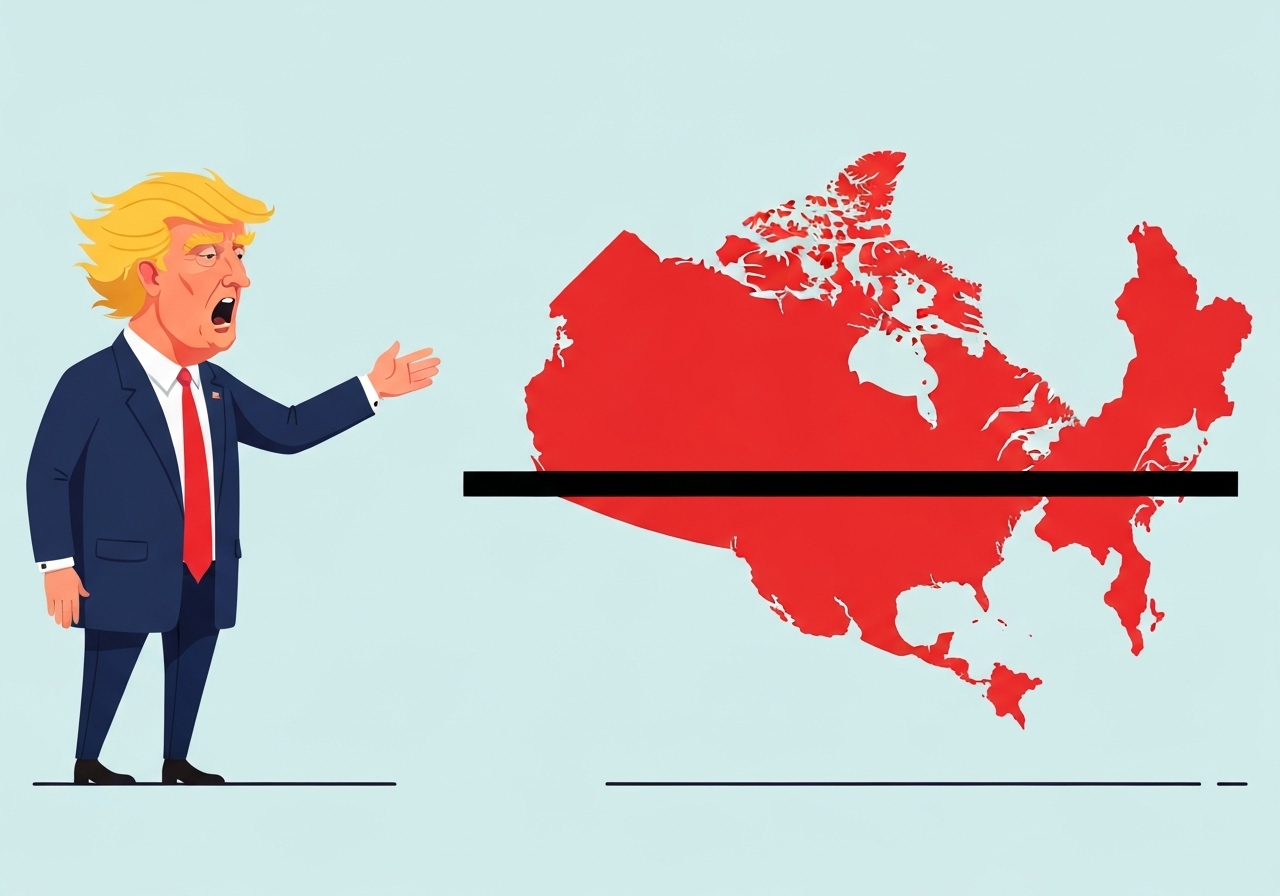
President Donald Trump on Saturday warned that Canada would face a 100% tariff if Ottawa finalizes a trade arrangement with China, deepening diplomatic friction with the United States northern neighbor. The remark followed Mr. Trump withdrawing an invitation to Canadian Prime Minister Mark Carney earlier this week for a Gaza reconstruction council, signaling a swift cooling in bilateral ties. Markets were mostly steady on Friday but futures slid Sunday night as investors prepared for major corporate earnings and a Federal Reserve policy decision this week.
Key Takeaways
- President Trump posted on Truth Social that a completed Canada-China deal would be met with a 100% tariff, a direct threat to cross-border trade ties.
- Canada reached a preliminary agreement earlier this month to ease trade barriers with Beijing, prompting the U.S. warning.
- Japan dissolved parliament and set a Feb. 8 snap election, with Prime Minister Sanae Takaichi pledging intervention against ‘speculative or very abnormal’ moves in the yen and government bonds; Japan remains the largest foreign holder of U.S. Treasurys per the U.S. Treasury Department.
- U.S. benchmark markets were mixed on Friday: the Nasdaq rose about 0.28% while the Dow fell roughly 0.58%; U.S. Treasurys were relatively unchanged that day.
- Major tech earnings from Apple, Meta and Microsoft and the Federal Reserve rate decision this Wednesday are expected to influence market direction after Sunday night futures slid.
- India announced plans to cut import duties on EU cars above 15,000 euros to 40% from as high as 110%, with a phased move toward 10%, according to Reuters sources.
- Sector moves included Goldman Sachs down nearly 4%, Intel off roughly 17%, Nvidia up about 1.5% and AMD up more than 2% on Friday; Europe’s Stoxx 600 closed mostly flat and headline gold prices moved past $5,000 on Monday.
Background
U.S.-Canada trade relations have long been intertwined through supply chains, energy flows and extensive two-way investment, making tariff threats between the neighbors unusually disruptive. The White House has previously used tariffs as leverage across multiple partners, and the recent exchange follows Ottawa’s exploratory steps to reduce barriers with Beijing earlier this month. Historically, tariffs between close allies have raised the cost of imported goods, strained bilateral cooperation and prompted retaliatory measures, as seen in past U.S.-Canada disputes over softwood lumber and dairy access.
At the same time, global macrolinkages give this spat broader market relevance: Japan is a major holder of U.S. Treasurys, so shifts in Japanese bond yields can influence U.S. funding conditions. Domestic politics in Japan led to a snap election and an explicit intervention pledge from Prime Minister Sanae Takaichi, which markets interpreted as a readiness to curb disorderly moves in the yen or bond market. Investors are watching these parallel developments—geopolitical friction in North America and monetary-market signals in Asia—because combined they can change cross-border capital flows and risk pricing.
Main Event
The immediate trigger was Mr. Trump’s Truth Social post on Saturday asserting that Canada would be ‘immediately hit with a 100% Tariff’ should it close a trade deal with China. That public statement followed his decision this week to rescind an invitation to Prime Minister Mark Carney for a council intended to coordinate Gaza reconstruction, a move Canadian officials described as unexpected. Ottawa had announced a preliminary agreement earlier this month to reduce trade frictions with Beijing, leading to domestic and international scrutiny.
Markets initially treated the rhetoric as manageable: on Friday U.S. Treasurys were largely unchanged and major indexes showed little net movement, with the S&P 500 roughly flat, the Nasdaq up and the Dow down. Yet by Sunday night futures had slipped as traders factored in the risk that escalating rhetoric could affect trade flows, corporate supply chains and investor sentiment. The immediate risk assessment among asset managers ranged from limited short-term volatility to a longer-lasting recalibration of U.S.-Canada commerce if tariffs were actually enacted and reciprocated.
Concurrently, Japan announced heavy political activity with a Feb. 8 snap election; Prime Minister Takaichi vowed to counter speculative pressure on the yen and Japanese government bonds after a recent sell-off. Given Japan’s substantial holdings of U.S. Treasurys, higher Japanese yields could prompt repatriation of funds and put upward pressure on U.S. borrowing costs. Investors also have key U.S. earnings reports and the Federal Reserve rate decision to weigh this week, complicating immediate market reactions.
Analysis & Implications
A 100% tariff on Canadian goods would be extraordinary in scale and scope for a major trading partner, potentially doubling prices for affected imports and disrupting integrated North American supply chains. For sectors like automotive, agriculture and energy that depend on cross-border inputs, a sweeping tariff could raise production costs, slow shipments and provoke supply re-routing that would take months to adjust. Canadian exporters would likely seek retaliatory measures or dispute settlement through trade institutions, but those processes are slow and do not eliminate short-term market dislocations.
Financial markets would face a twofold pressure if tariffs were enacted and Japanese yields continued to rise: trade-driven inflationary effects from tariffs could coincide with tighter global financial conditions as capital shifts back to Japan. That combination could lift U.S. interest rates marginally and raise financing costs for corporations already monitoring earnings risks from a tech-centric cycle. Policy makers in Washington and Ottawa would have to weigh domestic political incentives against the economic damage of a tariff standoff, making policy reversals possible but not guaranteed.
For investors, the near-term priority is event risk management rather than long-term structural forecasting. This week s schedule—big tech earnings and a Fed meeting—creates multiple catalysts that can amplify or mute the tariff rhetoric. If markets conclude the threat is primarily political signaling, volatility may remain contained; if further steps follow, estimates of corporate earnings, especially for exporters and supply-chain dependent firms, will be repriced. Internationally, nations monitoring U.S.-Canada frictions may reassess trade strategies and contingency planning, potentially accelerating regional diversification efforts.
Comparison & Data
| Market | Recent move (Friday) |
|---|---|
| U.S. Treasurys | Relatively unchanged |
| S&P 500 | Roughly flat |
| Nasdaq Composite | +0.28% |
| Dow Jones Industrial Average | -0.58% |
| Gold | Above $5,000 |
The table summarizes the snapshot cited over the weekend: U.S. benchmarks were mixed, with technology strength offset by losses elsewhere and safe-haven assets like gold moving higher. Those readings offer context for why futures fell Sunday as traders priced in geopolitical and central bank event risk. Historical comparisons show that tariff episodes with close allies typically produce sharper short-term market reactions than tariff threats involving distant trading partners because of the immediate supply-chain exposure.
Reactions & Quotes
White House rhetoric and Japanese policy statements shaped headlines over the weekend, prompting official and market responses that emphasized both domestic politics and international financial stability.
‘If Canada makes a deal with China, it will immediately be hit with a 100% Tariff.’
President Donald Trump, Truth Social post
That post was the clearest public signal of the administration s intentions and raised questions in Ottawa about next steps. Canadian officials have described ongoing talks with Beijing as exploratory, and the U.S. statement added urgency to diplomatic exchanges.
‘The government will take necessary steps against speculative or very abnormal market moves.’
Prime Minister Sanae Takaichi, public remarks
Takaichi s comment accompanied the dissolution of parliament and an election timetable; markets read it as a commitment to intervene if yen or bond moves threatened financial stability. Analysts noted that such intervention language tends to calm investors in the short term but can also indicate political sensitivity to market volatility.
Explainer/Glossary
Unconfirmed
- No official U.S. tariff legislation or executive order had yet been published detailing a 100% tariff schedule or effective date at the time of reporting.
- Reports that Ottawa had finalized a binding trade accord with Beijing remain preliminary; Canada described earlier steps as a preliminary deal rather than a concluded treaty.
- It is unconfirmed whether Japan would execute direct market operations immediately following the election call or would wait for administrative coordination; details on timing were not specified.
Bottom Line
The weekend s developments put a spotlight on how political signaling can quickly become market-relevant when it involves major trading partners and intersecting global risks. A public threat of a 100% tariff against Canada raises the stakes for bilateral cooperation and would have tangible costs for cross-border commerce if carried out, but legal, political and economic constraints make immediate implementation uncertain. Investors should treat the episode as an elevated event-risk scenario this week, with outcomes to be clarified by any formal U.S. actions, Canadian responses and the Federal Reserve s policy announcement.
Beyond immediate market moves, the episode underscores a broader trend: geopolitics and domestic political calendars are increasingly intertwined with financial stability. Policymakers in Washington, Ottawa and Tokyo will face choices that balance short-term political objectives against the economic costs of disruptive measures; how they act will shape market pricing in the days and weeks ahead.