
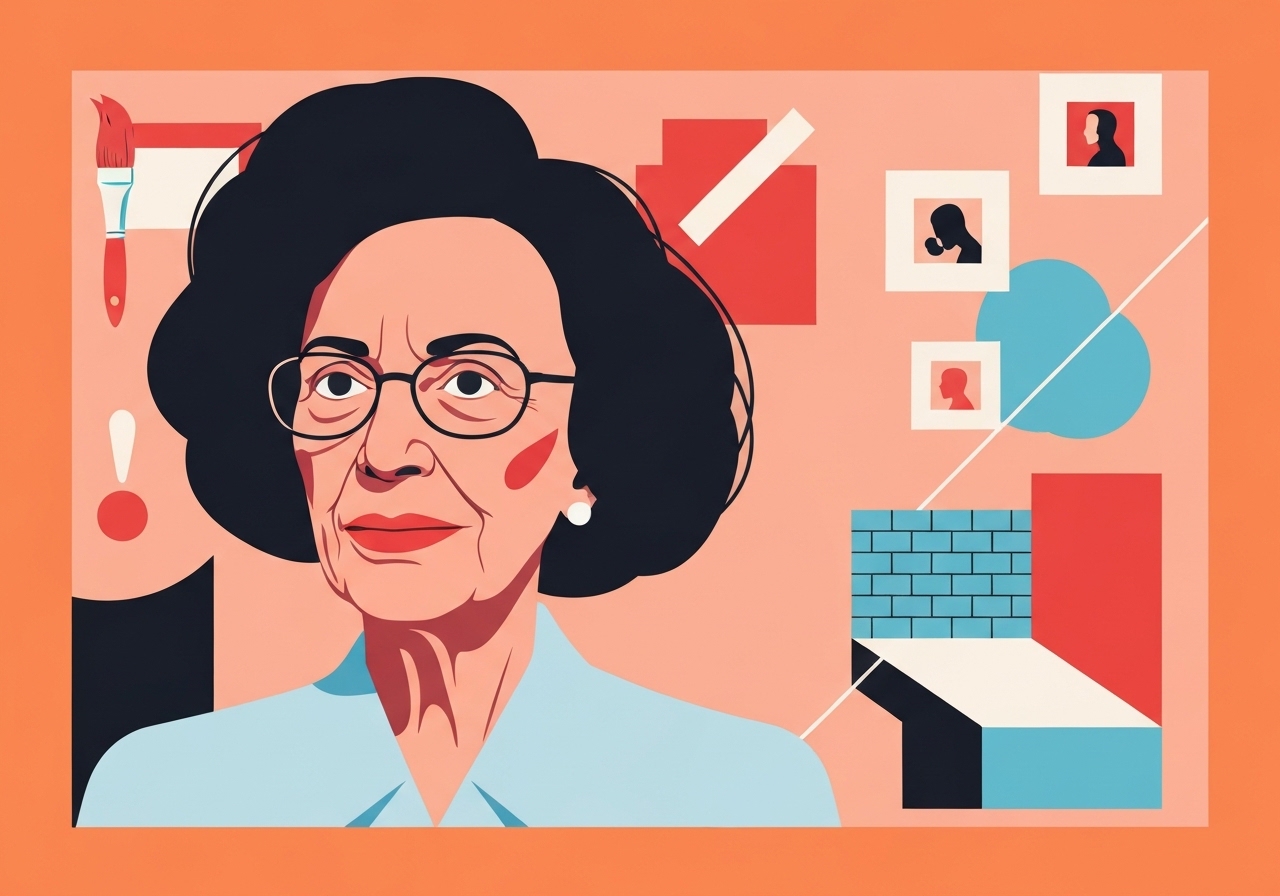
Marian Goodman, the New York dealer who introduced postwar European avant‑garde artists to American audiences and reshaped the international gallery circuit, died on Jan. 25, 2026, in Los Angeles. She was 97. A spokeswoman for her gallery confirmed the death and said Ms. Goodman had moved to Los Angeles to be near her son. Over five decades she promoted difficult, often challenging work—most notably by German painters whose reputations she helped establish in the United States.
Key takeaways
- Marian Goodman died on Jan. 25, 2026, in Los Angeles at age 97; the gallery confirmed the death through spokeswoman Linda Pellegrini.
- Goodman opened Marian Goodman Gallery in 1977 on 57th Street in New York, intentionally bringing European artists to the U.S. market.
- She promoted artists who used difficult or nontraditional media, and was instrumental in introducing Anselm Kiefer and Gerhard Richter to New York collectors in the 1980s.
- Her programming contributed to a broader debate in the 1980s about New York’s centrality in the global art world as European artists rose in prominence.
- Goodman expanded her practice beyond painting, supporting photography, film and other contemporary media that were often neglected by the market.
- Her gallery remained a reference point for curators, museums, and major collectors across Europe and North America through the late 20th and early 21st centuries.
Background
Marian Goodman opened her eponymous gallery in New York in 1977 at a moment when American artists and New York institutions dominated the market. Europe had not yet reclaimed the international visibility it later achieved after World War II, and many European figures remained underexposed to U.S. collectors. Goodman set out to change that balance by representing and staging early shows for leading European voices, often before their market value was secure. Her choices reflected aesthetic conviction more than short‑term sales, and she cultivated relationships with artists, curators and museum directors to build long‑term institutional recognition.
The gallery’s early program mixed challenging painting with experimental practices that did not always fit commercial expectations. Goodman looked beyond immediate market trends, supporting artists who worked in photography, film and installation as well as painting. That editorial stance positioned the gallery as a bridge between museum interest and private collecting, helping some artists to find institutional platforms that validated their work. Over the following decades her roster and exhibitions influenced auction markets and museum retrospectives alike.
Main event
The death, announced Jan. 25, 2026, was confirmed by Linda Pellegrini, a spokeswoman for Marian Goodman Gallery; Ms. Goodman had been living in Los Angeles in recent years to be near family. The gallery, founded in 1977 on Manhattan’s 57th Street, became a key venue for the first U.S. presentations of several major European artists. In the 1980s her exhibitions of Anselm Kiefer and Gerhard Richter were pivotal, introducing New York audiences to work that addressed Europe’s wartime past and modernist legacies.
Kiefer’s large, materially complex canvases—often incorporating straw, lead and scorched surfaces—challenged viewers with their historical intensity and moral charge. Richter’s work, ranging from photorealistic painting to abstractions, likewise demanded new modes of critical engagement. At the time these artists were not guaranteed commercial success in New York; Goodman’s early advocacy helped shift museum programming and collector interest toward them by the end of the decade.
Goodman also represented practitioners who largely rejected painting for photography, film and conceptual practices, expanding the gallery’s purview. Her willingness to show work that was hard to display or sell changed expectations about what a major commercial gallery could champion. Over the 1980s and 1990s, that editorial breadth contributed to discussions about the geographic distribution of cultural authority, with some commentators noting Europe’s renewed visibility on the global art stage.
Analysis & implications
Goodman’s career illustrates how a dealer’s curatorial choices can alter canons and market dynamics. By presenting difficult European work to New York audiences, she accelerated museum exhibitions and scholarship that validated those artists for collectors and institutions. Dealers do not act alone, of course; Goodman’s impact depended on close collaboration with curators, critics and artists themselves, but her reputation for intellectual rigor gave her selections institutional weight.
Her support of nontraditional media also foreshadowed contemporary collecting practices that prize cross‑disciplinary work. As photography, film and installation gained museum attention, their market value and institutional prominence followed—often because dealers like Goodman were willing to underwrite early exhibitions and to sustain relationships during slow market cycles. That pattern remains visible today in how museums incubate audiences for emerging practices before auction markets respond.
On a broader level, Goodman’s work contributed to shifts in the perceived geography of the art world. The 1980s debate about New York’s primacy reflected a redistribution of attention toward Europe and other centers; Goodman’s transatlantic practice helped create a more polycentric art ecosystem. For contemporary galleries and curators, her model underscores the long timeline required to establish artists and movements beyond immediate market pressures.
Comparison & data
| Item | Detail |
|---|---|
| Gallery founded | 1977, 57th Street, New York |
| Notable artists introduced in U.S. | Anselm Kiefer, Gerhard Richter (1980s) |
| Age at death | 97 (died Jan. 25, 2026) |
The table above highlights the basic timeline of Goodman’s public interventions: a 1977 foundation, landmark introductions in the 1980s, and a career spanning multiple artistic generations. Those anchors help explain why institutions and markets responded over years rather than months: museum exhibitions, critical literature and collecting patterns unfolded on different timelines, and Goodman’s gallery served as an organizing reference across them.
Reactions & quotes
I realized that everyone was looking in the wrong direction.
Marian Goodman, quoted in ARTnews, 2000
She played a major role in bringing avant‑garde European art to prominence in the 1980s.
The New York Times (obituary)
Unconfirmed
- Immediate long‑term market impact: it is too soon to quantify how Goodman’s passing will influence auction prices or dealer strategies for artists she represented.
- Claims that New York permanently lost its centrality in the 1980s remain debated among scholars and market analysts; historical and market data offer mixed interpretations.
Bottom line
Marian Goodman’s career was defined by editorial conviction: she chose artists and media that many contemporaries overlooked, and she sustained those commitments even when commercial rewards were uncertain. Her gallery’s programming reshaped institutional priorities and helped establish several artists now regarded as essential to postwar art histories.
Her death closes a long chapter in transatlantic gallery practice but also offers a point of reflection for dealers, curators and collectors about the long view in cultural stewardship. Expect museums and galleries to reassess collections and programming tied to her advocacy, and for scholarship to continue refining the history of how markets and institutions recognized European postwar art in the late 20th century.