
Lead
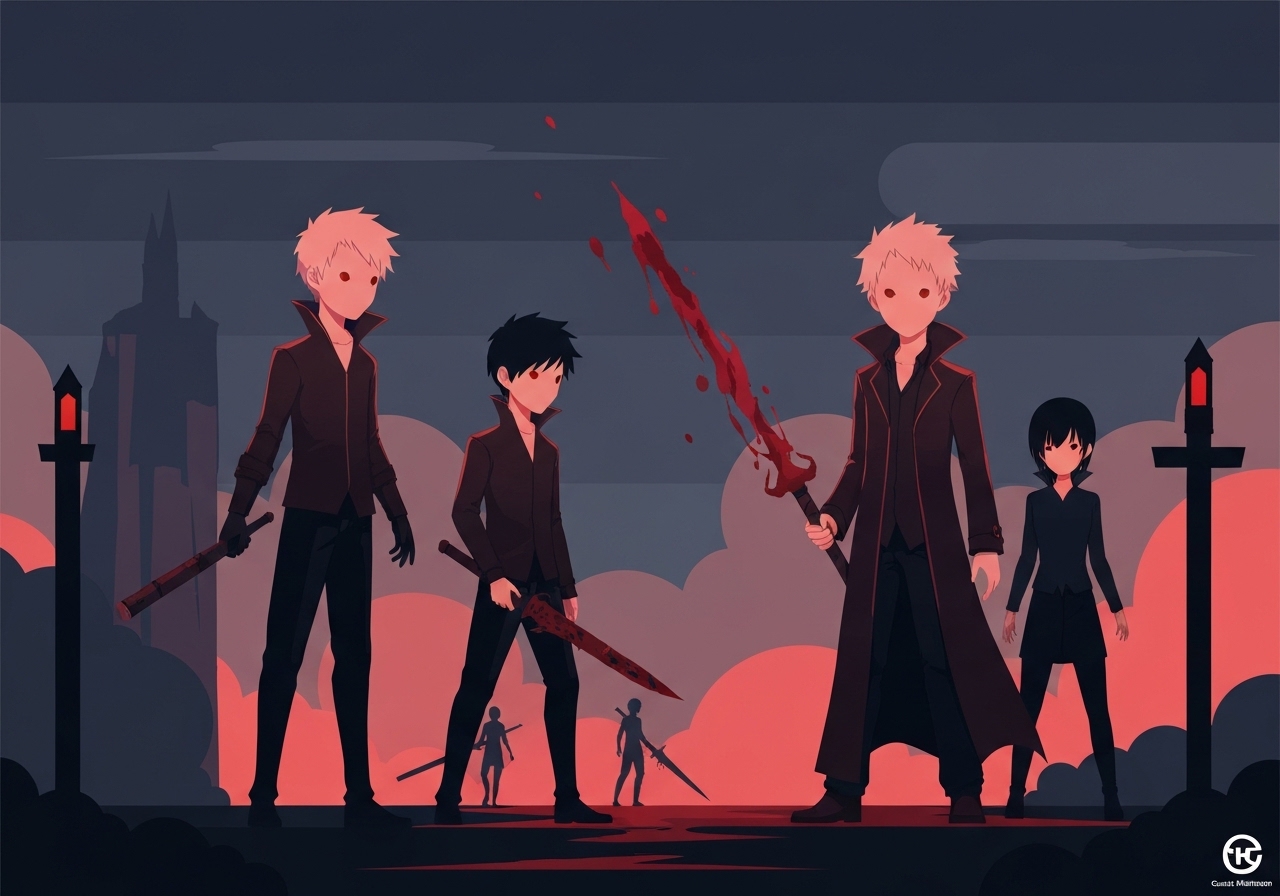
Code Vein II invites players into a vampire-haunted, dual-timeline campaign that alternates between an apocalyptic present and events 100 years earlier. Over roughly 42 hours of play in this review, the experience delivered technical ambition—an expansive character creator, an array of weapon and Blood Code systems—but left the reviewer frustrated by repetitive missions, a jarring visual palette, and uneven combat encounters. The narrative opens with intriguing ideas but becomes weighed down by pacing problems and overlong arcs. By the final boss, the reviewer felt relieved to finish the journey rather than satisfied by it.
Key Takeaways
- Playtime: The reviewer’s full run spanned about 42 hours, covering the main arcs and endgame bosses.
- Structure: The game alternates between the present and scenes set 100 years in the past to explain world events and character transformations.
- Combat systems: Multiple layers—primary and secondary weapons, Jail weapons that leech Ichor, special Ichor attacks, Blood Codes—offer build variety but often go underused in practice.
- Presentation: Visual design mixes baroque and rock-infused motifs with garish color choices; performances and sound design are uneven despite a memorable Baroque-tinged soundtrack.
- Level design: Overworld navigation and bespoke dungeons suffer from repetitive set dressing and unclear map markers, though checkpointing is generally fair.
- Bosses: Some major encounters provide satisfying patterns, but many suffer from camera problems, awkward hitboxes, or attacks that feel inconsistent.
- UI and menus: Inventory and interface design feel cluttered—comparable to late-stage MMOs—and detract from usability.
Background
Code Vein II arrives as a spiritual successor to the 2019 Code Vein, retaining the series’ Soulslike foundations while expanding character customization and narrative scope. The franchise leans heavily on a vampiric premise—Revenants who depend on Ichor and Blood Codes—framed within high-stakes, world-ending scenarios. Fans of the original expected iterative improvements: deeper systems, cleaner presentation, and more varied environments.
Development choices aimed to distinguish the sequel through interleaved timelines: present-day exploration paired with memory sequences set a century earlier. That structure is intended to reveal cause-and-effect across eras and to give context to former allies who have become adversaries. At the same time, the game attempts to broaden mechanical breadth with multilayered weaponry and partner AI companions to complement solo and co-op play.
Main Event
After building a customized Revenant Hunter in an impressively flexible creator, the reviewer was immediately plunged into dense lore populated with numerous proper nouns and jargon. Those worldbuilding touches occasionally illuminate motivations, but frequent exposition scenes—many presented as ghostly memory corridors—become circuit-breakers to momentum rather than immersive revelations. The back-and-forth between timelines initially adds variety, but the novelty fades as objectives repeatedly funnel the player through the same load-cutscene-load loop.
Exploration suffers from unclear overhead navigation. Overworld markers must be neutralized to clarify maps, and traversal—whether on foot or by motorcycle—often feels like a chore. Dungeons, while bespoke, reuse a narrow palette of locations (power plants, labs, prisons) and enemies that rapidly lose distinctiveness. Checkpoints are reasonably placed, and collectible retrieval after death is forgiving, which tempers some of the frustration.
Combat delivers mixed results. The systems are rich on paper: primary and secondary weapons, Jail weapons that drain Ichor, Ichor-powered special attacks, Blood Codes that overhaul stats, consumables, throwables, and a supportive AI partner that can buff or fight. In practice, enemy encounters rarely incentivize deep experimentation; the fastest route through many fights was repeating a heavy-weapon rhythm. Some arc-final bosses reward pattern-learning and offer compelling movesets, but too many encounters are hampered by camera framing issues and inconsistent hitboxes.
Presentation is discordant. The soundtrack—notably rock-tinged Baroque elements—occasionally lifts scenes, but voice performances and animation often fail to sell dramatic stakes. UI and menu systems are dense, giving the impression of MMO-derived clutter rather than streamlined RPG ergonomics. By the final act, the reviewer found the combination of presentation and repetitive design wearisome rather than absorbing.
Analysis & Implications
Mechanically, Code Vein II demonstrates ambition: the interplay of Ichor-based specials, Blood Codes, and Jail weapon mechanics could support deep metagame variety. However, systems require meaningful encounters to incentivize experimentation. When enemy variety and encounter design are thin, the most elaborate tools default to being optional cosmetics rather than substantive choices. This undercuts the title’s potential to differentiate itself within the Soulslike field.
Artistically, the game struggles to reconcile competing aesthetic directions. The clash between gothic, baroque, and garish anime-influenced visuals creates a tone that some players may find striking, but for many it reads as inconsistent and visually fatiguing. Audio and voice work show flashes of effectiveness, yet uneven performances make key emotional beats less resonant, reducing narrative payoffs across long arcs.
From a user-experience perspective, cluttered menus and opaque map mechanics raise friction at the moments players most need clarity. Those design costs are especially consequential in a genre where repeated death and retry loops are core to progression; when recovery and navigation feel tedious, player tolerance for repetitious content drops quickly. For developers, the lesson is that breadth of systems must be matched by encounter design and presentation that create demand for those systems.
Comparison & Data
| Metric | Code Vein (2019) | Code Vein II |
|---|---|---|
| Review playtime (this run) | — | ~42 hours |
| Narrative structure | Single timeline | Dual timeline (present + 100 years past) |
| Customization depth | Strong | Expanded (Blood Codes, Jail weapons) |
| Enemy / dungeon variety | Moderate | Per reviewer: repetitive, limited sets |
The table highlights where the sequel adds systems (notably Blood Codes and Jail weapons) and adopts a dual-timeline storytelling approach not present in 2019’s entry. However, according to this reviewer’s experience, additions did not translate into consistently more engaging encounters. The single quantified data point—approximately 42 hours—represents a full run across the game’s arcs and informed the assessments of pacing and repetition.
Reactions & Quotes
“After many hours, the systems feel underleveraged because the encounters rarely demand them,”
Game Informer (review)
This summarizes the reviewer’s core complaint: mechanical depth exists, but design rarely compels use of that depth. The statement underscores a gap between systems design and encounter architecture.
“Some arc-ending bosses reward pattern learning, but camera and hitbox issues undercut many fights,”
Game Informer (review)
The reviewer emphasized that while a subset of bosses provided satisfying learning curves, technical and design inconsistencies reduced the overall impact of those encounters.
Unconfirmed
- Whether post-launch patches will resolve camera and hitbox inconsistencies highlighted in boss encounters remains unverified at review time.
- Claims that future updates will add new enemy types or overhaul dungeon variety were not substantiated by the review and lack official confirmation.
Bottom Line
Code Vein II is an ambitious title that piles on systems and a nonstandard dual-timeline narrative in an effort to expand the franchise. On paper, many of these additions should broaden playstyles and deepen engagement; in practice, repetitive encounters, uneven presentation, and technical rough edges limit the game’s ability to make those systems meaningful.
For players attracted to deep customization and a robust character creator, Code Vein II offers tools worth exploring—especially for those willing to push through early monotony. For players prioritizing polished pacing, varied encounter design, and consistently coherent presentation, this installment will likely feel like a missed opportunity rather than a triumphant evolution of the series.