
Lead
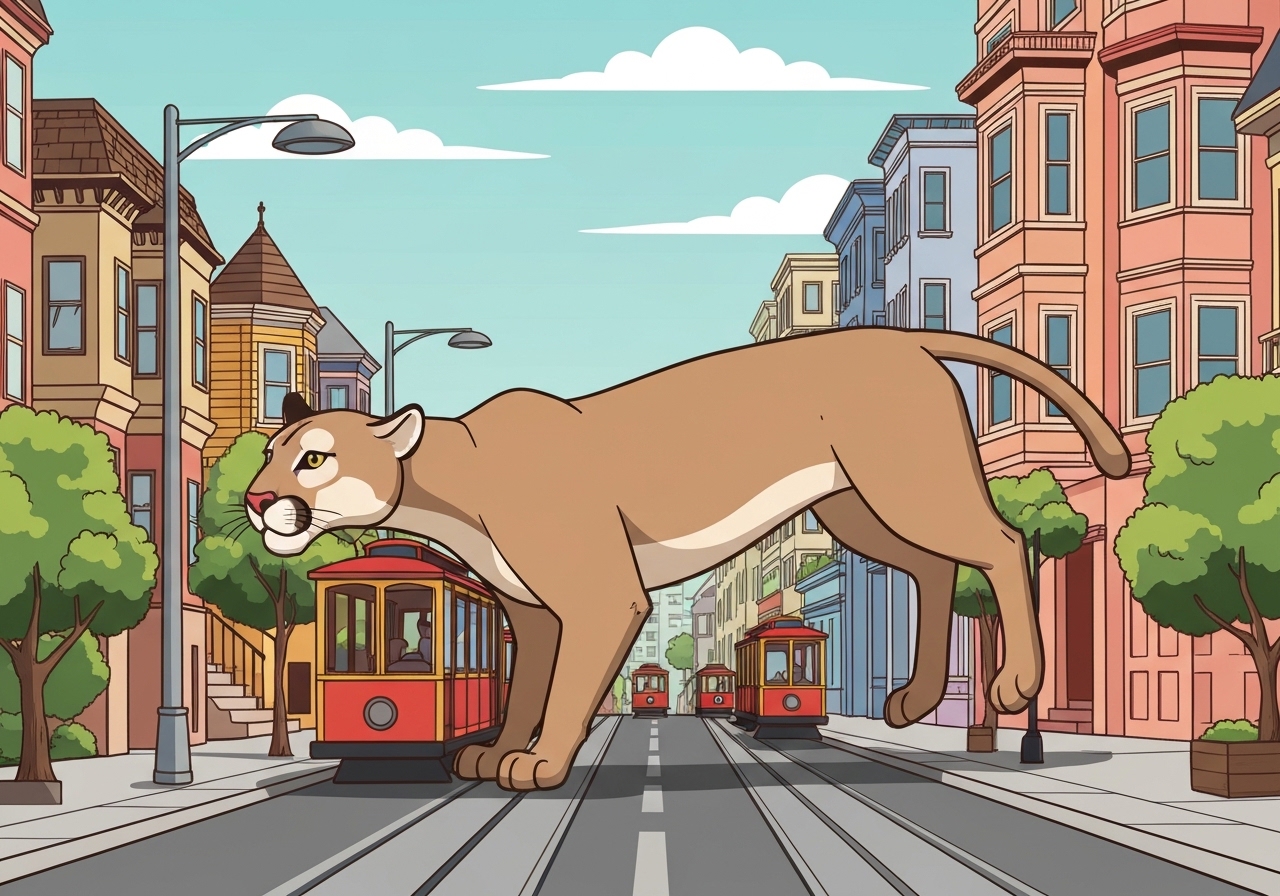
Early on Jan. 26, 2026, a mountain lion was seen near the corner of Sacramento and Gough streets in San Francisco’s Pacific Heights and filmed as it crossed toward Lafayette Park. San Francisco Animal Care and Control issued an alert at about 6:20 a.m., saying wildlife handlers were on scene and managing the situation. Park rangers and California Department of Fish and Wildlife staff swept Lafayette Park later that day, briefly closing it before reopening with warning signs and ranger presence. Officials said the animal appears young and possibly lost, but they did not immediately confirm capture.
Key Takeaways
- A mountain lion was observed and videotaped near Sacramento and Gough in Pacific Heights on Jan. 26, 2026; the sighting was reported to Animal Care and Control at about 6:20 a.m.
- Responders included San Francisco park rangers, Animal Care and Control officers, and staff from the California Department of Fish and Wildlife, who temporarily closed Lafayette Park for a sweep.
- Officials described the cat as likely about one year old and possibly disoriented or lost; they indicated it may move south and exit the city on its own.
- Additional public reports placed a sighting later that day near Pacific Avenue and Octavia Street, prompting expanded advisories to residents.
- Rangers reopened Lafayette Park after a search and posted warning signs while maintaining a visible presence to inform park users.
- Residents recorded and shared cellphone video of the animal; social posts prompted city agencies to coordinate the response.
- The last confirmed mountain lion sighting inside San Francisco occurred in 2021 in Bernal Heights.
Background
Mountain lions (Puma concolor) have an extensive range across California, but sightings inside dense urban neighborhoods remain rare and attract swift public attention. As development and habitat fragmentation push wildlife into closer contact with people, urban encounters — while still uncommon — have become more visible through smartphones and social platforms. San Francisco’s steep, vegetated parcels and connected green corridors provide occasional routes for large mammals moving through or across the city.
Local authorities have established protocols for large carnivore sightings that prioritize public safety and animal welfare, coordinating between municipal animal control, park services and state wildlife agencies. Historically, most large-cat occurrences near metropolitan areas involve transient juveniles dispersing from inland ranges; agencies often monitor and avoid confrontation unless the animal is injured or poses imminent danger. The 2021 Bernal Heights sighting is the most recent confirmed case inside city limits prior to this event.
Main Event
On the morning of Jan. 26, a resident filmed a large cat crossing near Sacramento and Gough and reported the observation to neighbors and Animal Care and Control. The footage shows a slim, agile puma crossing a street and scaling a low wall toward the grassy slopes of Lafayette Park, avoiding passing cars with headlights on. Animal Care and Control issued an early-morning alert at roughly 6:20 a.m., noting wildlife handlers were at the scene and managing the response.
Park rangers, city animal-control officers and California Department of Fish and Wildlife personnel convened at Lafayette Park. Officials conducted a search of the park and closed it temporarily Monday afternoon to reduce public exposure while teams swept high-visibility areas. After the sweep found no animal in the open, staff reopened the park with posted warnings and rangers stationed to inform visitors directly.
Officials told the public the cat appeared to be about one year old and likely disoriented or transient, and they suggested it might continue south and leave San Francisco without intervention. Later in the day, additional reports placed a mountain-lion sighting closer to Pacific Avenue and Octavia Street, widening the area of concern and prompting further advisories to neighborhood residents.
Analysis & Implications
Urban mountain lion sightings, while uncommon, reveal tensions between growing human populations and native predators whose juvenile dispersal can carry them into developed areas. A young puma dispersing from inland ranges can cover many miles; in cities such movements are often temporary but pose management challenges for public-safety teams and wildlife agencies. The likely age estimate — about one year — aligns with the dispersal phase when juveniles leave their natal range to establish new territory.
From a public-safety perspective, agencies must balance minimizing stress to the animal with preventing risky interactions. Noninvasive monitoring and public advisories are typical first steps unless the animal shows aggression, is injured, or is habituated to people. Repeated sightings in residential zones, however, can necessitate escalated responses, including capture or relocation if experts judge the animal a sustained threat.
Ecologically, these incidents underscore the importance of connected habitat corridors and the consequences of urban expansion into wildlife ranges. For city managers, they also highlight the need for clear communication plans, rapid interagency coordination, and community guidance on how to reduce attractants and respond when encountering large wildlife. Economically, the direct costs are modest — staff time, signage, and patrols — but the reputational and social impacts on neighborhoods can be substantial, driving demand for more intensive wildlife management resources.
Comparison & Data
| Year | Neighborhood | Reported Age/Notes |
|---|---|---|
| 2021 | Bernal Heights | Confirmed sighting; single animal |
| 2026 (Jan. 26) | Pacific Heights / Lafayette Park | Video recorded; estimated ~1 year old; transient |
The table above places the Jan. 26 sighting in context with the most recent confirmed San Francisco sighting in 2021. While both involved single animals observed within city neighborhoods, responders noted the 2026 individual appeared juvenile and likely transient — a pattern common in urban incursions.
Reactions & Quotes
Neighborhood reactions were mixed: some residents continued usual park activities with increased awareness, while others curtailed outings with pets. Park users described seeing fewer dogs that afternoon and some families choosing alternate spots for evening walks.
“It was so big — not just a regular cat,”
Madrey Hilton, Pacific Heights resident and witness
Hilton filmed the cat from her car as it moved toward Lafayette Park and reported it after consulting neighbors online. City spokespersons emphasized caution while urging calm, noting that the animal’s behavior suggested avoidance of people.
“There’s a good chance the animal has hunkered down in Lafayette Park,”
Angela Yip, San Francisco Animal Care and Control spokesperson
Yip provided situational updates and explained why the park was temporarily closed for a sweep; officials recommended residents keep pets leashed and to report any further sightings to authorities.
Unconfirmed
- Whether the animal was ultimately captured or removed has not been confirmed by officials as of the latest public updates.
- The exact origin or route the mountain lion took to enter San Francisco remains unverified; no tracking data has been released.
- Reports that multiple animals were present are unsubstantiated; available evidence points to a single individual.
Bottom Line
The Jan. 26, 2026 Pacific Heights sighting represents a rare but plausible event: a likely juvenile mountain lion moving through urban terrain and temporarily entering a neighborhood park. City and state wildlife teams responded with search efforts, temporary park closure and public advisories while prioritizing nonconfrontational management and public safety.
For residents the immediate priorities are simple: heed ranger and agency guidance, keep pets leashed, avoid approaching the animal, and report further sightings promptly. In the medium term, the incident underscores the need for continued coordination between municipal services and state wildlife agencies, public education on coexisting with native predators, and attention to habitat connectivity that can reduce surprise encounters in dense urban areas.
Sources
- San Francisco Chronicle (news)
- California Department of Fish and Wildlife (official state agency)