
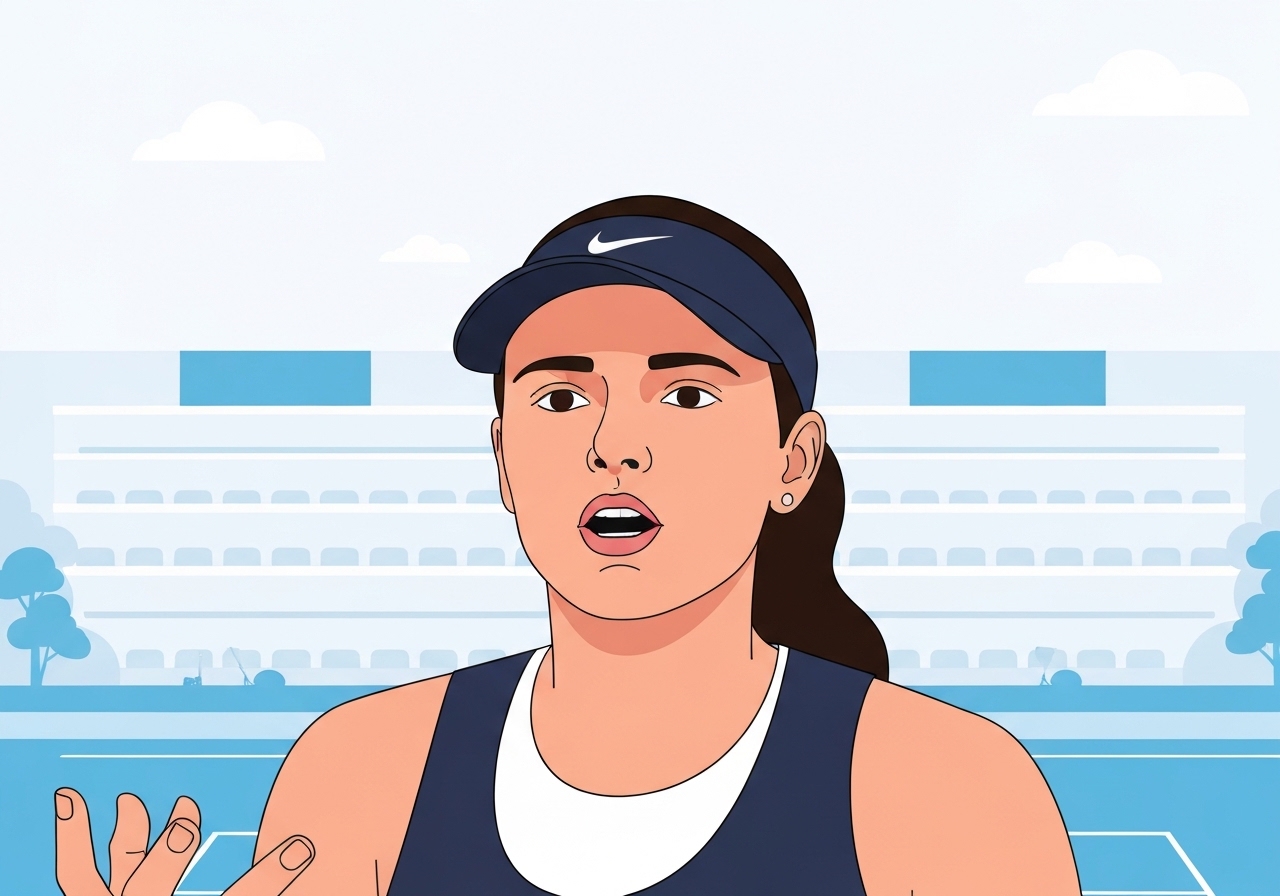
World No. 2 Iga Swiatek urged tournament organizers to create private spaces for players at the Australian Open after cameras captured Coco Gauff smashing a racket in a post-match meltdown that the American said should have remained a personal moment. The episode followed Gauff’s 59-minute quarter-final defeat by Elina Svitolina on Jan. 27, 2026, at Melbourne Park and was recorded and broadcast without the player’s apparent consent. Swiatek, speaking after her own 7-5, 6-1 quarter-final loss to Elena Rybakina, said the episode highlights an increasingly intrusive environment off court. Several players, including Amanda Anisimova and Jessica Pegula, called for a reassessment of camera coverage in non-competitive areas.
- Gauff retreated behind a wall near the match-call area after her 59-minute loss on Jan. 27, 2026; cameras filmed the outburst and the footage was shown to viewers worldwide.
- Swiatek, world No. 2, told reporters she wanted more private spaces off court after losing 7-5, 6-1 to Elena Rybakina on Jan. 28, 2026.
- Players say locker rooms remain the only reliably private place at Melbourne Park; several competitors said off-court filming felt pervasive this year.
- Amanda Anisimova said she avoids public areas until she reaches the locker room, noting that not all moments should be publicized.
- Jessica Pegula described the nonstop coverage as an “invasion of privacy” and urged organizers to reduce off-court camera access.
- Swiatek contrasted the Australian Open with Roland Garros and Wimbledon, where she said there are more off-limits sanctuary areas for players.
- No formal policy change had been announced by tournament organizers at the time of reporting; players said they had not received reassurances about new privacy measures.
Background
Televised tennis has expanded beyond match play in recent years: broadcasters and tournament producers routinely capture players in transit, practice courts and mixed zones to meet viewer demand for behind-the-scenes access. That expansion has raised recurring questions about where the boundary should lie between public-facing content and private moments for athletes. Grand Slam venues differ in layout and policy, and what is practical in one stadium may be difficult to replicate in another.
Player concern about off-court exposure is not new. High-profile athletes have previously pushed back when private reactions are filmed or circulated online, arguing that the mental-health toll of constant observation is real. Tournament organizers balance commercial and broadcast interests against athletes’ welfare, but the debate has intensified as social platforms amplify short clips globally within minutes of occurrence. Stakeholders include players, the WTA, tournament management, broadcasters and sponsors, each with different incentives.
Main Event
The sequence that sparked the debate began after Coco Gauff’s quarter-final match on Jan. 27, 2026, when she stepped behind a barrier near the match-call area and repeatedly struck her racket on the ground. According to on-site accounts, the area is not a formal public concourse but sits within the stadium’s internal circulation—close enough for cameras and security staff to observe. Unaware of the potential for the moment to be aired, Gauff later said she expected such reactions to remain private.
Video of the episode was distributed on broadcast and social platforms, prompting immediate player reactions. Swiatek, addressing reporters after her loss the next day, framed the issue in blunt terms and asked whether players are treated like exhibits rather than people. Other players described the footage as a violation because the subject had little control over how and where the clip would be used.
Responses from the playing field were swift. Amanda Anisimova said she keeps to herself until she reaches a locker-room sanctuary, while Jessica Pegula appealed directly to tournament staff to scale back surveillance in non-competitive zones. Players cited instances this year when they felt constantly observed, including being filmed while walking between facilities or when dealing with accreditation or logistical issues.
Analysis & Implications
The dispute highlights a structural tension in modern event production: broadcasters and rights-holders monetize unique, emotional moments, but those clips can clash with athletes’ expectations of dignity and privacy. For the Australian Open—one of the sport’s most-watched events—the commercial incentive to show behind-the-scenes footage is strong, yet the reputational risk of alienating top players is also significant. If leading players perceive Melbourne Park as excessively intrusive, the tournament could face pressure to change camera protocols or risk diminished goodwill.
Mental-health advocacy within elite sport gives additional weight to the players’ complaints. Psychologists and player welfare officers have argued that brief but intense episodes of scrutiny—especially after a loss—can magnify stress and impede recovery. Tournament policies that leave athletes exposed in transitional areas may therefore have consequences both for performance and long-term well-being, beyond the immediate PR fallout.
Operationally, adjustments range from modest (redesignating a few internal corridors as off-limits to cameras) to complex (reconfiguring stadium circulation or renegotiating broadcast plans). Smaller changes could be implemented quickly for player comfort, but meaningful structural change would require coordination among the tournament, broadcasters and sponsors. Absent a clear, enforceable protocol, ad hoc decisions will leave athletes uncertain about where private moments are protected.
Comparison & Data
| Major | Off-court camera restrictions |
|---|---|
| Australian Open | Players report limited sanctuary areas; many internal zones remain accessible to cameras |
| Roland Garros | Designated off-limits corridors and practice areas; players cite more protected spaces |
| Wimbledon | Traditionally stricter on non-competitive access; separate player-only routes and green-flagged sanctuaries |
The table synthesizes player accounts and venue practices discussed by competitors at this tournament; it is not a formal policy audit. Differences reflect stadium design and historical practice: Wimbledon’s enclosed layout and tradition have long supported more player-only corridors, while Melbourne Park’s open-plan precinct and high broadcast demand create more exposure. Any official comparison should be confirmed with tournament rulebooks and broadcast agreements.
Reactions & Quotes
Players and commentators reacted within hours. The context below shows brief statements and their significance to the broader debate.
“Are we tennis players or are we animals in the zoo, where they are observed even when they poop?”
Iga Swiatek (player)
Swiatek used hyperbole to make a blunt point about constant observation; she later clarified she was exaggerating but insisted players need private spaces to process results and recover mentally.
“There are good moments… then, when you lose, there are probably not-so-good moments. The video of Coco that was posted, it’s tough.”
Amanda Anisimova (player)
Anisimova emphasized personal consent and the emotional vulnerability that follows defeat, saying she avoids public areas until she reaches the locker room to protect those moments.
“Can you just let the girls have a moment to themselves? It felt like we were constantly filmed. That’s so unnecessary—an invasion of privacy.”
Jessica Pegula (player)
Pegula framed the issue as a contest between routine broadcasting practices and reasonable bounds for personal space, urging organizers to reduce off-court camera access.
Unconfirmed
- No official policy change from tournament organizers had been announced at the time of reporting; talks between players and management were not confirmed publicly.
- Claims that footage was deliberately targeted for sensational use by rights-holders have not been substantiated; broadcast decisions were not independently verified.
- Reports that fans were zooming in on players’ phones circulated online but lacked confirmation from security logs or tournament statements.
Bottom Line
The episode involving Coco Gauff’s post-match outburst and the subsequent player backlash crystallize a broader tension in modern tennis: how to balance fans’ appetite for candid moments with athletes’ right to privacy. Top players are increasingly willing to pressorganizers to create off-court sanctuaries; whether the Australian Open responds with new, enforceable rules will test organizers’ willingness to prioritize player welfare over instantaneous content.
Short-term fixes—such as restricting cameras in specified corridors or clarifying which internal areas are off-limits—could ease tensions quickly. Long-term solutions will require written guidelines, clear signage and agreed protocols with broadcasters so players know where privacy is expected and where recording may happen. For now, leading players have turned a viral clip into a renewed call for predictable, dignified treatment when the cameras stop rolling.
Sources
- New York Post — media report summarizing players’ comments and the incident (news)
- Australian Open — official tournament site, source for venue and operational context (organizer)