
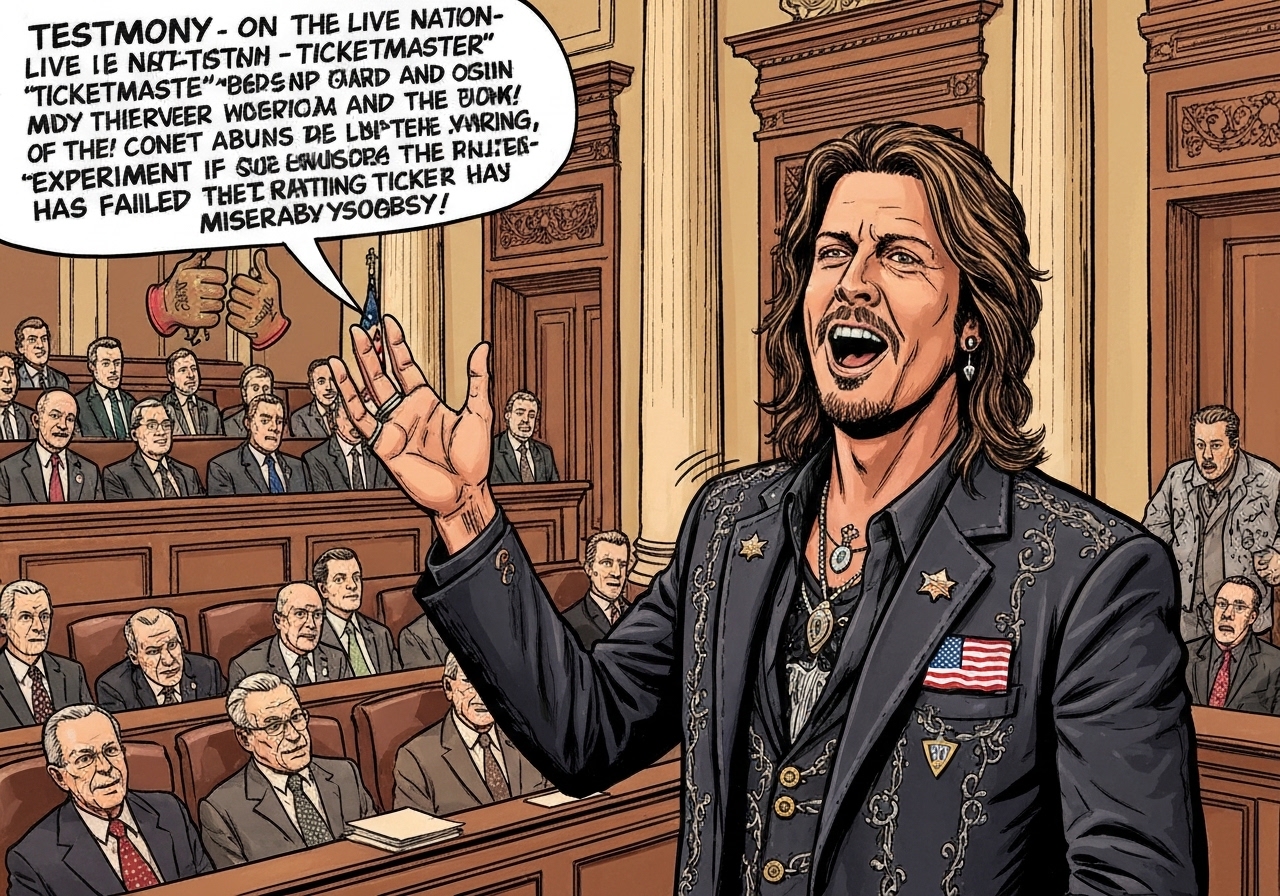
Lead: On Wednesday afternoon, musician Kid Rock (Robert Ritchie) testified to a Senate subcommittee led by Sen. Marsha Blackburn (R‑Tenn.) in Washington, pressing lawmakers on rapidly rising concert costs and practices by Live Nation and Ticketmaster. He argued the 2009 merger promised to help artists and fans but has instead allowed resale brokers, opaque fees and bots to squeeze consumers and strip venues and performers of leverage. Ritchie urged subpoenas of industry contracts and recommended policy fixes including resale caps and stronger enforcement of the Bots Act. His testimony joined broader congressional and enforcement scrutiny after multiple federal and state lawsuits against the companies.
Key Takeaways
- Kid Rock testified before a Senate subcommittee led by Sen. Marsha Blackburn on Wednesday, framing ticketing practices as harmful to fans and artists alike.
- He referenced the 2009 Live Nation–Ticketmaster merger, noting the CEO called it an “experiment” that would boost competition—Ritchie said it has “failed miserably.”
- Ritchie asked Congress to subpoena contracts among artists, promoters, venues, ticketing firms and vendors to expose alleged fraud and abuse.
- His policy suggestions included giving artists control over ticket distribution, capping resale prices, and enforcing the Bots Act to deter automated bulk purchases.
- The hearing included witnesses from the Ticket Policy Forum, Live Nation Entertainment, and the Colorado Independent Venue Association.
- The Department of Justice and a coalition of 30 state and district attorneys general filed an antitrust lawsuit seeking to break up Live Nation; the case is active in federal court.
- The Federal Trade Commission and seven states filed a separate suit alleging deceptive pricing and resale practices, and that the companies collected nearly $1 billion in fees over five years.
- In 2025, the Senate Commerce Committee approved the bipartisan TICKET Act; the bill previously passed the House in April and would require total price disclosure and ban speculative listings.
Background
The debate over ticketing practices has deep roots. Thirty years ago, Pearl Jam famously testified to Congress about Ticketmaster; that confrontation framed public concern about market power in live events. In 2009, Live Nation and Ticketmaster merged, with executives saying the deal would help artists by integrating promotion and ticketing. Over time critics have argued that exclusive venue contracts and platform control reduced competition and bargaining leverage for independent venues and some artists.
Regulators and plaintiffs now argue the combination of exclusive long‑term contracts, opaque fee structures, and secondary‑market dynamics has contributed to higher costs for consumers. Law enforcement has highlighted automated bots that buy blocks of tickets in milliseconds and brokers who list tickets they do not yet own, a practice known as speculative ticketing. That conduct, critics say, inflates consumer prices and concentrates revenue among intermediaries.
Main Event
At the Capitol, Ritchie framed his testimony around his claim to independence from major-label or corporate ties, saying he could speak plainly about industry practices. He said he has been filling arenas for 25 years and asserted that the current commercial model disadvantages both artists and fans. He criticized what he called lobbyist efforts that present limited reforms while preserving open markets that enable exploitation of buyers.
Ritchie cited previous congressional testimony — including Pearl Jam’s and assurances made around the 2009 merger — to argue expectations set at merger time were unmet. He told lawmakers independent venues have struggled, artists have seen diminished negotiating power, and fans now pay more. He requested subpoenas for contracts tying artists, promoters, venues, ticketing companies and vendors.
Other witnesses included Brian Berry (executive director, Ticket Policy Forum), Dan Wall (executive vice president, corporate and regulatory affairs, Live Nation Entertainment) and David Weingarden (chair and co‑founder, Colorado Independent Venue Association). Live Nation representatives defended its role and disputed claims that the company unlawfully monopolizes ticketing, while venue advocates and policy experts documented tangible harms to smaller venues and local circuits.
Analysis & Implications
Legislatively and legally, Ritchie’s testimony arrives amid intensified scrutiny. The Department of Justice suit and the FTC/state actions signal a multi‑front challenge that could reshape the live entertainment market. If courts find the company has violated antitrust or consumer protection laws, remedies could include structural changes, restrictions on exclusive contracting, or new disclosure and resale rules.
Policy proposals on the table range from modest transparency requirements to stronger market interventions. The TICKET Act — advanced by the Senate Commerce Committee in 2025 and already passed by the House in April — would force sellers to show total ticket prices up front, ban speculative listings, require clearer ownership disclosures and mandate refunds for canceled events, with FTC enforcement. These measures aim to reduce surprise fees and limit deceptive resale tactics.
Operationally, stronger enforcement of bot‑prevention statutes would change distribution mechanics. If brokers face heavier penalties or resale caps, primary sellers and artists might adopt different allocation strategies (fan presales, verified fan programs, strict ID requirements). Those shifts could benefit true fans but create new costs and logistical hurdles for promoters and venues.
Comparison & Data
| Action | Parties | Focus |
|---|---|---|
| DOJ antitrust lawsuit | DOJ + 30 state/district AGs | Alleges illegal monopoly and “flywheel” model; seeks breakup |
| FTC & states lawsuit | FTC + 7 states | Alleges deceptive pricing, resale abuses; cites nearly $1B in fees over 5 years |
| TICKET Act (legislation) | Senate Commerce Committee; House passed in April | Requires total price disclosure, bans speculative sales, FTC enforcement |
The table above places the major legal and legislative actions side by side. Together they illustrate coordinated regulatory pressure (DOJ antitrust plus FTC consumer protection claims) and parallel legislative remedies aimed at pricing transparency and resale restrictions. For artists, the likely near‑term effect is greater visibility into fees and more tools to contest resale practices; for companies, possible operational constraints and litigation costs are expected.
Reactions & Quotes
“I ain’t scared, like many artists, managers and agents are, for fear of biting the hand that feeds them.”
Robert Ritchie (Kid Rock)
Ritchie’s remark framed his willingness to call for subpoenas and aggressive remedies. He presented himself as unusually independent and urged lawmakers to look beyond industry narratives that reforms are sufficient.
“The charges are absurd,”
Live Nation (statement via company representatives)
Live Nation has publicly disputed claims it wields unlawful market power and has pointed out that artists influence pricing decisions. Company witnesses at the hearing reiterated defenses that fees and allocations are set in part by performers and venues.
Unconfirmed
- Claims that subpoenas will immediately reveal “mountains of fraud and abuse” remain unconfirmed pending document production and review.
- Specific figures about how much individual artists lost to resale and fees were not provided in court filings at the hearing and remain to be substantiated.
- Whether the TICKET Act’s proposed enforcement mechanisms will fully deter speculative listings and bot purchases is unproven until implemented and tested.
Bottom Line
Kid Rock’s testimony amplified a growing chorus of legal, legislative and public pressure on Live Nation and Ticketmaster over ticket pricing, resale practices and automation. He framed the issue as both a consumer problem and an artist livelihood issue, urging concrete interventions — subpoenas, resale caps and stricter bot enforcement — to rebalance incentives in the live events market.
Pending outcomes in the DOJ and FTC cases, combined with possible passage and implementation of the TICKET Act provisions, the industry could see meaningful operational changes: greater price transparency, limits on speculative listings, and tighter controls on automated purchases. For fans and many independent venues, those changes aim to restore access and reduce hidden costs; for companies, they would bring regulatory and compliance costs and potentially reduced secondary‑market revenue.
Sources
- Hollywood Reporter — media report summarizing the congressional hearing and related litigation (journalism)