
Lead
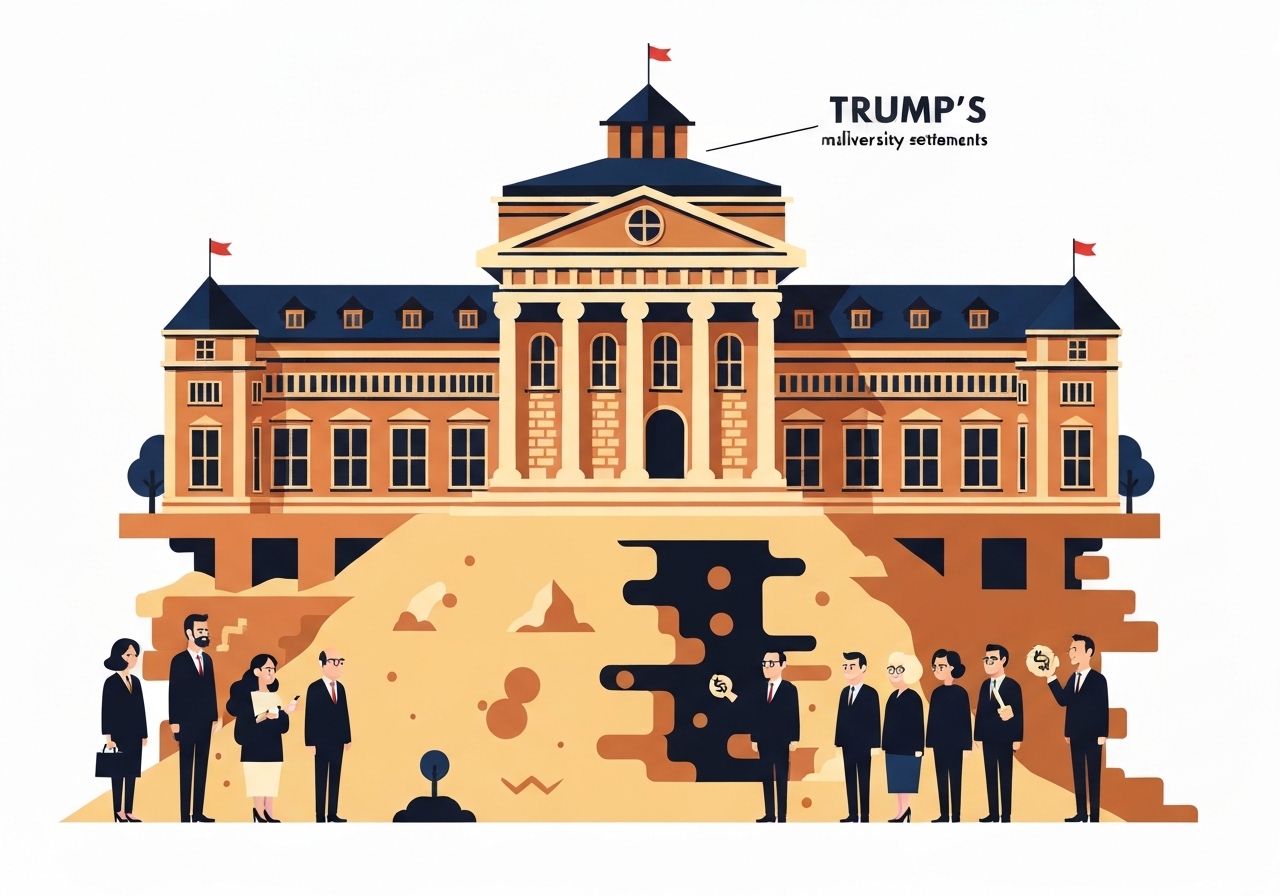
Since President Trump issued a Jan. 29, 2025 executive order targeting antisemitism on campus, federal agencies have paused and, in some cases, permanently withheld billions in contracts and grants from elite U.S. universities. Within weeks the review expanded from five schools to roughly 60, and the administration extracted settlements or policy concessions from multiple institutions. Some universities paid tens or hundreds of millions of dollars; others accepted changes to personnel, definitions of gender, and limits on diversity, equity, and inclusion (DEI) programs. Harvard challenged the actions in court and won a September 2025 ruling that the government illegally froze more than $2 billion in grants and contracts, a decision now under appeal.
Key Takeaways
- The Jan. 29, 2025 directive focused initially on antisemitism but triggered inquiries at about 60 institutions and the suspension of billions in federal support.
- Harvard won a September 2025 federal ruling that more than $2 billion in funding was frozen unlawfully; the government is appealing.
- Northwestern agreed to pay $75 million over three years to unlock roughly $790 million in withheld federal funding in late November 2025.
- Cornell settled on Nov. 7, 2025, agreeing to $60 million over three years while facing a potential loss of more than $250 million in federal funds.
- Columbia and the White House announced a roughly $221 million agreement in July 2025 after the government suspended most of $1.3 billion in research funding.
- Brown consented to a $50 million payment over 10 years after the executive branch threatened to freeze $510 million in federal support.
- Penn revised records and transgender-athlete policies as part of a July 1, 2025 agreement following a $175 million funding freeze.
- UVA reached a DOJ agreement on Oct. 22, 2025 without a financial penalty but committed to adopt Justice Department guidance on discrimination.
Background
The administration’s campaign began with a January 29, 2025 executive order that instructed federal agencies to investigate allegations of antisemitism and other policy violations at U.S. colleges and universities. Investigations that started at five campuses quickly broadened to around 60 institutions, and agencies used the leverage of grants and contracts to press schools for compliance with new federal definitions and guidance. A July 2025 memo from the Attorney General equated many DEI programs with discriminatory practices, providing an enforcement frame the administration has cited in settlement negotiations.
Universities have argued that signing settlements does not equate to admitting wrongdoing, but many accepted changes to policies, reporting, or personnel to restore funding. Critics – including constitutional scholars and faculty associations – say the government’s tactic risks breaching the unconstitutional conditions doctrine by tying federal dollars to limits on institutional speech and academic governance. Supporters in the administration describe the measures as restoring merit and addressing perceived abuses in higher education funding and campus governance.
Main Event
By mid‑2025, a wave of deals and disputes unfolded. Columbia and the White House announced a roughly $221 million resolution in July 2025 after the federal government said it had suspended most of $1.3 billion in research support. That agreement included limits on the consideration of race in admissions and new reporting requirements on applicant demographics. On the same month, the University of Pennsylvania reached a settlement that included revisions to records related to a transgender athlete and changes to athletic policies after a $175 million pause in federal funding.
Brown agreed on July 30, 2025 to a $50 million contribution over a decade, coupled with commitments to adopt certain gender definitions and restrictions on race‑conscious programming, after the White House indicated $510 million was at risk. Harvard charted a different course, litigating the freeze of more than $2 billion; a federal judge ruled in Harvard’s favor in September 2025, finding the government’s pause unlawful, and the administration has appealed that decision.
Later in 2025, Northwestern settled in late November to pay $75 million over three years, enabling access to roughly $790 million in previously frozen federal funds; university officials said a protracted court fight would have imperiled research continuity. Cornell finalized a Nov. 7, 2025 agreement to pay $60 million while confronting the potential loss of over $250 million in federal support. The University of Virginia reached a DOJ agreement on Oct. 22, 2025, accepting guidance and compliance steps but no monetary fine.
Analysis & Implications
The administration’s approach demonstrates a strategic use of the federal purse to shape institutional policy at elite universities. By conditioning grants and contracts on compliance with specified definitions and procedures, the government is effectively pressing institutions to align campus policies—on gender, admissions, and DEI—with federal priorities. If sustained, this could produce lasting changes to hiring, curricular choices, student services, and athletic eligibility rules.
Legally, the core question is whether these tactics cross the line from permissible grant conditions to unconstitutional coercion. The unconstitutional conditions doctrine bars the government from forcing waiver of constitutional rights as a condition of receiving benefits. Several constitutional scholars and groups such as the American Association of University Professors contend the settlements amount to coercion; courts will likely be the ultimate arbiter, and Harvard’s successful preliminary ruling gives the judiciary a central role in resolving the dispute.
For research and public‑interest projects, the immediate economic effect is substantial: interruptions in federal support can delay multi‑year studies, endanger partnerships with industry and government labs, and slow progress on federally funded priorities such as agriculture or biomedical research. Politically, the campaign aligns with the administration’s broader aims to curtail DEI initiatives and to signal responsiveness to constituencies critical of university practices, which may shape higher‑education policy debates for years.
Comparison & Data
| University | Approx. frozen funds | Settlement/Commitment | Timing |
|---|---|---|---|
| Harvard | >$2 billion | Litigated; court ruled funding freeze unlawful (appeal pending) | Sept. 2025 |
| Columbia | Majority of $1.3 billion | $221 million payment; reporting and admissions limits | July 2025 |
| Penn | $175 million | Policy revisions on transgender athlete records and athletics | July 1, 2025 |
| Northwestern | ~$790 million | $75 million over 3 years; policy changes | Late Nov. 2025 |
| Cornell | >$250 million at risk | $60 million over 3 years; DOJ guidance used in training | Nov. 7, 2025 |
| Brown | $510 million | $50 million over 10 years; DEI and gender-definition commitments | July 30, 2025 |
| UVA | $400M+ research (2024) | Agreement to adopt DOJ guidance; no fine | Oct. 22, 2025 |
The table above summarizes publicly reported freezes and settlements. Figures are drawn from university statements and government announcements; some frozen‑fund totals are agency estimates and may reflect fiscal‑year aggregates. The patterns show a mix of cash settlements, programmatic restrictions, and non‑monetary compliance obligations as the administration’s tools to restore or reallocate federal support.
Reactions & Quotes
Officials in the White House framed the efforts as accountability and reform aimed at protecting taxpayers and academic standards.
“In just a year, President Trump has completely transformed American higher education by restoring merit, enforcing civil rights, and eliminating waste, fraud, and abuse.”
White House spokesperson Liz Huston (statement to NPR)
Legal scholars and faculty groups pushed back, arguing that conditioning funds on policy changes risks constitutional violations and harms academic freedom and research continuity.
“To me, it’s a blatant violation of the unconstitutional conditions doctrine of the First Amendment.”
Thomas Berry, Cato Institute (director of constitutional studies)
“It was extortion.”
Todd Wolfson, American Association of University Professors (president)
Unconfirmed
- Whether any additional universities agreed to settlements in private that have not been publicly disclosed; reporting so far focuses on high‑profile institutions.
- The long‑term impact on specific ongoing research projects tied to frozen grants is still being catalogued and may vary by lab and sponsor.
Bottom Line
The administration’s use of grant and contract leverage has produced a rapid reordering of relations between federal agencies and several elite universities: some institutions paid large sums, others accepted policy changes, and at least one major university successfully challenged the funding pause in court. The legal fights now moving through appeals courts will be decisive for the boundary between permissible grant conditions and unconstitutional coercion.
For universities, researchers, and students, the episode signals a period of heightened legal and political risk around funding, campus governance, and DEI programming. Observers should watch upcoming appeals, additional agency guidance, and any legislative responses that could codify or curtail the administration’s approach.