
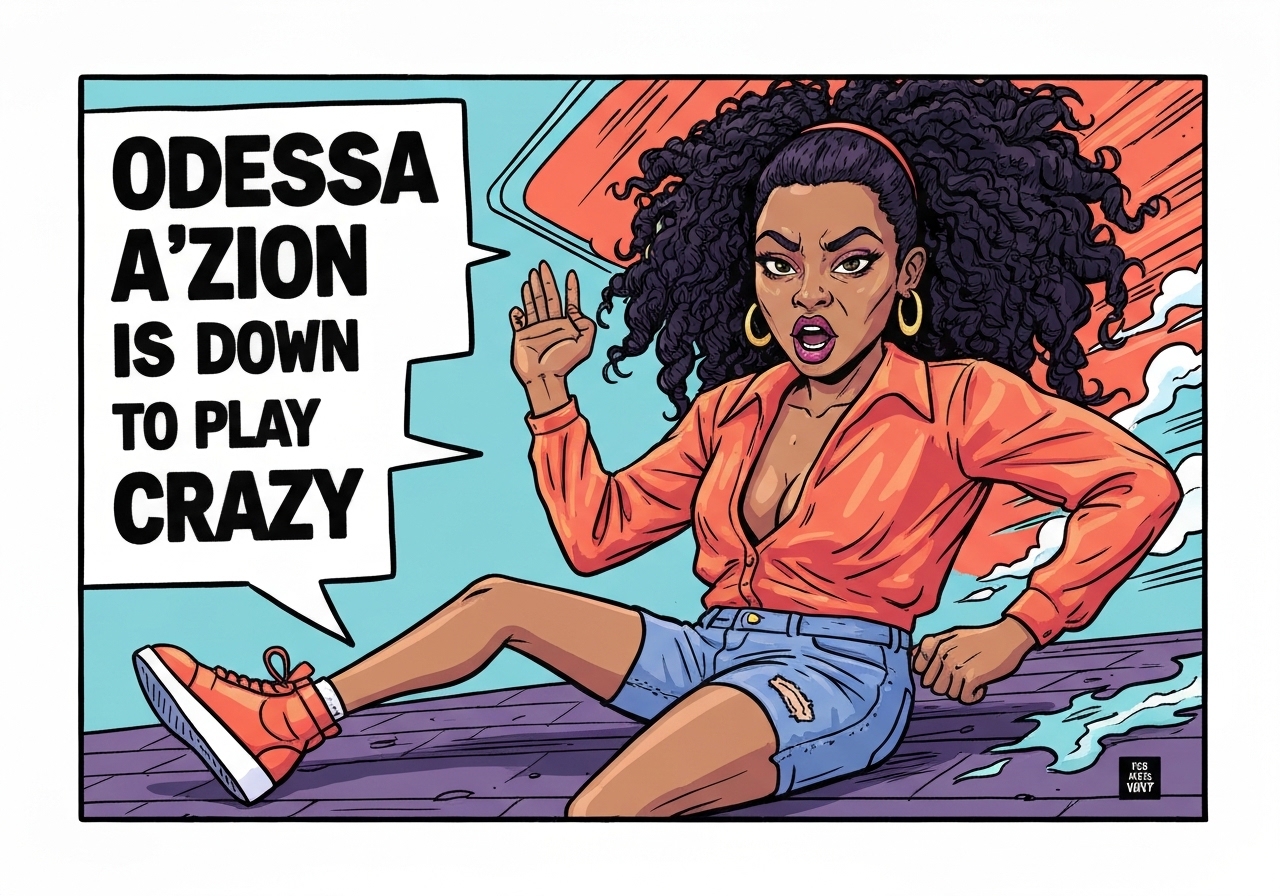
Lead: Odessa A’zion, 25, has emerged this awards season as a breakout actor after starring in Josh Safdie’s Marty Supreme and HBO’s ensemble comedy I Love LA. Her performance helped Marty Supreme become A24’s top North American earner at $81 million against a reported $70 million budget and earned the film nine Oscar nominations, including best picture. A’zion’s rise, shaped by early near-misses, family ties to Hollywood and a deliberate turn toward volatile, attention-grabbing parts, has come with intense public scrutiny and a sudden press-and-production workload. She balances that momentum with anxiety about exposure and a slate of forthcoming projects, including a film in production in Montreal and a second season of I Love LA.
Key Takeaways
- Box office: Marty Supreme has grossed $81 million in North America, with a production budget reported at $70 million, making it A24’s highest domestic earner to date.
- Awards: Marty Supreme earned nine Academy Award nominations, among them Best Picture, raising A’zion’s industry profile during the 2025–26 awards cycle.
- Casting arc: A’zion auditioned years earlier for Euphoria but was passed over after COVID delays; Jennifer Venditti later recommended her for Marty Supreme.
- Dual breakout: She leads HBO’s I Love LA as Tallulah, a social-media–savvy character that has quickly secured a season-two renewal from HBO.
- Personal background: The daughter of Pamela Adlon, A’zion attended CHAMPS in Van Nuys and spent a year at boarding school in Germany; she uses a stage name and has spoken cautiously about family matters.
- On-set hardships: While filming Marty Supreme she experienced physical and psychological strain — from a prosthetic pregnancy belly that caused skin injuries to periods of couch-surfing during long shoots.
- Public response: Viral audition clips and fan content for I Love LA have amplified her visibility, even as she reports ongoing stage fright and social anxiety.
Background
Odessa A’zion grew up around the entertainment industry: her mother, Pamela Adlon, earned critical acclaim for the FX series Better Things, and her sister Gideon Adlon is also an actress. That upbringing provided early exposure to sets and storytelling but, by A’zion’s account, did not remove the uncertainty that marks many young actors’ careers. She studied at CHAMPS Charter High School of the Arts and spent a formative year at a boarding school in Germany, an experience she describes as disorienting but not traumatic.
Her early professional steps were modest: a five-episode arc on Nashville at 17, small television roles on Fam and Grand Army, and supporting parts in films. Casting director Jennifer Venditti — noted for discovering new talent — saw A’zion in an early audition cycle that led to a callback for HBO’s Euphoria; the pandemic interrupted that trajectory and the role ultimately went elsewhere. That setback, A’zion says, left her shouldering some personal blame for not following up, a common feeling among actors navigating a crowded casting marketplace.
Main Event
Four years after the Euphoria audition, Venditti recommended A’zion when Safdie sought an actor to play opposite Timothée Chalamet in Marty Supreme. Safdie wanted someone fresh who could carry mischief and emotional volatility without preexisting star baggage. After multiple auditions and video meetings, Safdie called A’zion to describe the film’s ambitious production design and to say he was eager to collaborate — a moment she remembers as a decisive step toward landing the role.
Marty Supreme went on to become a commercial and awards-season success. A24 reports the film as its top North American grosser at $81 million, with industry reporting placing the production budget around $70 million. Critics and voters responded: the picture gathered nine Academy Award nominations, transforming A’zion from a working young actor into a focal point of the season’s discourse.
Concurrently, HBO cast A’zion as Tallulah in I Love LA, creator Rachel Sennott’s ensemble satire of social-media–obsessed L.A. culture. Tallulah’s brash, sexually forward persona required A’zion to negotiate a wardrobe and performance profile different from her off-screen style; she initially pushed back on costume choices and insisted on doing her own hair and makeup on set to manage anxiety around touch. The show’s quick renewal and the flood of fan videos signaled audience resonance similar to early cultural conversations that surrounded shows like Girls.
Analysis & Implications
A’zion’s trajectory illuminates several current industry dynamics: the power of casting directors to reshape careers, the speed with which social-media virality can amplify an actor’s visibility, and the financial model of prestige indie films crossing into mainstream grosses. Marty Supreme’s domestic return above its reported budget marks a notable commercial win for A24, a studio that frequently straddles art-house credibility and mainstream appeal; that blend boosts the marketability of actors who emerge from such projects.
The narrative around A’zion also touches on discussions of nepotism and access. While her family connections placed her in an environment familiar with production, her account and resume reflect years of working roles and auditions before a mainstream breakthrough. Industry conversations that reduce her success to “nepo baby” privilege risk overlooking the audition cycles, callbacks and psychophysical demands she describes — from grueling prosthetics to long relocations without fully offsetting housing support.
For studios and talent managers, A’zion’s case underscores the value and risk of rapid elevation. A box-office hit plus awards attention can accelerate career opportunities but also concentrates pressure: press tours, awards campaigning and simultaneous series production compress preparation time and magnify mental-health vulnerability. How agents, publicists and studios structure schedules and support will matter for sustaining her momentum and well-being.
Comparison & Data
| Metric | Value |
|---|---|
| North America gross (Marty Supreme) | $81,000,000 |
| Reported production budget | $70,000,000 |
| Academy Award nominations | 9 (including Best Picture) |
Put simply, Marty Supreme’s domestic gross exceeds its reported budget by about $11 million. That gap does not account for marketing costs or distribution splits, but for a specialty studio like A24 the threshold of mainstream box-office success often reshapes marketing leverage and awards visibility. The film’s nine nominations further convert commercial traction into industry recognition, which tends to generate downstream offers for principal actors.
Reactions & Quotes
Below are representative, brief quotes from people directly involved, with context about how their remarks relate to the story.
“I can’t wait to make this movie better with you.”
Josh Safdie, director (recounted by A’zion)
Context: A’zion recalls this line from a FaceTime call with Safdie as a pivotal affirmation during the casting phase for Marty Supreme; she interpreted it as a strong signal that the director wanted her in the ensemble and as an invitation to collaborative work.
“Seeing the fan-cams made me realize the show was working.”
Rachel Sennott, creator/star of I Love LA
Context: Sennott describes how user-generated clips and social buzz confirmed that Tallulah resonated with audiences, a factor that contributed to HBO’s early renewal and heightened cultural conversation about the series.
“She’s messy, but in the way a planet has moons stuck in its orbit.”
Josh Safdie (on A’zion’s personality)
Context: Safdie’s remark was offered as a character vignette during a conversation about A’zion’s off-camera habits and on-set presence, underscoring the filmmaker’s affection for her unpredictable energy.
Unconfirmed
- The exact identity of the actor who ultimately received the HBO Euphoria role A’zion auditioned for has not been publicly disclosed by A’zion in this interview.
- Details about A’zion’s current relationship with her mother were not provided and remain private by A’zion’s choice.
- Reports on precise marketing costs for Marty Supreme, and thus the film’s net profitability after prints-and-advertising, have not been independently confirmed in trade filings.
Bottom Line
Odessa A’zion’s emergence this season illustrates how a confluence of casting advocacy, a high-visibility film and a resonant TV role can accelerate an actor’s career almost overnight. Her run — from an interrupted Euphoria callback to a central part in A24’s most successful North American release — shows both the contingency of casting and the long arc of incremental experience that precedes a breakout.
At the same time, her story highlights industry gaps: the uneven financial support for long-location shoots, the physical toll of certain roles, and the mental-health strain produced by sudden public attention. For A’zion, sustaining momentum will require careful project selection and a support network that can weather the demands of back-to-back production and awards campaigning.