
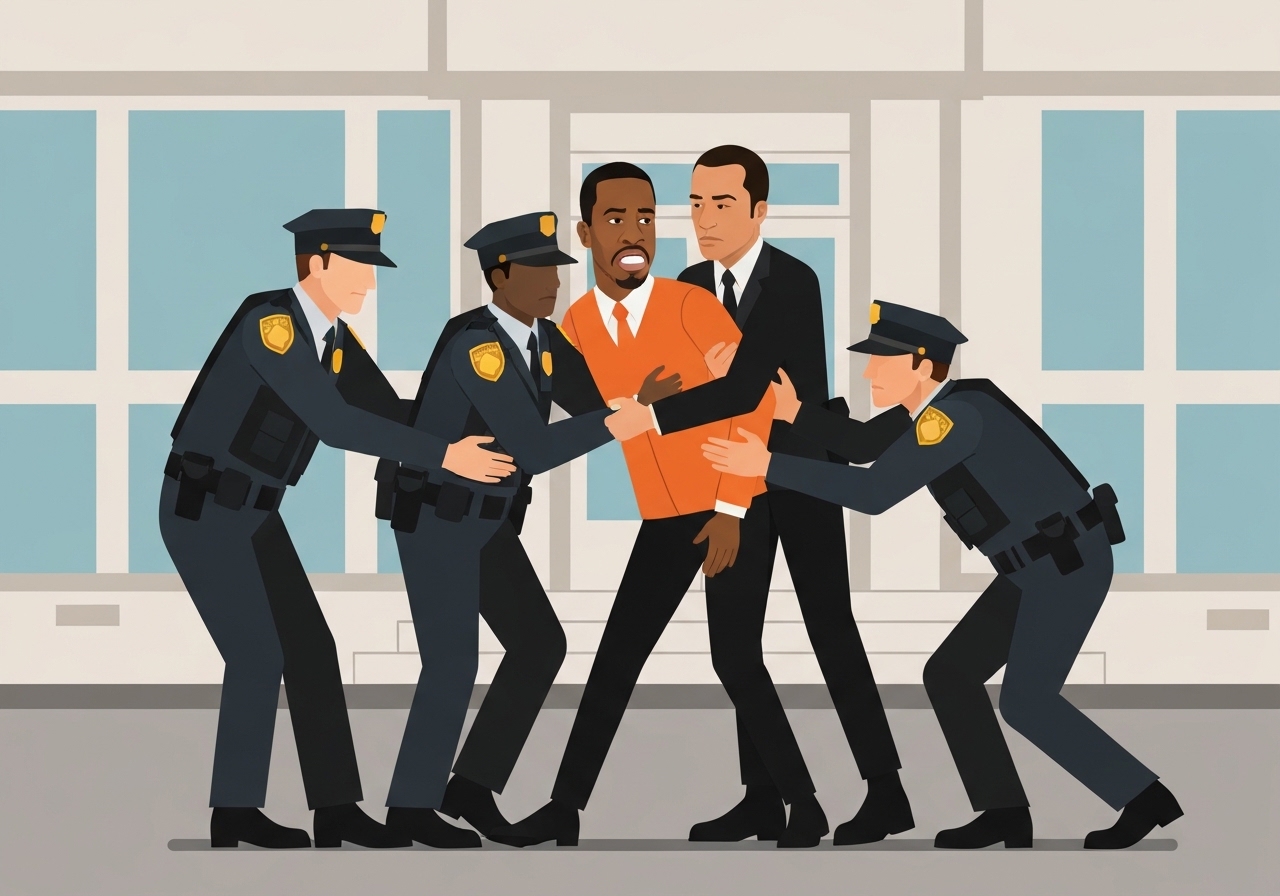
Lead: Former CNN anchor Don Lemon was taken into federal custody late Thursday night after authorities executed an arrest tied to a Jan. 18 disruption at Cities Church in St. Paul, Minnesota. Lemon says he entered the service to report on a demonstration opposing a regional immigration enforcement campaign and has characterized his presence as journalistic. The Trump administration sought charges against eight people under a federal statute that protects participation in religious services; a magistrate judge earlier approved warrants for three, finding the evidence against others, including Lemon, insufficient. Federal prosecutors later sought appellate intervention and were denied before the arrest in Los Angeles, where Lemon had been covering the Grammy Awards.
Key Takeaways
- Don Lemon was arrested by federal agents late Thursday while in Los Angeles covering the Grammy Awards; his lawyer confirmed the detention on Jan. 30, 2026.
- The underlying incident occurred on Jan. 18, 2026, at Cities Church in St. Paul during a protest against an immigration enforcement operation; protesters chanted against ICE while an ICE official serves as a pastor there.
- The Justice Department sought charges for eight people under a law that bars preventing participation in a house of worship; a magistrate judge authorized warrants for three defendants but found evidence against Lemon and others insufficient.
- After the magistrate decision, federal prosecutors asked an appeals court to compel additional warrants and the request was denied prior to Lemon’s arrest.
- Lemon and his counsel say his presence at the church was journalistic in purpose; his lawyer, Abbe Lowell, has pledged to contest the charges in court.
- The case raises questions about the reach of the statute, prosecutorial discretion, and protections for newsgathering inside houses of worship.
Background
The episode traces to Jan. 18, 2026, when a group protesting an immigration enforcement campaign entered Cities Church in St. Paul and interrupted a service. According to reporting, the demonstration targeted a local crackdown and vocalized opposition to Immigration and Customs Enforcement personnel; one of the church’s leaders is an ICE official. Federal prosecutors invoked a statute designed to protect the right of individuals to attend and participate in religious services, a rarely used law in cases involving protest activity.
Historically, prosecutions that touch houses of worship have been sensitive because they intersect constitutional protections for both free exercise of religion and free expression. The administration’s decision to pursue charges against multiple people—initially eight—placed the case at the center of a debate over whether criminal law should cover protest conduct inside sanctuaries, and how courts should evaluate intent and disruption. Local stakeholders, civil liberties groups and press advocates have framed the episode through competing lenses: religious liberty, public order, and press freedom.
Main Event
On Jan. 18 demonstrators entered Cities Church while a service was under way and chanted slogans such as “ICE out,” according to contemporaneous accounts. Don Lemon, a prominent journalist formerly with CNN, says he entered that service to observe and report on the demonstration; protesters and attendees have offered differing accounts of the extent and nature of the disruption. After an internal review, federal prosecutors pursued charges under the law protecting worship participation, targeting eight individuals they said were involved in the incident.
A magistrate judge later reviewed the evidence and authorized warrants for three defendants, concluding that the record did not sufficiently support charges against several others, including Lemon. The Justice Department then asked a federal appeals court to require the magistrate to issue additional warrants; that request was denied. Despite the prior rulings, federal agents arrested Lemon late Thursday night in Los Angeles, where he had been covering the Grammy Awards, and transported him into federal custody.
Lemon’s attorney, Abbe Lowell, issued a public statement asserting that Lemon’s presence was standard reporting activity and that the arrest amounted to an attack on press freedom. Prosecutors have maintained that the statute applies when protesters intrude on a service to prevent participation, but have not released all investigative material publicly. The litigation is expected to move quickly through pretrial proceedings, where factual disputes about intent, conduct and the scope of the statute will be central.
Analysis & Implications
The arrest of a high-profile journalist on charges tied to a worship-service disruption elevates constitutional questions about how criminal statutes interact with newsgathering. If prosecutors pursue a conviction, courts will likely confront whether a reporter documenting a protest inside a house of worship can be held to the same standard as an active participant seeking to block worship. That analysis will hinge on intent, conduct, and whether the reporter reasonably identified themselves as press.
Prosecutorial discretion is also in focus. The decision to seek charges against multiple participants, then to have a magistrate restrict warrants, to ask an appeals court for intervention, and finally to arrest one of those previously excluded raises scrutiny of the decision-making pipeline within the Justice Department. Defense lawyers will emphasize the magistrate’s earlier finding of insufficient evidence as a procedural and substantive point in pretrial motions.
Politically, the case lands amid heightened tensions over immigration enforcement and public demonstrations. For critics, the arrests risk chilling protest activity and press coverage of confrontational events; for supporters of enforcement, the use of criminal statutes is framed as protecting congregants’ right to worship without interruption. The case could set a precedent that shapes how law enforcement approaches protests that enter religious spaces, and how courts balance competing constitutional claims.
Comparison & Data
| Item | Count / Date |
|---|---|
| Incident date | Jan. 18, 2026 |
| People DOJ sought to charge | 8 |
| Warrants approved by magistrate | 3 |
| Publication date | Jan. 30, 2026 |
The magistrate’s authorization for three warrants, versus the eight initially sought by prosecutors, is a central factual piece that defense teams will use to challenge sufficiency and probable cause. That discrepancy, and the appeals court’s denial of the Justice Department’s request to compel additional warrants, frames the immediate legal posture before Lemon’s arrest.
Reactions & Quotes
Supporters of Lemon and press-freedom groups have criticized the arrest as an overreach; some local church members and congregants have said they felt the service was disrupted. Officials at the Department of Justice have framed the investigation as enforcement of a statute intended to safeguard worship participation, while details released publicly remain limited.
“I was there to report and observe; I consider that an act of journalism,”
Don Lemon
“We will challenge these charges in court and defend the rights at stake,”
Abbe Lowell, counsel for Don Lemon
Unconfirmed
- Whether prosecutors will file formal indictment papers against Don Lemon remains pending and will be revealed in forthcoming court filings.
- The full evidentiary record underpinning the Justice Department’s decision to seek the arrest has not been publicly released, limiting outside assessment of the strength of the charges.
Bottom Line
The arrest places a nationally known journalist at the center of a test case about the intersection of protest, religion and press freedoms. The magistrate judge’s earlier decision to limit warrants underscores immediate factual disputes that will shape pretrial rulings.
Expect aggressive litigation over probable cause and free-press protections, followed by heightened public debate. How judges resolve questions about intent and the proper reach of the statute will determine whether this episode becomes a narrow prosecution or a broader legal precedent affecting journalists and demonstrators alike.
Sources
- The New York Times — U.S. news outlet (report)