
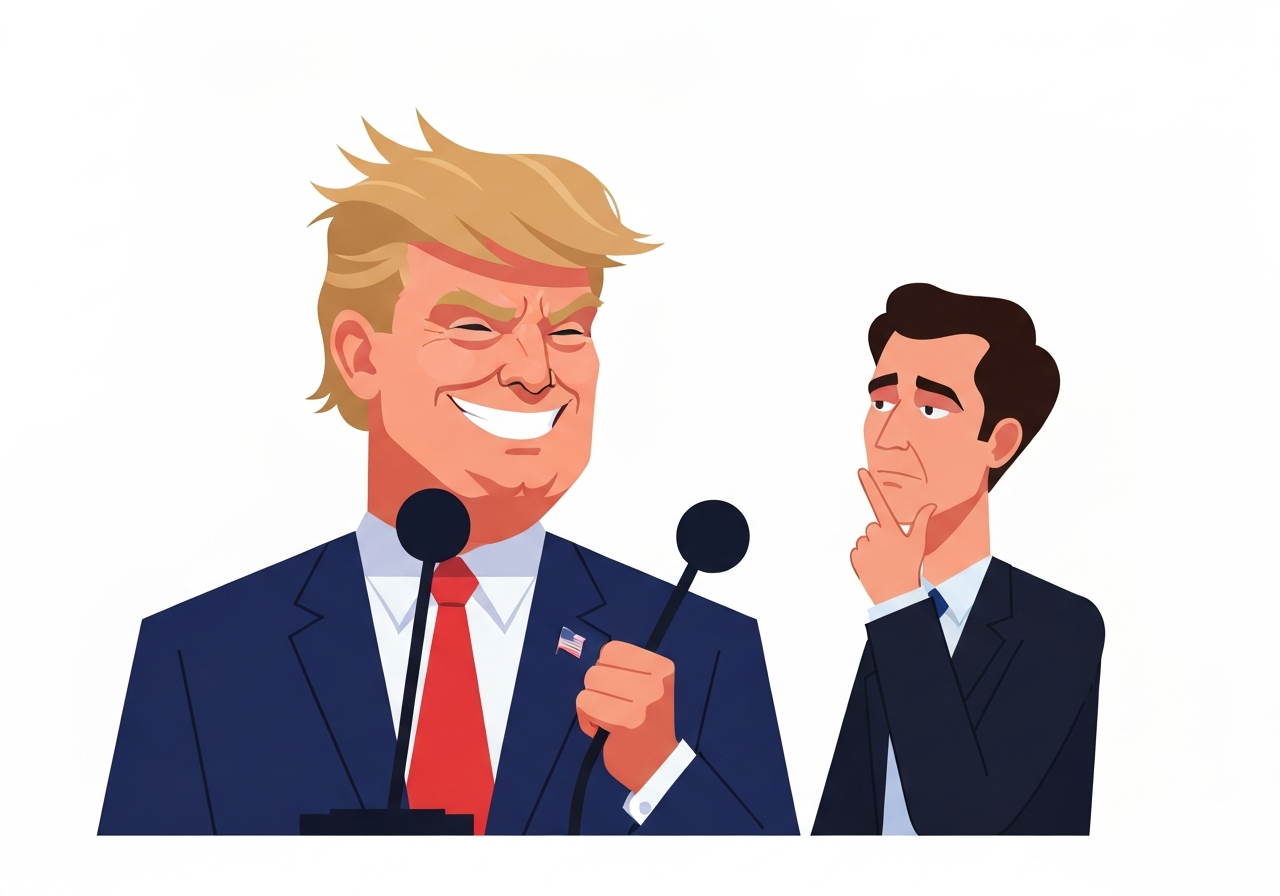
Lead: On Friday, January 30, 2026, President Donald J. Trump nominated Kevin M. Warsh to be the next chair of the Federal Reserve, setting the stage for a contentious Senate confirmation over the central bank’s independence and interest-rate path. Warsh, a former Fed governor (2006–2011) and Hoover Institution fellow, is seen by the White House as a proponent of lower borrowing costs; his selection immediately drew mixed reactions from lawmakers and market observers. The nomination caps a lengthy search to replace Jerome H. Powell, whose term ends in May 2026, and raises questions about how the Fed will balance price stability with demands for faster rate relief.
Key Takeaways
- President Trump announced Kevin M. Warsh as his pick for Fed chair on Jan. 30, 2026; Warsh served as a Fed governor from 2006 to 2011 and is 55 years old.
- The choice follows a search that included Kevin A. Hassett, Christopher J. Waller and Rick Rieder; Warsh was selected over those finalists.
- Fed officials on the most recent meeting held rates at 3.50–3.75 percent after three quarter-point cuts in the latter half of 2025.
- Senate reaction split along partisan lines: Sen. Tim Scott praised the pick; Sen. Elizabeth Warren said Warsh passed a “loyalty” filter; Sen. Thom Tillis said he may withhold support pending a Justice Department inquiry into Jerome Powell.
- Analysts note Warsh’s record as an inflation hawk (pre-2011) and his more recent public advocacy for rate cuts — prompting debate about whether his views reflect politics or economics.
- Confirmation is likely to be lengthy and contentious, centering on Fed independence, policy credibility and whether the chair can build consensus on the 12-member policy committee.
Background
Kevin M. Warsh was a governor at the Federal Reserve between 2006 and 2011, a period that included the global financial crisis and major policy interventions. After leaving the Fed he worked with private investors and think tanks, including a role alongside Stanley Druckenmiller and a senior fellowship at Stanford’s Hoover Institution. His early tenure at the Fed earned him an inflation-hawk reputation; he was skeptical of large-scale asset purchases and favored tighter policy when inflation risks loomed.
The Trump administration has publicly pressured the Fed for more accommodative policy, arguing that lower rates would boost growth and ease borrower stress. That pressure intensified after several Fed cuts in late 2025 and a pause at the Fed’s first meeting of 2026. The administration’s preferred nominee profile emphasized commitment to materially lower interest rates, a stance at odds with officials who stress long-run price stability and institutional independence.
Main Event
On Jan. 30, 2026, the White House announced Warsh as its choice to succeed Jerome H. Powell, who remains the sitting chair through May 2026 unless replaced earlier. The president lauded Warsh’s experience and suggested he expects the nominee to pursue the lower-rate agenda the administration favors. White House comments and a social-media post framed Warsh as a strongly supportive figure for rate cuts, though Warsh has not given a public, binding commitment to any specific policy path.
The nomination immediately drew partisan reaction on Capitol Hill. Senate Banking Committee leaders and rank-and-file members voiced both support and skepticism, signaling a likely protracted confirmation calendar. Some Republicans praised Warsh’s credentials and market understanding; Democrats and some independents raised alarms about potential politicization of monetary policy and shifts in Fed staffing and balance-sheet management.
Beyond Capitol Hill, Fed officials and market strategists are parsing Warsh’s record for clues about his approach to inflation, balance-sheet policy and institutional governance. The Fed’s policy body comprises 12 votes — seven governors plus rotating regional presidents — meaning a chair must persuade colleagues rather than dictate outcomes. Economists warn that any push for aggressive cuts would need a broad case to win majority support on that committee.
Analysis & Implications
Warsh’s nomination puts institutional independence at the center of the debate. If confirmed, he would inherit a Fed navigating persistent inflationary pressures alongside signs of a softer labor market — conditions that make the case for either restraint or easing more fraught. The chair’s ability to persuade the Federal Open Market Committee (FOMC) will hinge on data, credibility and collegial leadership; unilateral moves are neither possible nor likely to be sustainable.
Markets will watch two fault lines: the timing and scale of potential rate cuts, and any structural changes to the Fed’s balance-sheet strategy and Treasury coordination. Warsh has advocated for a smaller central-bank footprint in markets and has suggested revisiting a 1951 framework concerning Fed–Treasury relations. Such shifts could alter long-run interest-rate dynamics and fiscal–monetary interactions, with implications for borrowing costs and market stability.
Politically, the nomination escalates friction between the White House and a central bank that has resisted overt political direction. Critics argue recent policy reversals and staffing pressures — including an attempt to remove Governor Lisa D. Cook, which drew Supreme Court scrutiny this month — risk eroding public confidence in the Fed. Supporters counter that fresh leadership could restore credibility if it tightens governance and improves accountability.
Comparison & Data
| Item | Recent Level / Note |
|---|---|
| Policy rate (post-meeting) | 3.50%–3.75% (hold at first 2026 meeting) |
| Cuts in latter half 2025 | Three cuts of 25 basis points each |
| President’s past public target | Approximately 1% (historical public statements) |
Those figures illustrate the gap between current policy and the image of significantly lower rates favored by the president. Analysts note that moving the policy rate materially below current levels would require clear evidence of slowing inflation and weaker labor-market readings — and would still depend on majority support within the FOMC.
Reactions & Quotes
Senators and market veterans offered quick, contrasting responses that signal the shape of the confirmation fight and public debate.
“He will deliver on bringing accountability and credibility to the Fed,”
Sen. Tim Scott (R-SC, statement)
Sen. Scott framed the nomination as a corrective to perceived institutional failures. His comments underscore Republican hopes that a new chair will adopt a more accommodative stance while fixing governance concerns.
“He passed the president’s loyalty test,”
Sen. Elizabeth Warren (D-MA, statement)
Sen. Warren’s remark encapsulates Democratic skepticism that the nominee’s recent positions are politically motivated rather than technocratic, a charge likely to animate Democratic opposition in hearings.
“Protecting the independence of the Federal Reserve from political interference is non‑negotiable,”
Sen. Thom Tillis (R-NC, social post)
Sen. Tillis combined praise for Warsh’s qualifications with a refusal to expedite confirmation until related legal inquiries — notably the Justice Department review of Chair Powell’s conduct — are resolved.
Unconfirmed
- Whether Warsh has made any binding, explicit commitment to cut rates if confirmed remains unproven in public record; he has publicly signaled support for lower rates but has not presented a formal plan.
- The extent to which the Justice Department investigation into Jerome Powell influenced the timing or choice of the nomination is not independently confirmed.
- Claims that Warsh’s recent policy shifts are solely politically motivated are contested and lack conclusive evidence; motives are debated among analysts.
Bottom Line
Kevin M. Warsh’s nomination sets up a consequential confirmation process that will test the boundaries between presidential influence and central‑bank independence. The job will require balancing the White House’s demand for lower borrowing costs with the Fed’s dual mandate to maintain price stability and maximum sustainable employment — a balance that depends heavily on data and collegial persuasion within the FOMC.
Investors, lawmakers and the public should expect a protracted debate in the Senate, close scrutiny of Warsh’s policy record and careful attention to any proposed changes to Fed governance or balance‑sheet strategy. In the near term the Fed’s posture will continue to hinge on incoming inflation and labor figures; over the longer term, confirmation and Warsh’s subsequent actions could reshape perceptions of the Fed’s independence and the resilience of U.S. monetary policy.