
Lead: On Sept. 6, 2025, President Donald Trump renewed threats to send U.S. troops and federal agents to Chicago as part of a planned immigration and crime enforcement operation, while a Department of Homeland Security memo sought use of Naval Station Great Lakes to house personnel and vehicles for roughly 30 days.
Key Takeaways
- President Trump signaled another deployment to Chicago for immigration and public-safety operations.
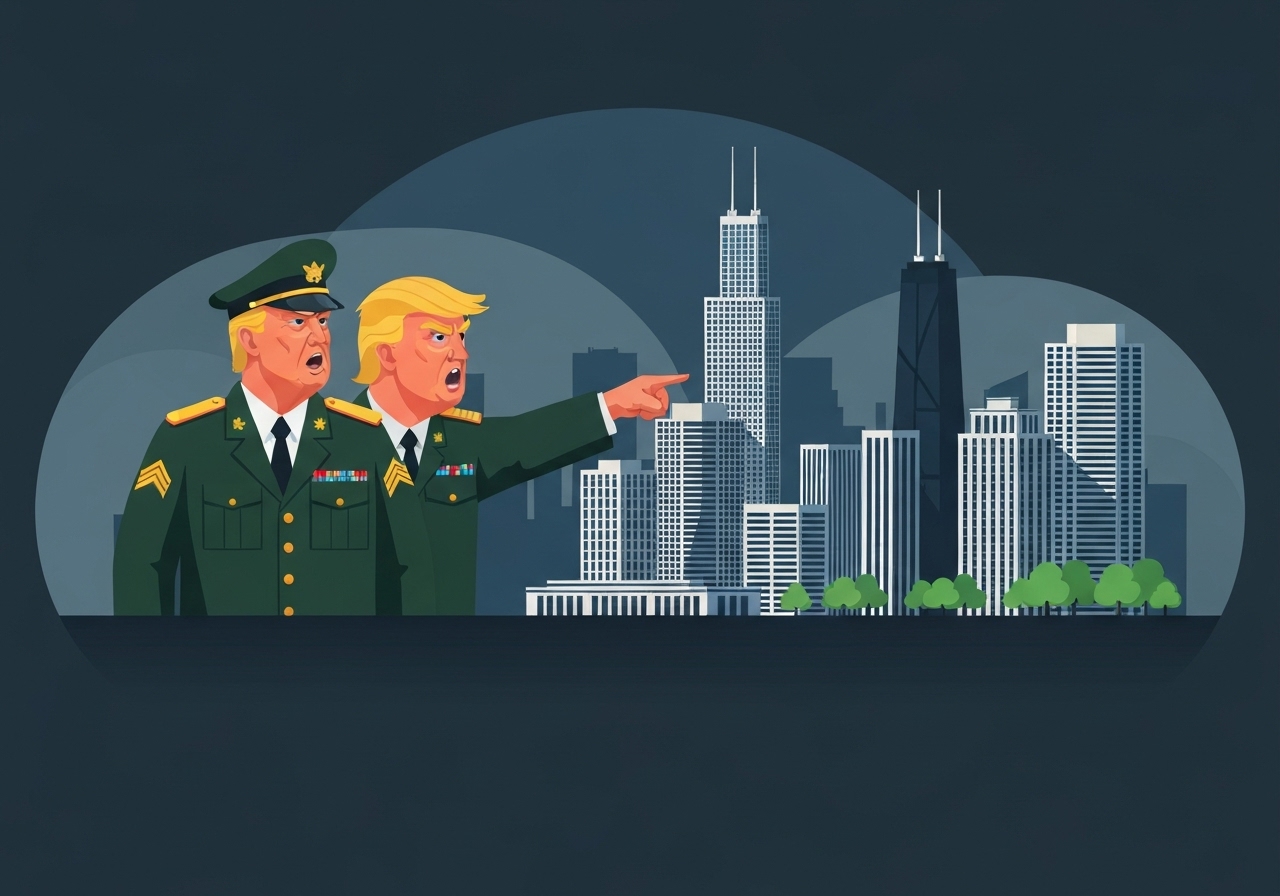
- A Truth Social post included an AI-generated parody image mocking deportations; officials say it accompanied the threat.
- DHS sought space at Naval Station Great Lakes for about 250 federal agents and 140 vehicles for roughly 30 days.
- Legal and civic opposition is building: Illinois officials and Chicago leaders say they will resist and prepare litigation.
- A federal judge recently ruled the Los Angeles deployment violated the Posse Comitatus Act.
- Organizers in Chicago postponed at least one public festival amid community concerns about the planned operation.
Verified Facts
President Trump posted a screenshot on Truth Social that included a movie-parody image and language suggesting an imminent enforcement action in Chicago. The post and his subsequent Oval Office remark — “We’re going in. I didn’t say when, we’re going in” — have renewed debate over how and when federal forces might be used inside the city.
An internal DHS memo obtained by news organizations requested that Naval Station Great Lakes, located about 50 miles north of Chicago, accommodate roughly 250 federal agents and 140 vehicles. The request reportedly sought the base for a period of 30 days, indicating authorities anticipated a multiweek presence.
The administration previously deployed National Guard troops to Los Angeles in June and sent forces to Washington, D.C., last month. A U.S. District Court in California (Judge Charles Breyer) ruled this week that the Los Angeles deployment violated the 1878 Posse Comitatus Act, which limits the use of military forces for domestic law enforcement.
Local officials in Illinois and Chicago have formally criticized the proposal. Governor J.B. Pritzker characterized the president’s social-media post as a threat to an American city, and Chicago Mayor Brandon Johnson said the plan risks undermining constitutional protections and civic trust. Community groups, faith organizations and schools have been mobilizing in response.
Context & Impact
Deploying military or federal forces into U.S. cities raises constitutional and statutory questions, and the recent court ruling adds legal risk to any plan resembling the Los Angeles operation. If implemented, the Chicago effort could trigger immediate lawsuits from state and municipal officials and draw congressional oversight.
Beyond legal contests, the operation is already affecting community life: organizers postponed a downtown Mexican Independence Day festival amid concerns about enforcement actions targeting immigrant communities. Advocates warn such operations can chill civic participation and strain relations between local police and residents.
Political effects may also be significant. The president is framing the move as part of a broader crackdown aimed at cities he says harbor “criminal illegal aliens,” while opponents cast it as an overreach of federal power and a politically motivated show of force in a major Democratic stronghold.
Official Statements
“We’re going in. I didn’t say when, we’re going in.”
President Donald Trump, Oval Office remark
“If you come to our country illegally and break our laws, we will hunt you down, arrest you, deport you, and you will never return.”
Department of Homeland Security (public statement)
Unconfirmed
- Exact timing and start date of any Chicago operation remain unspecified by federal officials.
- Whether the deployment would rely primarily on National Guard units, active-duty military, or federal law-enforcement agents has not been confirmed.
- Final scope and rules of engagement for personnel once in Chicago have not been released publicly.
Bottom Line
The administration’s latest threats to send troops and federal agents to Chicago have triggered legal scrutiny and local resistance. A DHS memo seeking to use Naval Station Great Lakes signals logistical planning, but key operational details, legal questions under Posse Comitatus, and mounting state and city pushback make the initiative uncertain and likely to face immediate court challenges.