
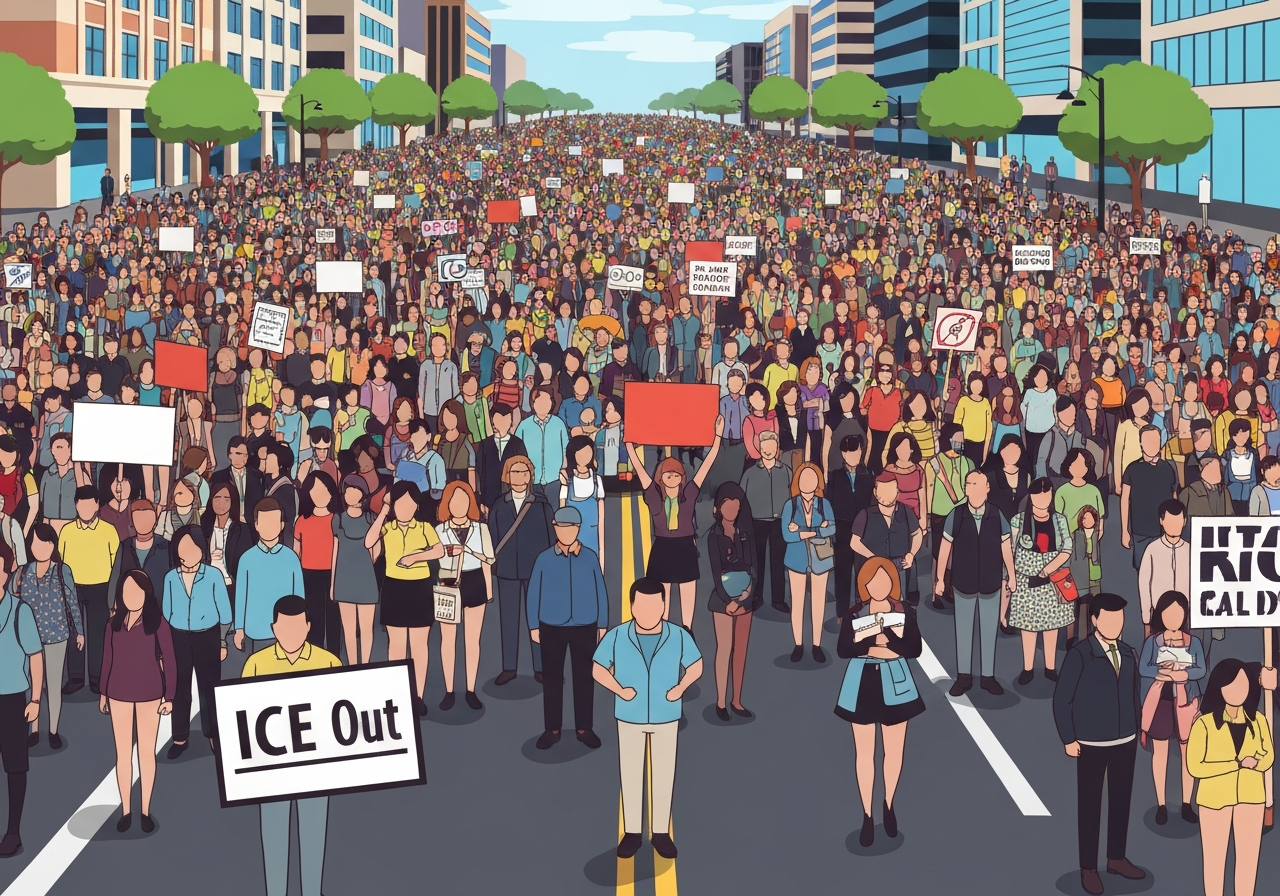
On Jan. 30, 2026, thousands gathered at Dolores Park and other San Francisco sites as part of a nationwide “ICE Out” day of action aimed at protesting recent immigration enforcement operations. Schools, workers and dozens of local businesses participated—some by closing, others by donating proceeds or providing space for organizers—in solidarity with protests sparked by enforcement surges in Minneapolis. Organizers and participants said the action sought to disrupt economic activity for a day to pressure political leaders and show broad public opposition to recent raids, detentions and two fatal shootings tied to enforcement activity.
Key Takeaways
- On Jan. 30, 2026, thousands rallied in San Francisco’s Dolores Park as part of a nationwide “ICE Out” protest responding to recent enforcement operations in multiple U.S. cities.
- San Francisco Unified School District granted excused absences to students who notified schools in advance; hundreds of students in San José and the East Bay also participated or stayed home.
- At least 70 local coffee shops, restaurants and other businesses temporarily closed or pledged solidarity, according to a growing list compiled by Mission Local.
- The demonstrations follow enforcement actions in Minneapolis that organizers say led to thousands of arrests and detentions and to the deaths of two U.S. citizens, identified in public reporting as Pretti and Good.
- Some Republican lawmakers, including Sens. Lisa Murkowski and Thom Tillis, publicly criticized the administration’s tactics and called for leadership changes at the Department of Homeland Security.
- Labor scholars and some union members described the action as an uncommon but potentially influential general strike-style protest, intended to bring businesses and political leaders’ attention to enforcement policy.
- Several businesses that remained open pledged to donate proceeds to immigration legal services or to provide free goods and spaces for protesters.
Background
The “ICE Out” mobilization on Jan. 30 grew out of a broader wave of protests triggered by enforcement surges in Minneapolis and other cities this winter. Organizers say those operations resulted in widespread detentions—including children reported as young as two—and in two deaths that galvanized national outrage. Activists framed the nationwide day of action as solidarity with communities most affected by enforcement and as a response to what they describe as overly aggressive tactics by immigration officials.
General strikes and coordinated citywide shutdowns are rare in the United States because of organizational complexity and the decentralized nature of U.S. labor. Observers point to historical precedents such as the 1934 San Francisco general strike—when roughly 150,000 workers walked off the job for four days after fatal police shootings of picketers—to explain why a modern, multi-city shutdown draws attention. Recent labor and community networks, plus social media coordination, have made cross-city solidarity actions easier to organize than in previous eras.
Main Event
The San Francisco demonstration concentrated at Dolores Park, where crowds filled lawns and adjacent streets on Friday. Speakers, students and community members marched and chanted messages opposing ICE enforcement; local educators and union-affiliated groups encouraged participation while some school districts granted excused absences to students who notified administrators. The mood combined protest energy with efforts to maintain peaceful, family-oriented participation.
Across the Bay Area, at least 70 businesses temporarily shut their doors or declared solidarity, according to Mission Local’s tracker. Some small proprietors cited moral solidarity with Minneapolis communities; others said closures were a pragmatic way to protect employees or to draw public attention to what they called an urgent humanitarian problem. Several eateries and bookstores that remained open pledged to donate proceeds or to serve as gathering spaces for organizers.
Local and national labor figures made measured statements: some union chapters discouraged formal sponsorship but allowed members to participate individually, while groups such as the California Faculty Association publicly urged members to support the demonstrations. Organizers described the action as intentionally broad—aiming to include students, labor members, small businesses and community groups—to maximize visibility without centralizing control in any single institution.
Analysis & Implications
The coordinated day of action signals a strategic shift from localized protest to broader economic and civic pressure. By encouraging business closures and absentee participation by students and workers, organizers aimed to convert moral outrage into measurable disruption. If such actions repeat or expand, they could prompt employers and local chambers of commerce to lobby political leaders for policy reviews—especially where businesses calculate that enforcement activity hurts community stability or customer flows.
Politically, the protests appear to be producing cracks in previously unified support for current enforcement strategies. High-profile criticisms from elected Republicans—such as calls by Sens. Lisa Murkowski and Thom Tillis for Department of Homeland Security leadership changes—illustrate cross-party discomfort. That dynamic increases the likelihood of congressional inquiries, hearings, or at least public pressure for internal DHS reviews, though concrete policy shifts would require sustained political momentum and coalition-building.
From a legal and administrative standpoint, claims about the scale and conduct of enforcement operations may spur litigation and independent investigations. Civil liberties groups, immigrant-rights organizations and some local officials have already signaled intentions to document and challenge alleged abuses. The combination of public demonstrations, potential legal cases and local political pressure could lengthen oversight timelines and affect future deployment decisions by federal agencies.
| Event | Reported Scale | Context |
|---|---|---|
| 1934 San Francisco General Strike | ~150,000 workers, 4 days | Response to police shootings of picketers; led to labor law changes |
| Jan. 30, 2026 “ICE Out” (SF) | Thousands in Dolores Park; 70+ businesses closed | Solidarity action against enforcement surges originating in Minneapolis |
While precise nationwide participation totals remain uncertain, the table juxtaposes the well-documented 1934 strike with the Jan. 30, 2026 solidarity action to illustrate how organizers aim to replicate leverage through concentrated, short-term disruption. The 1934 event led to significant institutional changes; observers caution that modern outcomes depend on political alignments, media attention and follow-up organizing.
Reactions & Quotes
“We want ICE out, we want the ICE terror to end,” said an educator taking part in the Dolores Park rally, summarizing the protest’s core demand and emotional tenor.
Yajaira Cuapio, San Francisco educator
“A wide, disruptive day of action can force businesses and political leaders to pay attention,” said a labor scholar noting the unusual scale and cross-sector participation.
John Logan, Professor of Labor and Employment Studies, San Francisco State University
“ICE agents do not have carte blanche in carrying out their duties,” Sen. Lisa Murkowski wrote on social media while urging accountability after the Minneapolis incidents.
Sen. Lisa Murkowski (R-Alaska)
Unconfirmed
- Precise nationwide arrest totals tied to the most recent enforcement surge are described in some reports as “thousands,” but exact, city-by-city verified counts remain incomplete.
- Attribution of specific fatalities to particular enforcement actions is under investigation; public reporting names Pretti and Good but details of official inquiries and findings are still developing.
- The full economic impact of the Jan. 30 closures on local businesses and city revenue for the day has not been independently audited.
Bottom Line
The Jan. 30 “ICE Out” mobilization in San Francisco combined large public gatherings, student participation and a notable number of business closures to amplify solidarity with communities affected by recent enforcement surges. The action reflects organizers’ intent to translate moral outrage into visible economic and civic pressure that could influence political calculations at local and national levels.
Whether the protests produce concrete policy changes will depend on sustained organizing, legal challenges, media attention and how businesses and elected officials respond to continued disruption. For now, the event underscores deep public unease about enforcement tactics and demonstrates the potential for cross-sector solidarity to shape the debate.
Sources
- KQED — Local/Regional news reporting on Jan. 30 protests and reactions (media)
- Mission Local — Local San Francisco tracker of participating businesses and closures (local media/resource)