
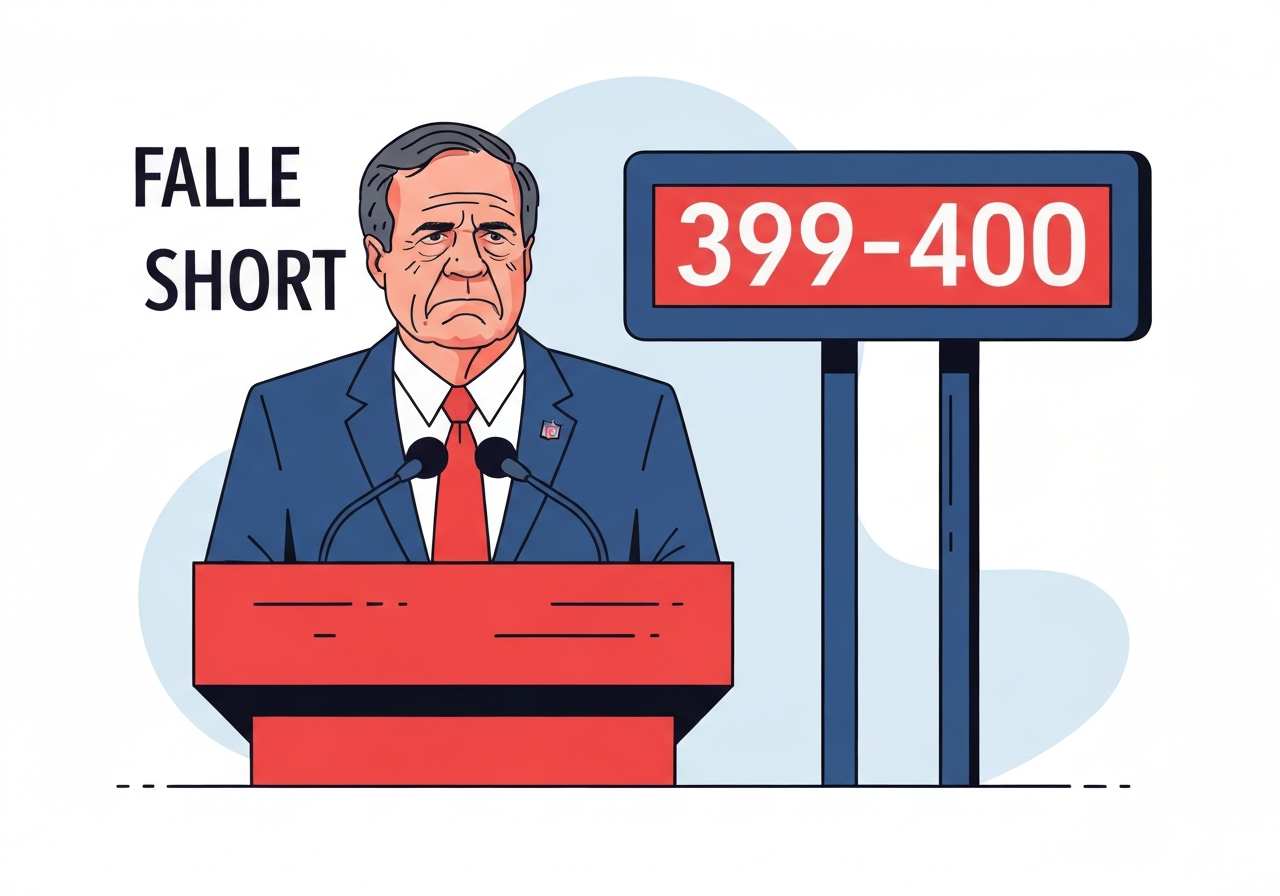
Bill Belichick was reportedly one vote short of induction into the Pro Football Hall of Fame after the class vote required 40 of 50 ballots for election. A column by Gerry Dulac of the Pittsburgh Post-Gazette—published amid debate over the Hall’s opaque voting—says Belichick received 39 votes. The result has reignited criticism of a process that required voters to name exactly three of five candidates and kept ballots secret, producing an outcome many observers call avoidable and controversial.
Key takeaways
- The Hall of Fame requires 80% approval; with 50 voters that equals 40 votes for election.
- Gerry Dulac’s Post-Gazette column states Belichick received 39 votes, one short of the threshold.
- Five candidates were on the combined ballot: Bill Belichick, Robert Kraft, Ken Anderson, Roger Craig and L.C. Greenwood.
- Because voters could select only three names, the vote design created a risk that a top candidate could fall short if votes concentrated elsewhere.
- At least one other candidate appears to have reached or passed 40 votes, undercutting the idea that no one met the threshold.
- Critics argue the Hall’s secrecy on individual ballots contributed to strategic voting and public distrust.
Background
The Pro Football Hall of Fame’s modern voting system relies on a 50-member committee and an 80% approval threshold; for the current ballot that meant 40 votes were needed. This year’s enshrinement process grouped five nominees into a single selection round in which each voter could list exactly three names. The arrangement was intended to manage a crowded field but created arithmetic constraints when several strong candidates competed for the same limited slots.
The controversy intensified after a Post-Gazette column by Gerry Dulac discussed both the process and the result, and raised the possibility that Belichick fell short by one vote. Media and fans have since focused on transparency: some compare Hall voting to award ballots that major outlets, like the Associated Press, now publish, and argue the Hall should follow suit. The Post-Gazette itself faces uncertainty, with reporting noting the publication will cease operations in May, which some critics say undermines how the story was promoted.
Main event
According to Dulac’s column, Belichick received 39 of the 50 votes—one shy of the 40 needed for election—though the piece leaves room for ambiguity about whether that figure is definitive. The ballot this year listed five candidates in a pooled vote: Belichick, team owner Robert Kraft, quarterback Ken Anderson, running back Roger Craig and defensive end L.C. Greenwood. Voters were instructed to choose exactly three names, a constraint that analysts now say encouraged strategic choices favoring first-time or senior-committee candidates perceived to have fewer future chances.
Observers noted that if Belichick did reach 39 votes, at least one of the other four nominees must have hit 40 or higher, implying someone else achieved the threshold. That outcome—where a highly credentialed coach misses by a single vote while another enters—has intensified calls to review the voting design. Some voters, including columnists such as Vahe Gregorian of The Kansas City Star, publicly explained their prioritization choices and why they omitted Belichick from their top three.
The Hall’s policy of ballot secrecy has also drawn scrutiny. Proponents say confidentiality protects voters from outside pressure; critics counter that secrecy permits result-shaping without accountability. The Associated Press and other organizations publish votes for awards, and many commentators argue the Hall could adopt a similar practice without compromising voter independence. The lack of transparent individual ballots means the public cannot verify how close candidates actually were or whether voters acted strategically.
Analysis & implications
The immediate implication is reputational: the Hall’s credibility suffers if its procedures repeatedly produce outcomes the public deems arbitrary. Belichick’s near-miss spotlights a tension between procedural rules and public expectations; voters followed the rules yet produced a result many view as inconsistent with the coaches’ meritocratic narrative. For the Hall, repeated controversy risks eroding trust among fans, former players and media stakeholders who expect clear, defensible selections.
Strategically, the three-choice limit amplified vote-splitting risks. When several strong candidates appear together—especially a mix of coaches, owners and players—voters may prioritize nominees they think have a narrower window to be elected. That dynamic benefits some candidates and penalizes others, generating outcomes that reflect tactical calculation as much as merit. Reformers argue that either expanding the number of choices or changing the threshold mechanics could reduce the probability of high-profile near-misses.
On the institutional side, transparency reforms are now more salient. If ballots were disclosed after a short embargo, voters would know their decisions would become public and might adjust behavior accordingly, potentially reducing overt strategic omissions. However, disclosure also risks exposing voters to lobbying, harassment or pressure from interest groups—a real concern the Hall must weigh. Any change will require the Hall’s committee and stakeholders to balance accountability against voter protection.
Comparison & data
| Item | Requirement or total | Reported Belichick result |
|---|---|---|
| Voters | 50 | 50 |
| Votes needed (80%) | 40 | 40 |
| Reported votes for Belichick | N/A | 39 (per Dulac) |
The table summarizes the arithmetic at the heart of the controversy: with 50 ballots, 40 votes are required for election. Dulac’s reporting—that Belichick received 39 votes—places him a single vote short. That arithmetic makes clear why grouping five nominees into a single three-choice slate can produce tight results: a few strategic switches by voters can change outcomes dramatically. The numbers alone show this was not a landslide rejection but an extremely close outcome that turned on granular voter choices.
Reactions & quotes
Reactions have come from columnists, voters and fans, often framing the issue as one of process rather than pure evaluation. Some commentators defended the secrecy tradition; others demanded disclosure and procedural review. Below are representative short statements and their contexts.
“To be elected, a candidate has to receive at least 80% of the votes…Belichick, according to a published report, did not. He received 39.”
Gerry Dulac / Pittsburgh Post-Gazette (column)
This encapsulates Dulac’s factual framing of the vote arithmetic; his column also argued voters aren’t owed full transparency, a stance that has drawn pushback. Dulac’s piece was the vehicle for the 39-vote claim and for debate about whether publication of ballots is necessary.
“I passed on Belichick because I believed other nominees might not get another close opportunity.”
Vahe Gregorian / The Kansas City Star (voter explanation)
Gregorian’s reasoning illustrates a common voter calculus: prioritize candidates perceived to have fewer realistic future chances. That strategy helps explain how a highly qualified coach could be edged out by players or contributors deemed more time-sensitive candidacies.
“Awards and many ballots are published; there is precedent for disclosure that increases public trust.”
Associated Press practice (industry example)
Commentators point to organizations such as the Associated Press that disclose votes for awards, arguing the Hall could adapt similar transparency without compromising fairness. The AP example is cited to show practical alternatives exist.
Unconfirmed
- Whether Dulac’s 39-vote figure is final and independently verified; the Hall has not publicly released individual ballot totals.
- Exactly which other candidate or candidates reached 40 or more votes; the identity of any candidate who met the 80% threshold has not been disclosed alongside a breakdown.
- Whether the Post-Gazette’s impending closure in May affected editorial choices or the prominence given to this scoop.
Bottom line
The report that Bill Belichick missed induction by a single vote crystallizes broader concerns about the Hall of Fame’s voting mechanics and secrecy. The arithmetic is simple—39 reported versus 40 required—yet the political and procedural fallout is complex, touching on voter strategy, institutional trust and media accountability.
Going forward, the Hall’s leadership faces a choice: defend a confidential tradition that many see as allowing tactical results, or move toward greater transparency or rule changes that reduce the chance of a similarly controversial outcome. Either path will have trade-offs; the current episode makes clear the status quo leaves the Hall vulnerable to sustained criticism.