
Lead
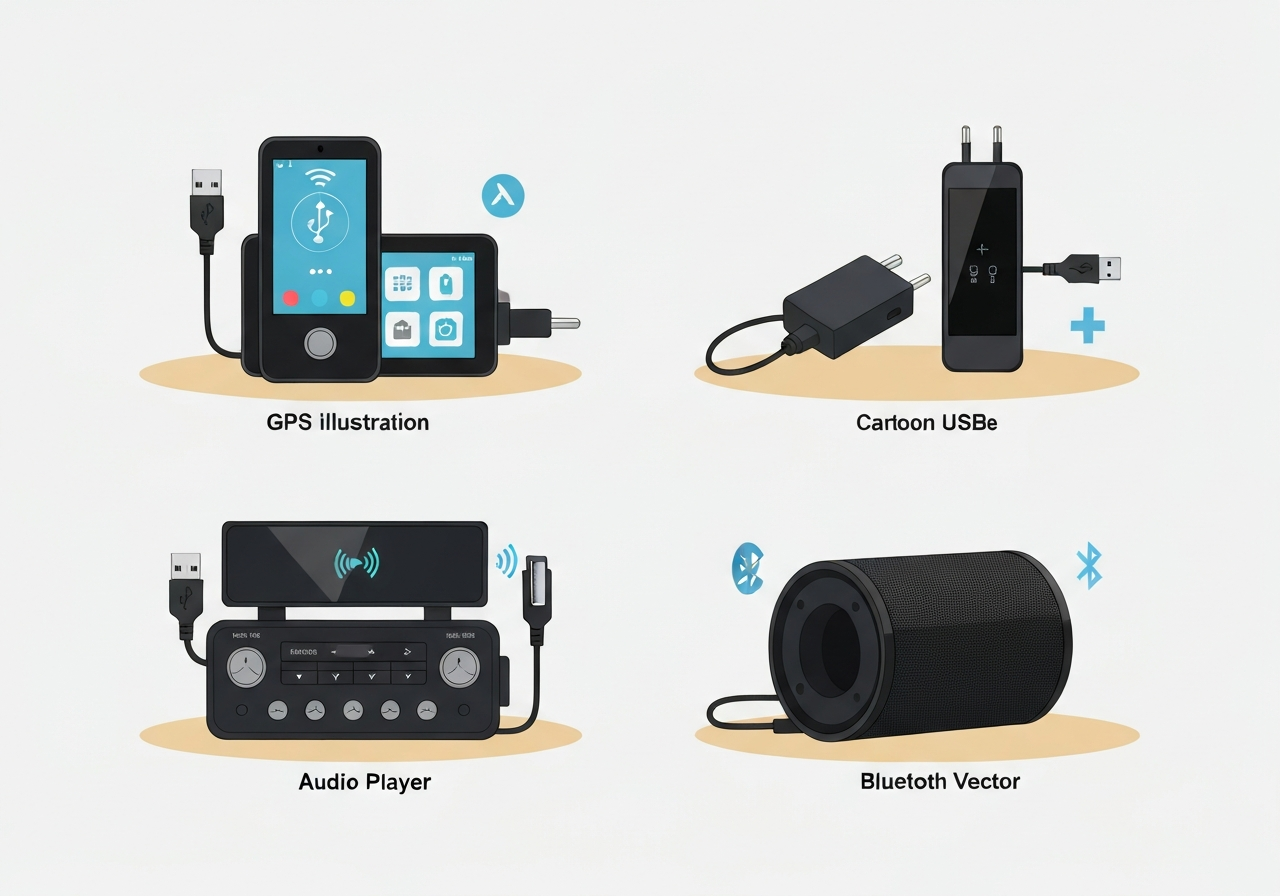
Four compact gadgets that plug into a car’s USB port— a mini USB fridge, a Bluetooth receiver, a portable humidifier and a heads-up display—can add comfort and convenience on the road. This selection highlights plug-and-play items available now that cost no more than about $30 and work with common car USB outlets. Each device delivers a specific benefit: keeping a drink cool, enabling wireless audio, restoring cabin moisture, or projecting speed in the driver’s line of sight. Together they demonstrate how the modest USB port has evolved from simple charging to enabling a broader in-car ecosystem.
Key Takeaways
- The TOPINCN mini USB fridge measures about 12 inches, weighs under one pound and costs roughly $30; its maker says it cools a can to 47°F in about five minutes.
- The UGREEN Bluetooth receiver has more than 25,000 reviews and a roughly 4.6-star average on Amazon; it supports Bluetooth 6.0, SBC codec, about a 32-foot range, remembers up to five devices and can pair two devices at once for about $14.
- The GENIANI portable USB humidifier lists near 38,000 reviews with a 4.1-star average; its smallest 250ml model costs about $27 and can run up to eight hours while operating quietly at about 38 dB.
- The KUOWEIHUD heads-up display is a low-cost HUD (~$16) that runs from a 5V USB source, reports speed with a 10Hz refresh rate using up to 32 satellites and displays up to 115 mph on a reflective windshield film.
- All four gadgets are intentionally under $30, chosen for plug-and-play simplicity with USB-A ports; a USB-A to USB-C adapter is an inexpensive option for newer devices.
- These items are aimed at comfort and convenience rather than full appliance performance; their claims (cooling speed, run time, GPS precision) reflect manufacturer specs and user summaries.
Background
USB ports began appearing in cars in the mid-2000s primarily as a convenient way to charge mobile phones. Early implementations often provided limited current and were treated as accessories rather than true vehicle power sources. Over the past decade, automakers and aftermarket vendors have increased USB output and introduced a wider range of accessories that rely on that 5V rail, including data-capable ports and higher-current charging outlets.
As USB power became more reliable and ubiquitous in cabins, third-party makers started offering novel gadgets sized and tuned specifically for in-car use. Some products are designed to work within the conservative power envelope of a vehicle’s USB port, while others assume the availability of higher-output or dedicated 12V supplies. That distinction matters for buyers: items designed for USB will generally be safe to run from a car’s built-in port or a modest power bank, whereas traditional car appliances often require the cigarette-lighter 12V socket.
Main Event
Mini USB Fridge: The TOPINCN mini USB fridge is a compact cooler about 12 inches long and weighing less than a pound. Priced near $30, it is sized to hold a single medium can and is powered via USB, not the 12V socket. TOPINCN’s specifications say a room-temperature can can be cooled to about 47°F in approximately five minutes; users can leave it connected and use an onboard switch to power it down when desired. Because it runs from a 5V USB source, the unit can also operate from a power bank for trips or camping, though it won’t match the performance of larger 12V automotive fridges.
Bluetooth Receiver: The UGREEN Bluetooth receiver targets older cars that lack built-in Bluetooth. With an estimated 25,000+ reviews and a 4.6-star average on Amazon, the adapter plugs into a car’s AUX input and draws power from USB. It supports Bluetooth 6.0 and the SBC codec, claims a clear connection to about 32 feet, and includes a built-in microphone for hands-free calls. The adapter can remember up to five paired devices, often auto-connects when the vehicle is turned on, and some units support simultaneous connection of two phones.
Portable Humidifier: GENIANI’s USB-powered humidifier is offered in several tank sizes; the compact 250ml model is listed around $27 and promises up to eight hours of operation on a single fill. Installation is simple: fill the tank, soak the included cotton wick to avoid dry starts, and plug into the car’s USB port. GENIANI units typically include an automatic shutoff when water runs low and advertise a quiet operating noise level near 38 dB, making them suitable for long drives and overnight use in stationary settings.
Heads-Up Display: The KUOWEIHUD HUD provides a windshield-projected speed readout and runs from a 5V USB feed (about $16). The device pairs GPS-derived speed data with a reflective film placed on the windshield to show speed up to 115 mph. With a 10Hz refresh rate and connections to as many as 32 satellites, the unit aims to provide timely speed readouts, and it has an ambient-light sensor that adjusts display brightness to reduce glare during day and night driving.
Analysis & Implications
The shift from USB as a simple charger to a general-purpose cabin power source broadens what buyers can reasonably expect from in-car accessories. Low-voltage USB devices are convenient because they usually avoid the vehicle’s higher-voltage 12V circuit and can run from power banks, but buyers should calibrate expectations: USB-powered fridges and humidifiers are designed for incremental comfort rather than industrial-grade performance. Manufacturer claims such as “cools a can to 47°F in five minutes” or “runs eight hours on 250ml” are useful benchmarks but will vary with ambient temperature and actual power delivery.
Compatibility and safety are practical considerations. Many factory USB ports are rated for modest current; a heavy electrical draw over extended idling could strain a weak port or deplete a vehicle battery if the engine is off. Purchasing devices that specify USB power operation and following instructions (for example, the humidifier’s wick soak step) reduces the risk of damage. The inexpensive USB-A to USB-C adapters mentioned by sellers are a pragmatic way to bridge legacy vehicle ports and modern peripherals, but quality matters to avoid loose connections or overheating.
From a human-factors perspective, HUDs and other driver-facing displays offer safety benefits by reducing the frequency drivers look down at the instrument cluster. However, aftermarket HUDs that depend on a reflective film and small projected numerals can be sensitive to viewing angle, windshield curvature and sunlight. Users should test fit and readability before relying on these devices for speed-critical decisions. Bluetooth adapters with hands-free calling can reduce manual phone handling, but voice-control behavior, microphone placement and call quality vary across models.
Comparison & Data
| Device | Approx. Price | Key Specs | Notable Claim |
|---|---|---|---|
| TOPINCN Mini USB Fridge | $30 | ~12 in, <1 lb, USB powered | Cools a can to 47°F in ~5 minutes |
| UGREEN Bluetooth Receiver | $14 | Bluetooth 6.0, SBC, ~32 ft range | 25,000+ reviews, 4.6-star avg, remembers 5 devices |
| GENIANI Humidifier (250ml) | $27 | 250 ml, up to 8 hrs, ~38 dB | Auto shutoff on low water |
| KUOWEIHUD HUD | $16 | 5V USB, 10Hz, up to 32 satellites | Displays up to 115 mph |
The table above summarizes list price, notable hardware attributes and the core manufacturer or marketplace claims for each unit. These figures are intended to let readers compare portability, claimed performance and likely in-car fit before purchase; real-world performance will depend on vehicle USB output, ambient conditions and user setup.
Reactions & Quotes
Manufacturers often frame these gadgets as convenience upgrades rather than full replacements for larger systems; buyer reviews tend to echo that view.
“Small, plug-and-play solutions that are built for USB power are meant for added comfort on trips, not as a substitute for larger appliances.”
Product description / manufacturer summary
Consumer feedback highlights the price-to-value balance but also notes variability in real-world results.
“It works well for keeping a drink cooler on a hot day, though it won’t make a lukewarm can ice cold like a full-sized fridge.”
User review summaries on retail listings
Road-safety voices encourage cautious adoption of driver-facing gadgets, urging buyers to prioritize readability and minimize distraction.
“Any device that keeps the driver’s eyes up and on the road can reduce glance time, but aftermarket HUDs must be fit and tested to avoid new visual clutter.”
Road-safety researcher (summary)
Unconfirmed
- The exact five-minute cooling time for the TOPINCN fridge is a manufacturer claim and may vary with ambient temperature and initial can temperature.
- UGREEN’s stated 32-foot practical range and universal auto-connect behavior depend on radio environment and paired device behavior and thus may not hold in all cars or setups.
- HUD accuracy under heavy canopy, urban canyon GPS conditions, or windshield angles may be reduced; the 10Hz refresh and satellite count reflect device specs but not guaranteed real-world performance in every location.
Bottom Line
For drivers seeking inexpensive, low-effort upgrades, USB-powered gadgets can deliver meaningful comfort and convenience: a chilled can, wireless audio, improved cabin humidity or a glanceable speed readout. These devices are generally designed to run from a standard 5V USB source and are priced to be accessible, but they are trade-offs in size and ultimate performance compared with larger or car-specific systems.
Before buying, confirm your car’s USB output, read user feedback about real-world performance and follow installation guidance (for example, humidifier wick preparation and HUD placement). When chosen and used thoughtfully, these small USB devices make incremental but practical improvements to the driving experience without complex installation or major expense.
Sources
- BGR: 4 Devices Compatible With Your Car’s USB Port (media: news feature)
- USB Implementers Forum (official: industry standards organization)
- NHTSA: Distracted Driving (official: U.S. government traffic safety guidance)