
Lead
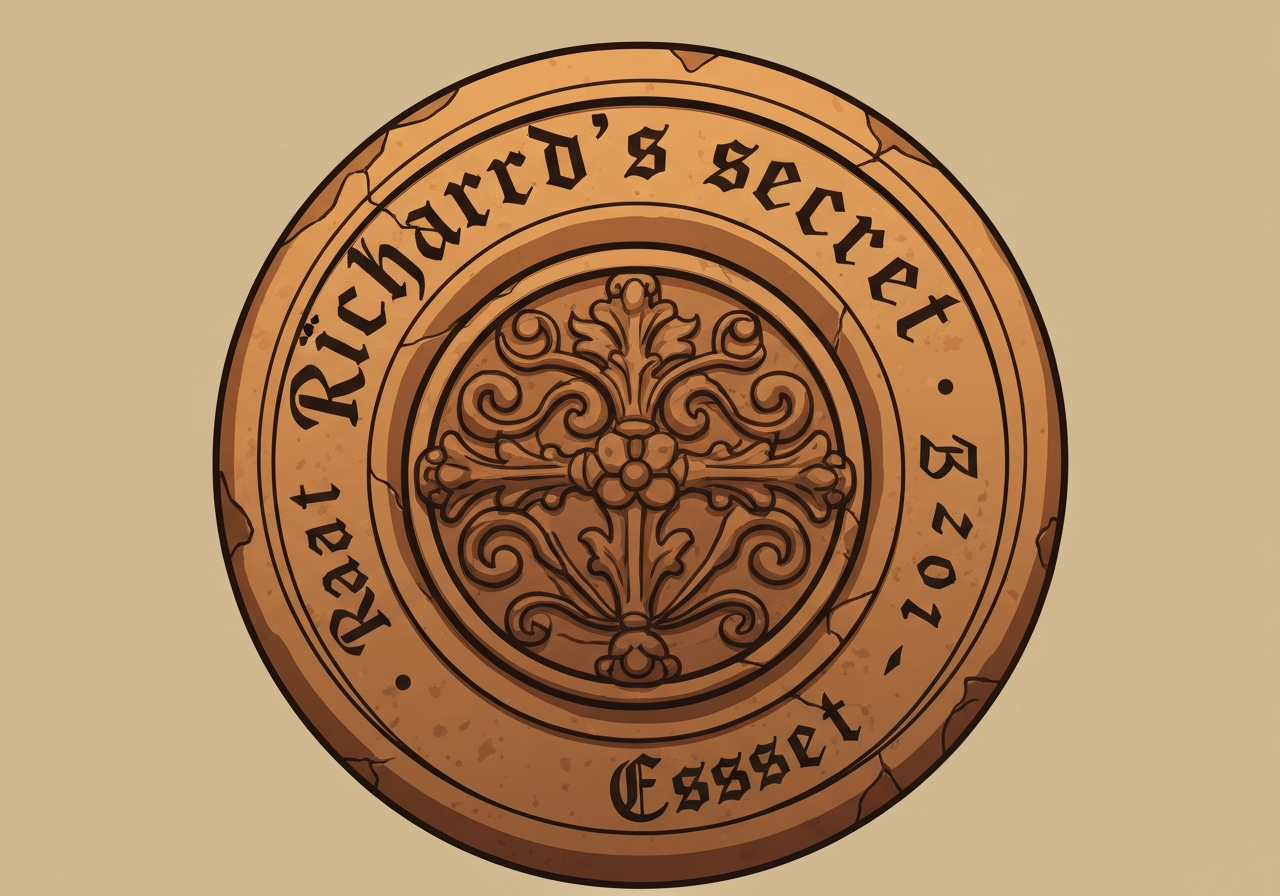
In autumn 2024 a metal detectorist uncovered a small silver seal in Gosfield, Essex, that is now dated to roughly 800 years old. Detailed analysis by the U.K.’s Portable Antiquities Scheme shows the oval seal incorporates a much older carnelian gemstone carved in the Roman period — about 2,000 years ago. The bezel bears a mirror-image inscription reading “SECRETUM.RICARDI” and a cross pattée; the intaglio chariot on the carnelian would print correctly into wax. The object has been submitted under the U.K.’s Treasure Act 1996 and the Braintree Museum in Essex has expressed interest in acquiring it after a treasure inquest.
Key takeaways
- The object was found in Gosfield, Essex, in fall 2024 by a metal detectorist and reported to the Portable Antiquities Scheme.
- The silver seal measures about 1 inch (27.5 mm) in length and weighs 0.23 ounces (6.44 g), per the PAS entry.
- The bezel contains a carnelian intaglio depicting a two-horse chariot dated to the late 1st century B.C. or early 1st century A.D., making the gem ~1,200 years older than the seal metalwork.
- An inscription around the bezel reads “SECRETUM.RICARDI,” translated as “Richard’s secret” or “the secret seal of Richard.”
- The seal includes a loop for suspension, suggesting it was worn on a cord or necklace rather than used as a finger signet.
- The piece was submitted under the Treasure Act 1996 because it is silver and over 300 years old; a local museum (Braintree) hopes to acquire it.
- Experts say the reuse of a Roman gemstone likely signaled classical learning, far-reaching connections, or elevated social standing for the owner.
Background
Medieval seals served as personal and administrative authentication tools: pressing a carved matrix into wax authorized letters, legal acts, and possessions. From the 12th to 14th centuries especially, seals circulated widely among clergy, merchants, knights and minor nobility, often featuring religious symbols, names and heraldic imagery. Small, portable matrices with suspension loops are comparatively uncommon; many contemporary examples are signet rings rather than pendant seals.
Reusing older gemstones—intaglios or cameos—from the classical world was not unheard of in medieval Europe. Roman glass, gems and engraved stones were valued for their craftsmanship and antiquity; mounting an antique gem into new metalwork could confer prestige and connect the bearer to a classical past. Institutions such as the Portable Antiquities Scheme record these finds to balance archaeological context with private discovery by detectorists.
Main event
The object was recovered in Gosfield, an area in eastern Essex, during the fall of 2024 and subsequently recorded in the Portable Antiquities Scheme database. Conservators noted the matrix is silver and oval with a small suspension loop at one end, measuring 27.5 millimeters across and weighing 6.44 grams. Its small size and loop indicate it was likely worn rather than attached to a signet ring.
Close inspection showed a brownish-red carnelian set at the center. The stone’s intaglio depicts a two-horse chariot with a standing charioteer holding reins and a whip — an image associated with Roman circus racing scenes and datable stylistically to the late first century B.C. or early first century A.D. Because the carved scene is cut in intaglio and reversed on the gem, it would print the correct orientation when pressed into wax.
Engraved around the bezel in mirror-image script are the Latin words “SECRETUM.RICARDI.” The phrase is commonly translated as “Richard’s secret” or the “secret seal of Richard,” and the motif is accompanied by a cross pattée — a Christian emblem used in various medieval contexts, sometimes but not exclusively associated with crusading orders. The object’s dual elements — medieval silverwork plus an ancient Roman gemstone — reveal reuse of classical material in a medieval object.
Analysis & implications
The presence of a Roman intaglio in an 800-year-old matrix points to several overlapping practices: collecting antiquities, reusing valued materials, and symbolic display. A Roman carnelian would have been rare, portable and visibly exotic in the medieval period; selecting such a gem for a personal seal could advertise wealth, education or connections to trade networks that supplied ancient objects.
Socially, the inscription naming “Richard” anchors the object to an individual identity but does not by itself identify rank. The looped, wearable format suggests the owner wished to keep the seal close at hand, possibly for frequent use or as a status pendant. The cross pattée indicates an overtly Christian symbolic context, which would be expected on official personal seals of the High Middle Ages.
For archaeologists and historians, the find underscores the long afterlife of Roman objects and their repurposing in medieval material culture. The artifact provides a datable junction: a securely medieval silver matrix linked with a well-dated Roman gem, enabling cross-period study of taste, trade and reuse. If the Braintree Museum acquires the seal, further conservation and scientific analyses (metallurgy, gem microscopy) could refine manufacturing and provenance hypotheses.
Comparison & data
| Attribute | Seal (medieval) | Gemstone (Roman) |
|---|---|---|
| Approximate date | ~800 years old (c. 13th–14th century) | Late 1st century B.C. – early 1st century A.D. (~2,000 years old) |
| Material | Silver matrix, suspension loop | Carnelian intaglio with chariot scene |
| Dimensions/weight | 27.5 mm long; 6.44 g (0.23 oz) | Fits bezel; engraved in intaglio |
The table highlights the temporal gap between the matrix and the gem. That gap — roughly 1,200 years — is central to interpreting how medieval owners perceived and repurposed antiquities. Scientific tests (e.g., gem microscopy, metal composition analysis) can further validate dating and origin hypotheses and are likely next steps if the museum acquisition proceeds.
Reactions & quotes
Local museum staff and PAS archaeologists emphasized the find’s cultural layering: an 800-year-old piece integrating a Roman-era engraved gemstone is unusual and instructive for cross-period studies of material culture. Experts noted the object’s small, wearable format makes it especially interesting as evidence of personal display.
“It would have signaled the owner’s social standing and an awareness of the classical world,”
Rogerson (quoted by BBC)
The Portable Antiquities Scheme recorded the object and is processing the Treasure Act submission; officials said any museum acquisition will follow the statutory inquest and valuation procedures set out under the 1996 Act.
“The matt silver matrix and the Roman intaglio create a rare combination that helps us read medieval collecting and identity,”
Portable Antiquities Scheme record and conservator notes (official record)
Unconfirmed
- Whether the inscribed name “Richard” refers to a known local figure, a noble, a cleric, or an otherwise unrecorded person remains unconfirmed pending documentary or archaeological context.
- The exact route by which the Roman carnelian reached medieval Essex—whether inherited, traded, or recovered locally—is not yet demonstrated by direct evidence.
- Any attribution of the cross pattée specifically to an order such as the Knights Templar is unproven; the symbol was broadly used in medieval Christian contexts.
Bottom line
The Gosfield seal is a compact but information-rich object: an 800-year-old silver matrix deliberately paired with a Roman carnelian intaglio. That intentional reuse signals medieval tastes that prized classical artifacts as markers of status and identity. Because the piece has been reported under the Treasure Act 1996, legal and curatorial processes will determine its next home and enable further study.
Follow-up scientific analyses and the treasure inquest outcome will be important for confirming manufacturing techniques, the gem’s precise provenance and whether the named “Richard” can be linked to local or documentary records. For scholars and the public alike, the seal offers a tangible example of continuity and appropriation across two millennia of European material culture.