
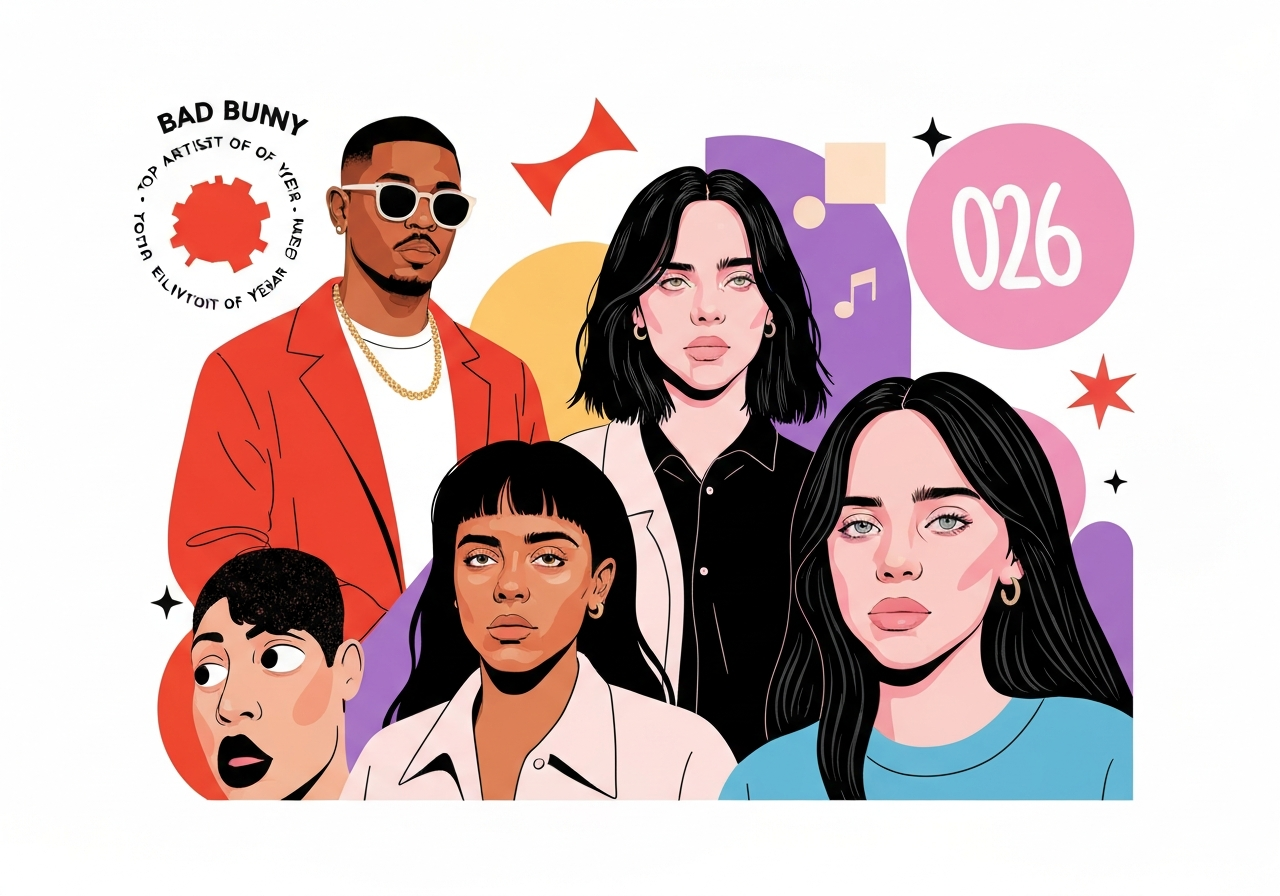
At the 68th Annual Grammy Awards in Los Angeles on Sunday night, Bad Bunny and Kendrick Lamar emerged as the ceremony’s biggest winners while Billie Eilish, Olivia Dean and a range of artists scored milestone trophies. The show at Crypto.com Arena mixed high-profile performances, long-form tributes and pointed political statements — notably opposition to recent U.S. immigration enforcement actions. Bad Bunny’s Debí Tirar Más Fotos won album of the year, the first Spanish-language LP to do so, while Kendrick Lamar collected five Grammys, including record of the year. The evening closed with a series of tributes and memorable stage moments that underscored the night’s blend of celebration and protest.
Key Takeaways
- Bad Bunny won album of the year for Debí Tirar Más Fotos, becoming the first Spanish-language winner of that prize in the Grammys’ 68-year history.
- Kendrick Lamar took five trophies — the most of any artist this year — bringing his career total to 27 Grammys and retaining his position as the most-awarded rapper in Grammys history.
- Billie Eilish and Finneas won song of the year for “Wildflower,” marking Eilish’s third win in that category and a new record for songwriters.
- Olivia Dean captured best new artist, capping a breakout year following strong U.K. album sales and U.S. chart gains for singles like “Man I Need.”
- The ceremony featured sustained political messaging: multiple artists wore “ICE OUT” pins and several winners used acceptance speeches to criticize recent immigration enforcement actions.
- Genre breakthroughs included K-pop’s first Grammy win for best song written for visual media and continued recognition for música urbana across major categories.
- High-profile live moments included Cher’s lifetime achievement appearance, an extended in-memoriam segment, and standout performances from Lady Gaga, Tyler, the Creator and Justin Bieber.
Background
The 68th Grammys were staged amid heightened cultural and political friction in the United States, with immigration enforcement and border policy dominating headlines in early 2026. The Recording Academy’s awards have increasingly become venues for artists to make political statements, and this year’s ceremony continued that trend as performers and winners used the platform to address immigration policy and related controversies. The Grammys also reflected long-term shifts in the music business: streaming and global tastes have expanded the field of contenders, allowing artists who primarily sing in languages other than English to compete at the highest level.
Bad Bunny’s ascent has been closely tied to streaming-dominant consumption patterns and cross-genre collaboration; his 2025 LP Debí Tirar Más Fotos combines Puerto Rican traditional forms with contemporary electronic and urban production. Kendrick Lamar’s continued dominance follows a decade of critical and commercial success that has positioned him as an institutional figure within hip-hop. Meanwhile, younger acts such as Olivia Dean and Lola Young show how social media, festival runs and transatlantic promotion can accelerate a career from domestic success to international award recognition.
Main Event
The show opened and closed with high-energy performances and several carefully staged tribute segments. Early on, Bad Bunny won best música urbana album and used his moment to command the room’s attention: he said “ICE out” and framed his remarks around human dignity, telling the audience, “We’re not savage, we’re not animals, we’re not aliens. We are humans, and we are Americans.” That line was widely echoed throughout the evening by artists who wore matching pins and referenced immigration issues in acceptance remarks.
Kendrick Lamar’s sweep of the rap categories — including record of the year for “Luther” (with SZA) and best rap album for GNX — was the night’s other major narrative. Lamar has now accumulated 27 Grammys, and his wins this year reinforced his standing as a central figure in contemporary hip-hop. The presentation of record of the year had a notable moment when Cher, presenting, mispronounced a name while announcing the winner; Lamar and SZA accepted and used their time to reflect on the song’s inspirations.
Billie Eilish and Finneas won song of the year for “Wildflower,” their third victory in the category as songwriters. Eilish’s short acceptance included a political line — “No one is illegal on stolen land” — which joined the evening’s broader protest themes. Olivia Dean won best new artist, highlighting a trajectory that moved from strong U.K. album openings to growing U.S. chart presence and festival exposure.
Other winners spanned genres: Jelly Roll took best contemporary country album, Leon Thomas won R&B album, the Cure and Turnstile collected awards in alternative and rock categories, and a K-pop track won for best song written for visual media — a first for that genre at the Grammys. The ceremony also contained lengthy in-memoriam segments and a multi-artist tribute led by Lauryn Hill for D’Angelo, with guests such as John Legend and Wyclef Jean joining on stage.
Analysis & Implications
Bad Bunny’s album of the year victory is both symbolic and practical: it signals mainstream industry acceptance of non-English language albums at the highest level. The award reflects streaming-era consumption patterns and globalized pop culture in which Spanish-language music commands vast audiences. For the industry, this win will likely accelerate investment in Latin artists for major-label promotion, festival bookings and cross-market collaborations.
Kendrick Lamar’s multiple wins solidify his role as a cultural institution within hip-hop. At 38, his continued critical recognition shows how the Academy rewards artists who combine commercial reach with sustained artistic ambition. Lamar’s success may shape how rap albums are marketed and championed in awards cycles, reinforcing the narrative that albums with dense themes and long-form cohesion can still prevail in a singles-driven market.
The visible political statements at the Grammys — coordinated pins and repeated references to immigration enforcement — suggest artists remain willing to leverage cultural events for advocacy. That posture can influence public discussion and corporate responses: sponsors, broadcasters and venue operators will weigh audience and advertiser reactions as they navigate future awards and halftime platforms. It may also affect scheduling and security conversations around culturally significant live events such as the Super Bowl.
Finally, wins for a wide set of genres, including K-pop and música urbana, point to a more plural awards landscape. The Recording Academy’s choices this year may encourage genre crossover and give international artists greater bargaining power in touring and media rights negotiations. For listeners, these results validate broader musical tastes and may expand mainstream radio and playlist curation beyond traditionally dominant Anglo-American pop.
Comparison & Data
| Artist | Major Awards Won (2026) | Notable Prize |
|---|---|---|
| Bad Bunny | 3 | Album of the Year |
| Kendrick Lamar | 5 | Record of the Year |
| Billie Eilish & Finneas | 1 | Song of the Year |
| Olivia Dean | 1 | Best New Artist |
The table highlights the concentration of top trophies among a small group of artists: Lamar led the night with five wins, while Bad Bunny’s album victory stands out for its historic language milestone. These figures underline how a few headline artists can dominate both nominations and wins in a single ceremony, a pattern that affects media coverage, streaming spikes and sales in the weeks following the awards.
Reactions & Quotes
Acceptance speeches and backstage comments provided direct statements that framed the night’s political overtones and artistic significance.
“Before I say thanks to God, I’m going to say ICE out. We’re not savage, we’re not animals, we’re not aliens.”
Bad Bunny, acceptance speech
Bad Bunny’s remarks came during his win for best música urbana album and foreshadowed his later album of the year acceptance, reinforcing a theme of protest that recurred across speeches.
“No one is illegal on stolen land. We need to keep fighting and speaking up and protesting.”
Billie Eilish, acceptance speech
Eilish used her moment for song of the year to reiterate a political stance, aligning with other artists who wore protest pins and referenced immigration policy in their remarks.
“In challenging times, music never stands still. It moves, it heals, it pushes us forward.”
Harvey Mason Jr., Recording Academy CEO
Mason’s short remarks framed the ceremony as both a cultural touchstone and a space for reflection amid social tensions.
Unconfirmed
- Whether Justin Bieber’s boxer-shorts performance was coordinated as a direct Skylrk marketing drop remains unconfirmed and has not been verified by the artist’s brand team.
- Speculation that the night’s political statements will produce measurable boycotts or sponsor withdrawals is ongoing and not yet substantiated by announced commercial actions.
Bottom Line
The 2026 Grammys combined artistic milestones with explicit political messaging, producing a ceremony that will be remembered as much for its winners as for its statements. Bad Bunny’s album of the year win is an industry landmark, validating the global reach of Spanish-language music in mainstream U.S. awards contexts, while Kendrick Lamar’s multiple trophies reaffirm his rarefied status within hip-hop and across genres.
Looking ahead, the awards’ outcomes are likely to affect tour planning, promotion budgets and platforming decisions for artists and labels. The prominence of protest rhetoric also signals that awards shows will continue to be arenas for political expression, a pattern that industry stakeholders — from advertisers to broadcasters — will monitor closely as they weigh partnerships and programming decisions in 2026 and beyond.