
Lead
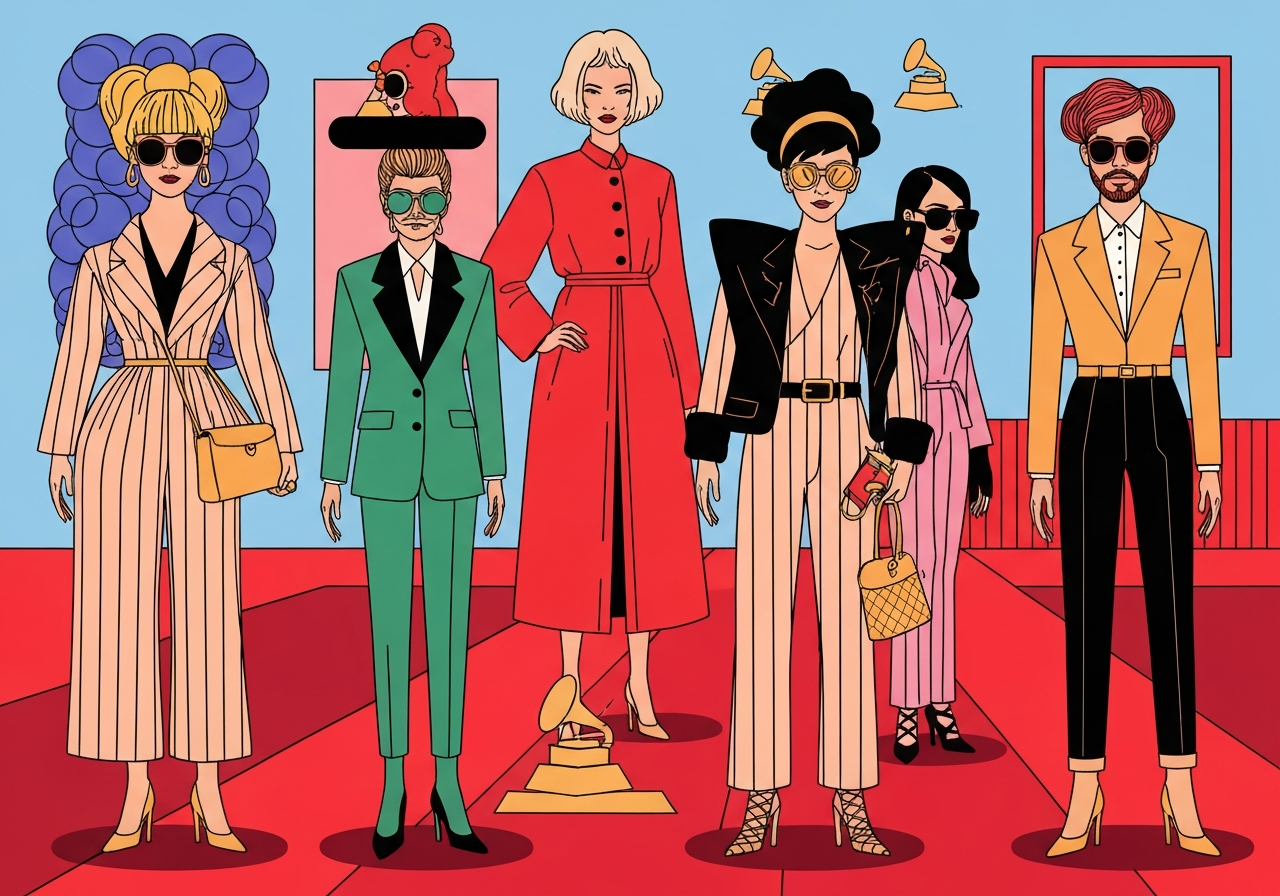
On Feb. 1, 2026 in Los Angeles, the Grammy Awards red carpet delivered a night of daring silhouettes and couture spectacle captured by The Los Angeles Times photo team. High-drama moments ranged from sheer, nipple-ring-accented gowns to pearl-draped classics and full-skirted black-and-white statements. Lady Gaga’s custom feathered creation and a string of celebrity showstoppers dominated headlines and social feeds, underscoring the Grammys’ continuing role as a stage for fashion risk-taking. The gallery and captions, photographed by Christina House, document both headline looks and quieter style choices across the guest list.
Key Takeaways
- Event date and coverage: The red carpet took place Feb. 1, 2026, photographed and captioned by Christina House for the Los Angeles Times.
- Bold trend: Sheer and near-nude gowns were prominent—Chappell Roan wore a Mugler dress that incorporated nipple rings as a structural element.
- Couture moments: Sabrina Carpenter appeared in a pearl-covered Valentino gown; several attendees wore recognizable house names including Mugler, Valentino, Tom Ford, Miu Miu and Roberto Cavalli.
- Statement styling: Lady Gaga arrived in a custom feathered gown by Matières Fécales and later performed with a cage-like headpiece.
- Varied silhouettes: Rosé and Olivia Dean favored full-skirted black-and-white gowns, while Zara Larsson and others embraced midriff-baring or ab-baring looks.
- Men’s styling: Male artists who drew attention included Bad Bunny, Sombr (in sequined Valentino), Benson Boone (black velvet tux) and Gesaffelstein (signature mask).
- Notable appearances: First-time Grammys attendees and nominees such as Lola Young, and public moments like Kristy Sarah’s first appearance since filing for divorce, were recorded in the gallery.
- Accessory notes: Several musicians, including Billie Eilish and Kehlani, wore visible lapel or enamel pins during arrivals.
Background
The Grammy Awards red carpet has long been a platform where musicians, stylists and designers stage looks that test mainstream fashion boundaries. Historically the ceremony blends high couture, performance-ready costumes and streetwear, creating a showcase with outsized cultural impact—runway trends and viral moments often trace back to this evening. In 2026 this dynamic remained intact: designers supplied bespoke gowns and suits while some artists used the red carpet to extend the narrative of their stage personas.
Photography plays a central role in how these moments are archived and interpreted; Christina House and The Times’ photo team documented dozens of arrivals and captioned each image with identifying details. The mix of established stars (Joni Mitchell, Reba McEntire, Lady Gaga) and rising nominees (Lola Young, Huntr/x members) underscored the Grammys’ dual role as industry recognition and public spectacle. These images are routinely recontextualized across social media and fashion coverage, magnifying both commercial opportunity for designers and the cultural footprint of individual artists.
Main Event
The night opened with a parade of varied silhouettes. Chappell Roan’s Mugler gown—constructed to hang from nipple rings—became an immediate talking point, exemplifying the evening’s blurring of lingerie and outerwear. Sabrina Carpenter presented a contrasting mood in a Valentino gown layered with pearls, an ethereal counterpoint to the more exposing trends on display.
Lady Gaga arrived in an extravagant feathered gown by Matières Fécales, complete with a long train that framed a raven-like silhouette on the carpet; she later amplified that motif onstage with a cage-like headpiece during her performance. Rosé and Olivia Dean chose classic black-and-white full skirts, bringing a sense of timelessness amid the evening’s flashier moments.
Around them, nominees and guests offered a spectrum of approaches: Teyana Taylor in a Tom Ford by Haider Ackermann gown tailored to her form; Billie Eilish sporting a Baracuta jacket with a visible ICE Out pin; Doechii in Roberto Cavalli making a maximalist entrance; and Sombr shimmering in sequined Valentino. Male artists such as Bad Bunny and Benson Boone favored elevated suiting—one in tailored velvet, another in a sleek, polished look.
Other arrivals ranged from casual edge (Miley Cyrus in a black leather jacket with oversized gold brooches) to sartorial pageantry (Laufey in a lilac Miu Miu gown). The diversity of dress codes reflected musicians’ different relationships to image-making: some prioritized couture and red-carpet drama, others emphasized performance brand or personal comfort.
Analysis & Implications
The 2026 Grammys red carpet reinforced several converging trends. First, the prevalence of sheer and body-exposing constructions—often anchored by visible hardware or unconventional fastenings—signals designers leaning into literalizations of the “naked dress” concept that circulated on runways earlier in the decade. Such looks invite conversations about agency, spectacle and the boundaries between fashion and performance art.
Second, heritage couture continues to coexist with costume-led experimentation. Valentino’s pearl work and Tom Ford–level tailoring illustrate that legacy houses remain vital for artists seeking classic glamour or institutional recognition. At the same time, bespoke pieces from smaller ateliers (e.g., Matières Fécales) show the carpet still rewards singular, media-ready concepts that translate into viral images.
Third, gender and costume codes remain fluid. Men’s styling ranged from embellished suits to signature stage masks, while women toggled between armor-like structures and diaphanous fabrics—underscoring how the red carpet amplifies nonbinary approaches to formality. This fluidity has commercial consequences: stylists and brands can capitalize on hybrid pieces that cross red carpet and stage use.
Finally, the Grammys’ visibility means these choices ripple beyond fashion circles. Streaming numbers, social engagement, and designer bookings can all be affected by a single widely shared photograph; for emerging designers, one high-profile appearance can catalyze demand, while established houses maintain brand cachet through celebrity placement.
Comparison & Data
| Artist | Designer/Label | Key Detail |
|---|---|---|
| Chappell Roan | Mugler | Sheer gown suspended from nipple rings |
| Sabrina Carpenter | Valentino | Pearl-covered ethereal gown |
| Lady Gaga | Matières Fécales | Feathered gown with long train; later wore cage-like headpiece |
| Rosé | — | Black-and-white full-skirted gown |
| Sombr | Valentino | Sequined suit |
The table above highlights a selection of designer-artist pairings documented on the carpet. While not exhaustive, it shows a split between established couture houses and more idiosyncratic ateliers, reflecting the dual commercial and artistic aims present at the Grammys. These pairings also signal what viewers and buyers may expect in seasonal showrooms and editorial spreads.
Reactions & Quotes
Gaga’s arrival read like performance-art couture—an avian silhouette rendered in custom feathers that photographed as a single dramatic moment on the carpet.
Christina House / Los Angeles Times (photo caption, paraphrased)
Chappell Roan’s Mugler choice became an instant conversation starter for its literal embrace of the naked-dress trend, combining sheer fabric with visible hardware.
Christina House / Los Angeles Times (photo caption, paraphrased)
Sabrina Carpenter’s Valentino moment registered as classic red-carpet glamour, anchored by dense pearl embellishment.
Christina House / Los Angeles Times (photo caption, paraphrased)
Unconfirmed
- The gallery captions referenced FKA Twigs’ “first-ever Grammy win”; that outcome should be cross-checked with the official winners list before treating it as confirmed.
- Some social-media reactions and inferred motivations behind outfit choices (for example, political signaling via pins) were not independently verified in the photo captions.
- Attributions of mentorship or personal history (beyond what was directly captioned) may require further source confirmation.
Bottom Line
The 2026 Grammys red carpet reaffirmed the ceremony’s role as a fashion bellwether: designers and artists used the stage to advance both timeless glamour and provocative new forms. From pearl-dense Valentino gowns to sheer constructions that foregrounded body hardware, the looks reflected broader industry conversations about spectacle, agency and commercial strategy.
For designers and stylists, the evening offered measurable opportunity—editorial lift, runway relevance and consumer interest follow high-visibility placements. For audiences and cultural observers, the carpet provided a concentrated snapshot of where music, fashion and performance intersect heading into 2026.
Sources
- Los Angeles Times — Grammys 2026 red carpet fashion gallery (news/photography: photo captions and gallery by Christina House)