
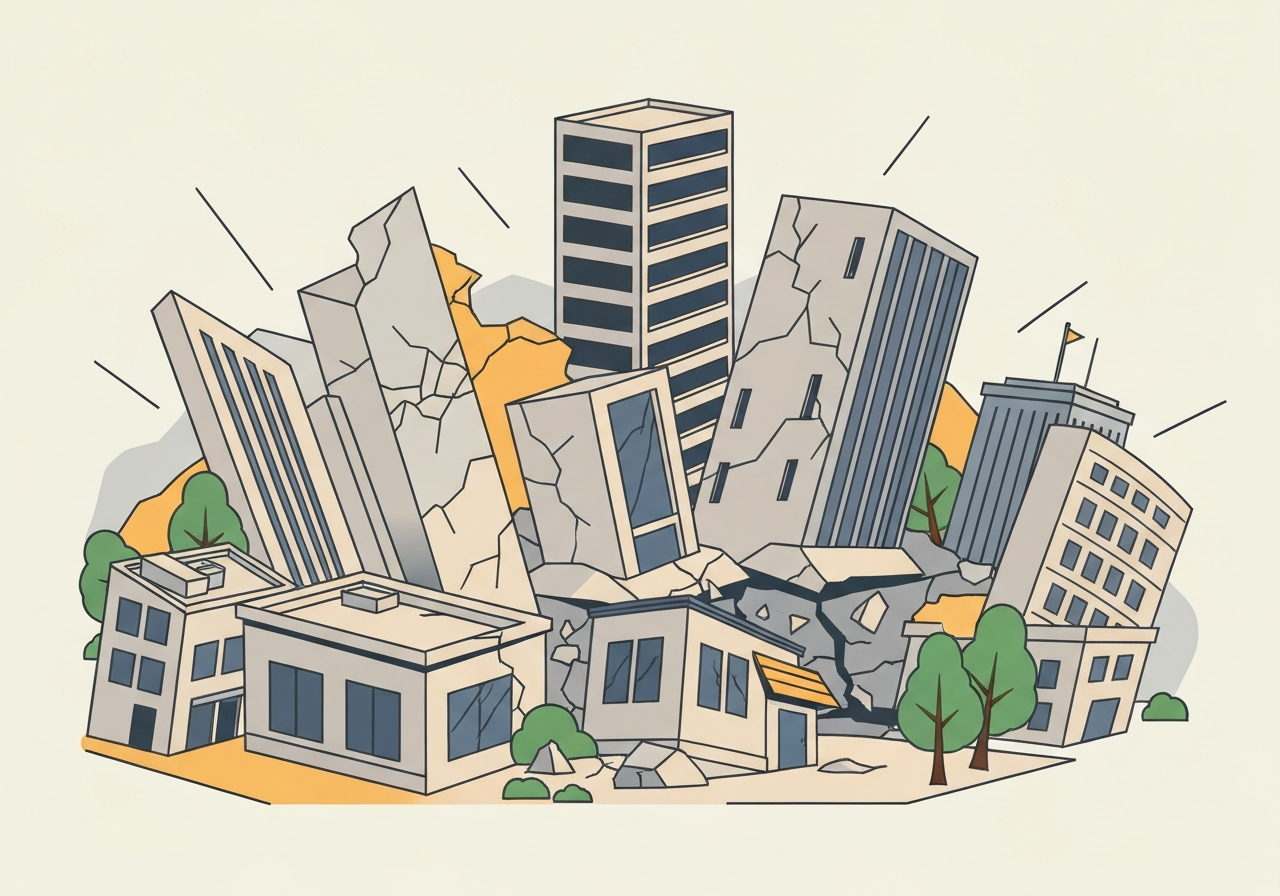
Early on Monday, Feb. 2, 2026, a swarm of 21 earthquakes struck southeast of San Ramon, with the largest registering magnitude 4.2 just after 7 a.m. The shaking was felt across the East Bay — including Oakland, Richmond, San Leandro and Hayward — and residents in parts of San Francisco reported windows rattling. There were no widespread reports of structural damage, though video circulated showing items falling from shelves at a San Ramon convenience store. Transit officials said trains were slowed while crews completed safety inspections.
Key Takeaways
- Twenty-one earthquakes shook the area southeast of San Ramon on Feb. 2, 2026, the strongest a 4.2 magnitude event recorded just after 7:00 a.m.
- Epicenters clustered near Alcosta Boulevard in San Ramon; additional shocks that morning ranged from magnitude 2.5 to 3.9.
- No broad reports of structural damage emerged; local video showed merchandise falling at a 7‑11 in San Ramon.
- BART announced trains running at reduced speeds for track inspections and warned riders of up to 20‑minute delays systemwide.
- The Tri‑Valley has seen intermittent swarms recently: 87 quakes of magnitude 2.0 or greater were logged between last November and December.
- Seismologists say the region overlies a branching section of the Calaveras Fault and that swarm causes remain under study; it is not clear which fault produced these events.
Background
The Tri‑Valley area of the East Bay, which includes San Ramon, has a known history of earthquake swarms—clusters of small to moderate temblors concentrated in time and space. Much of the region sits above or near strands of the Calaveras Fault, which fractures into smaller subfaults as it progresses northward. Seismologists note that swarms can arise on these subsidiary structures without a single large mainshock occurring afterward.
Scientists have proposed several mechanisms for swarms, including the migration of fluids from depth, stress transfer between nearby faults, or transient changes in crustal stress. Observationally, the Tri‑Valley saw an elevated rate of small earthquakes last winter: a Chronicle analysis of U.S. Geological Survey (USGS) data documented 87 events of magnitude 2.0 or above between November and December 2025. That recent activity framed Monday’s episodes as part of an ongoing, localized pattern rather than an isolated incident.
Main Event
The sequence began before dawn and culminated in a 4.2 magnitude quake shortly after 7:00 a.m. local time. According to USGS data, most epicenters that morning were concentrated within a narrow area bisected by Alcosta Boulevard in San Ramon, suggesting a tightly clustered swarm rather than widely dispersed fault activity. Additional shocks that day ranged from magnitude 2.5 to 3.9.
People across the Bay Area reported different intensities of shaking: residents in Oakland, Richmond, San Leandro and Hayward felt noticeable rumbling, while San Francisco neighborhoods such as Glen Park and NoPa reported window rattling and brief tremors. Video shared by local news outlets showed store products tumbling from shelves at a San Ramon 7‑11; emergency services did not immediately report major injuries.
Transit agencies moved quickly to assess infrastructure: BART issued an alert that trains were running at reduced speeds while crews inspected tracks, advising riders to expect delays up to 20 minutes systemwide. Transit officials emphasized that the speed reductions were a precaution as inspections were completed.
Analysis & Implications
Earthquake swarms complicate short‑term hazard assessment because their behavior does not always follow the mainshock‑aftershock pattern that helps forecasters estimate subsequent risk. While swarms can precede larger quakes in some settings, experts emphasize that most swarms do not culminate in a damaging mainshock. That nuance matters for emergency messaging and public preparedness.
For infrastructure and transit operators, even moderate shaking requires inspection protocols. BART’s precautionary slowdowns illustrate how even non‑destructive events ripple through daily life — producing commuter delays, inspection costs and temporary service adjustments. Repeated swarms can increase operational burdens and economic impacts, particularly if inspections uncover damage or require repairs.
From a scientific standpoint, the clustered epicenters near Alcosta Boulevard point to activity on a localized structure or subfault within the Calaveras system. Continued monitoring by the USGS and regional networks will help determine whether the swarm dissipates or persists, and whether patterns such as migrating epicenters or increasing magnitudes emerge — signals that can alter risk assessments.
Comparison & Data
| Time window | Number of quakes ≥ 2.0 | Largest recorded magnitude |
|---|---|---|
| Feb. 2, 2026 (one morning swarm) | 21 | 4.2 |
| Nov–Dec 2025 (Tri‑Valley) | 87 | varied (≥2.0) |
The table contrasts the single‑day Feb. 2 swarm with heightened activity observed across November–December 2025. While the number of shocks in Nov–Dec was larger overall, Monday’s sequence included the day’s strongest single event (4.2). In both cases, most events were small to moderate and geographically clustered in the Tri‑Valley area.
Reactions & Quotes
“An earthquake occurred within the area serviced by BART. Trains are running at reduced speeds while we complete safety track inspections.”
BART Alert (official)
“Swarms represent a different pattern of seismicity and, in many cases, are not an immediate precursor to a larger earthquake,”
USGS seismologists (agency statement)
“We felt a long rumble and the windows shook — it was unsettling, but everyone here is okay,”
Resident, Glen Park
Each quote is accompanied by context: transit officials described operational precautions, USGS scientists reiterated the uncertainty inherent in swarm behavior, and local residents conveyed the lived experience of widespread but generally non‑destructive shaking.
Unconfirmed
- Which specific fault strand produced the Feb. 2 epicenters remains unconfirmed pending detailed seismic analysis.
- Whether deep fluids played a role in triggering the swarm is a hypothesis under study, not a proven cause for this sequence.
- The full extent of property damage beyond circulated video of items falling has not been verified by officials.
Bottom Line
Monday’s swarm — 21 quakes with a largest magnitude of 4.2 — underscores ongoing seismic activity in the Tri‑Valley but, so far, did not produce widespread structural damage. The event triggered standard safety responses from transit and emergency services, which prioritized inspections and public caution over alarm.
For residents and commuters, the immediate implications are practical: expect potential service impacts and continued monitoring updates from USGS and local authorities. For scientists and planners, the episode reinforces the need for detailed local seismic mapping and transparent, measured public communication as aftereffects and further small shocks are assessed.
Sources
- San Francisco Chronicle — Local news report summarizing the swarm and regional context (news outlet).
- U.S. Geological Survey (USGS) — National seismic monitoring and event data (official agency).
- BART Alert (@SFBARTalert) — Official transit advisory about speed reductions and inspections (official account).
- ABC7 Bay Area — Local broadcast outlet that shared video of items falling at a San Ramon store (news outlet).