
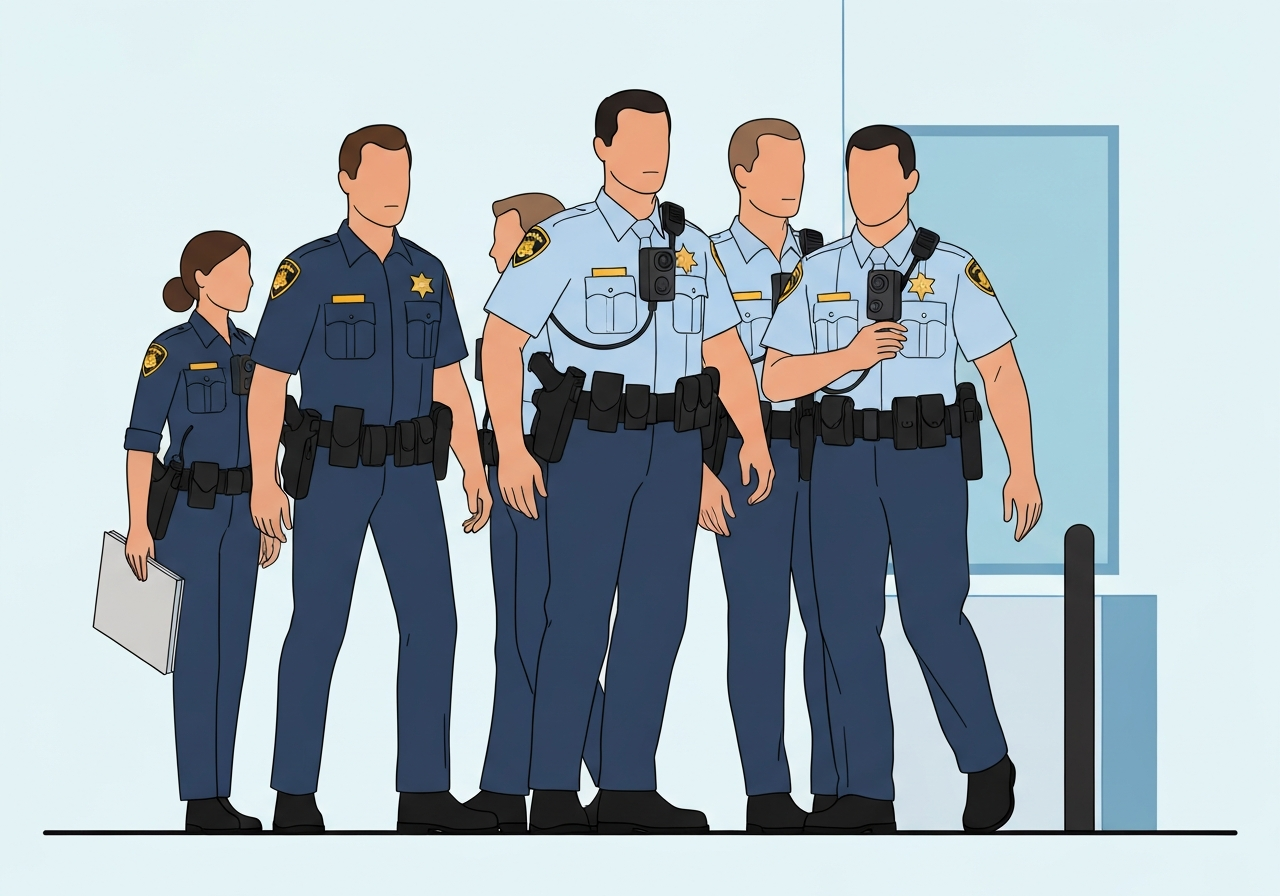
Homeland Security Secretary Kristi Noem announced on Monday that all federal agents operating in Minneapolis will immediately begin wearing body cameras, with a pledge to expand the program nationwide “as funding is available.” The move follows public pressure and political negotiations after the fatal shootings of Alex Pretti and Renee Good. Republican Senator Ron Johnson signaled openness to body cameras for Immigration and Customs Enforcement (ICE) agents, a concession that could ease a standoff over Department of Homeland Security (DHS) funding. Democrats continue to press for broader operational reforms as a condition for approving agency financing.
Key takeaways
- Noem ordered immediate body-camera use for all federal agents in Minneapolis; nationwide rollout contingent on available funding.
- Senator Ron Johnson (R–WI), chair of the Senate Homeland Security Committee, told CNN he “did not have a problem” with ICE officers wearing cameras, signaling bipartisan movement on the issue.
- Democratic leaders are withholding votes on DHS funding pending reforms, including body cameras, limits on roving patrols, and new warrant rules tied to home entries.
- Senate leaders passed a package of five funding measures last Friday to keep government departments funded until next September and a separate bill to sustain DHS operations for two weeks.
- Democratic demands also include banning masks for agents during operations, requiring clear identification, and adopting a universal use-of-force code for federal law officers.
- Civil liberties groups raised concerns after agents arrested and pepper-sprayed demonstrators and observers filming patrols; such filming is argued to be protected by the First Amendment.
- Johnson argued that agents face heightened risks in the field — citing being shot at and vehicle assaults — and warned that judicial-warrant requirements would hamper immigration enforcement amid a backlog of cases.
Background
Calls for greater transparency and oversight of federal immigration patrols have intensified following two fatal shootings in Minneapolis involving people identified as Alex Pretti and Renee Good. Those incidents prompted public outcry, protests and renewed scrutiny of how ICE and other federal law-enforcement units conduct street operations. Democrats in Congress linked approval of DHS appropriations to concrete reforms intended to curb alleged abuses and increase accountability.
Historically, debates over camera use by federal agents have mirrored similar fights at state and local levels, where body cameras were adopted to document encounters and reduce contested accounts of force. Immigration enforcement adds legal and operational complexity: ICE and DHS officials argue patrol tactics are necessary for officer and public safety, while critics say some tactics risk civil-rights violations and chilling of bystander documentation.
Main event
On Monday Secretary Noem said Minneapolis-based federal agents will begin wearing body cameras immediately and that the initiative will be extended across the country depending on budget approvals. The announcement arrived amid a tense appropriations debate in which Democratic senators are refusing to back DHS funding without reforms to ICE’s patrol practices.
Senator Ron Johnson told CNN’s State of the Union he personally “didn’t have a problem” with ICE officers wearing body cameras, framing his comment as a potential bargaining chip to break a funding impasse. Johnson emphasized operational risks agents face in the field, saying some have been shot at and had vehicles rammed, and suggested cameras could clarify contested encounters.
Democratic leader Chuck Schumer pressed for a package of changes beyond cameras: an end to roving patrols, new requirements for judicial warrants before home entries to make arrests, bans on masks during operations, mandatory identification for agents and a universal use-of-force code for federal officers. Schumer described these measures as “commonsense” reforms aimed at restoring order and protecting civil liberties.
The Senate advanced a short-term funding path last week: a set of five measures to fund government agencies through next September and a two-week extension specific to DHS activities. The House is scheduled to consider the legislation this week, and House Democrats have signaled they will continue to condition support on reforms to ICE protocols.
Analysis & implications
Practically, immediate deployment of body cameras in Minneapolis is a limited, local change that can be implemented quickly under departmental authority. A nationwide mandate, however, hinges on appropriations and technical, privacy and policy choices — who controls footage, retention periods, access rules and redaction standards — decisions that require legislative or departmental rulemaking and budget allocation.
Politically, cameras are relatively easy for some Republicans to accept, which helps narrow bargaining space. But Democrats’ broader demands — warrants for home entries, ending roving patrols and a binding use-of-force code — cut deeper into how ICE and DHS operate and would require structural policy change. That mismatch explains why body cameras are likely to be treated as a partial concession rather than a full solution.
Operationally, federal agencies will face implementation challenges: procuring cameras, training agents, establishing chain-of-custody and data storage, and ensuring consistent activation. Privacy advocates will press for tight rules on who may access footage and for what purposes; enforcement proponents will push for access exceptions tied to investigations and officer safety.
Internationally and across jurisdictions, the debate may influence state and municipal policing reforms by renewing attention on surveillance, accountability and the balance between transparency and enforcement discretion. If a federal standard emerges, it could cascade into coordinated practices across multiple federal law-enforcement components.
Comparison & data
| Democratic demand | Current GOP/Administration position |
|---|---|
| Mandatory body cameras | Accepted in Minneapolis; nationwide expansion dependent on funding |
| End roving patrols | Rejected or contested as operationally limiting |
| Judicial warrants for home entries | Opposed by some Republicans; framed as impractical amid case backlogs |
| Ban on masks, visible ID, universal use-of-force code | Mixed reception; Democrats press, Republicans cautious |
The table summarizes positions described during the funding negotiations. While cameras are getting bipartisan traction in limited contexts, deeper operational reforms remain contested and could require statutory or regulatory changes to take effect.
Reactions & quotes
“I don’t have a problem with that personally,”
Senator Ron Johnson (State of the Union interview)
Johnson framed camera adoption as a practical compromise while warning that other Democratic demands could undermine enforcement capacity.
“ICE agents should conduct themselves like every other law enforcement agency in the country,”
Hakeem Jeffries (ABC This Week)
House Democratic leader Hakeem Jeffries echoed calls for standardizing conduct and accountability across federal law-enforcement components.
“These are commonsense changes,”
Senate Majority Leader Chuck Schumer
Schumer described the package of reforms — including cameras and warrant requirements — as necessary steps to restore trust and order in affected communities.
Unconfirmed
- Claims that agents were shot at or had vehicles rammed are based on statements by some officials and have not been independently verified in all cited incidents.
- The timeline and具体 scope for a nationwide body-camera rollout remain undefined; funding availability and rulemaking could materially change expansion plans.
Bottom line
The immediate order for body cameras in Minneapolis represents a visible concession to transparency demands and may ease part of the partisan logjam over DHS funding. Yet cameras alone do not resolve deeper disputes: Democrats seek structural limits on patrol tactics and warrant protections that Republicans argue would impede enforcement.
Negotiations in the coming days over the Senate’s funding measures and the House’s response will determine whether a narrow, camera-focused compromise is possible or whether the standoff will force more significant policy trade-offs. For communities, the pressing questions are how body-camera footage will be governed and whether any changes will meaningfully alter frontline policing behavior.
Sources
- The Guardian — news reporting summarizing announcements and congressional reactions.
- CNN — news network (State of the Union interview referenced in coverage).
- ABC News — news network (This Week interview referenced in coverage).