
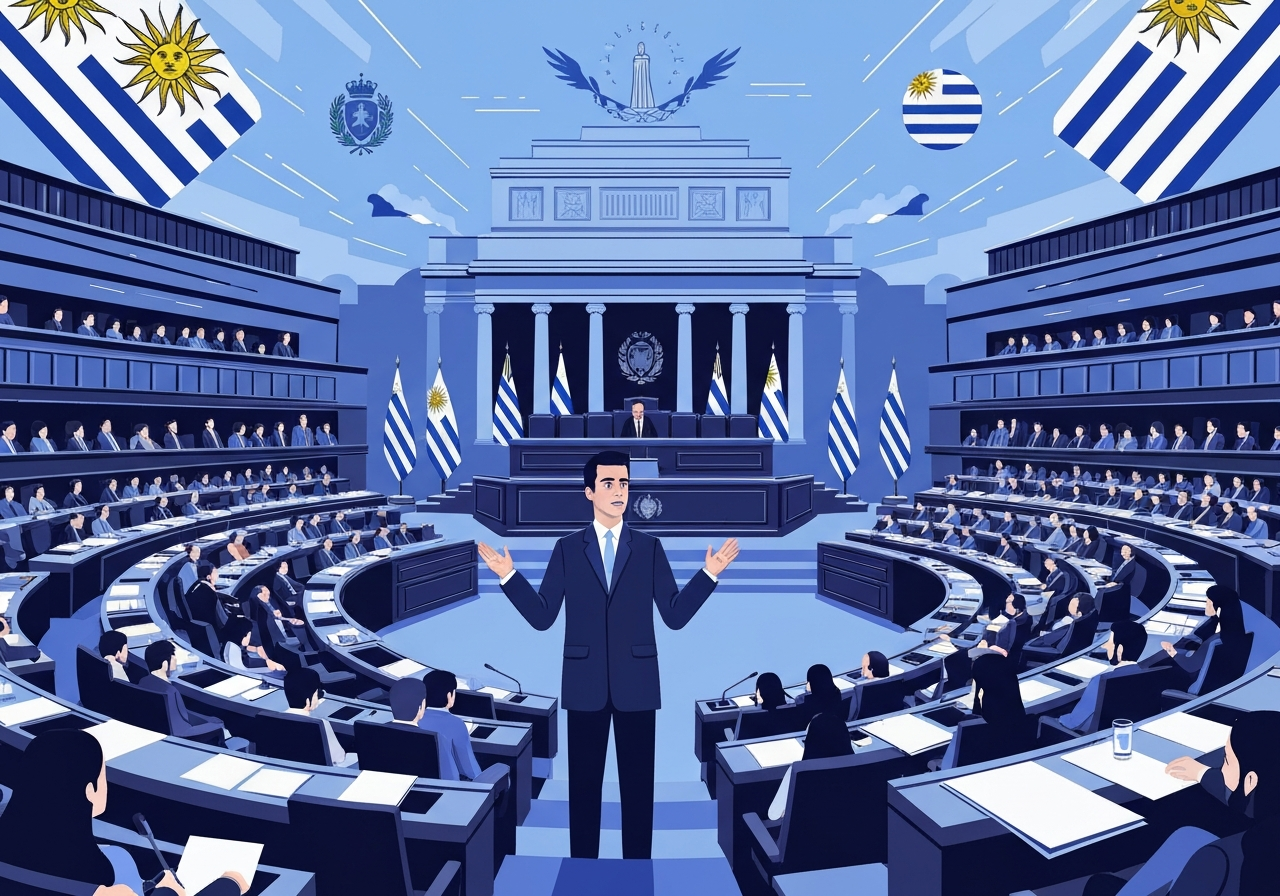
Uruguayan President Yamandu Orsi arrived in Beijing on a seven-day state visit beginning 1 February 2026 and signed roughly a dozen cooperation agreements with Chinese leader Xi Jinping, including pacts on science, technology and trade. The trip, accompanied by a 150-person delegation of business and government figures, marks the first visit by a Latin American head of state to China since US forces abducted Venezuela’s President Nicolas Maduro in early January 2026. Orsi said the visit pursues active international engagement and new development opportunities for Uruguay, even as the White House under President Donald Trump has reiterated a policy to limit hostile external influence in the Western Hemisphere. The meetings signal a closer Uruguay-China relationship while testing Washingtons response to deeper economic and diplomatic ties in the region.
Key Takeaways
- Orsi’s seven-day trip to China began on 1 February 2026 and includes an official stop in Shanghai later in the week.
- Beijing and Montevideo signed about a dozen cooperation agreements on 3 February 2026 covering science, technology and trade.
- Orsi traveled with a 150-person delegation that comprised business leaders and government officials, underlining an economic focus to the visit.
- Uruguay’s exports to China were valued at approximately 3.49 billion US dollars last year, with imports from China near 2.8 billion US dollars in the same period.
- The visit is the first by a Latin American president to Beijing since US special forces removed Venezuela’s Nicolas Maduro in early January 2026, an event that has heightened regional tensions.
- The US National Security Strategy published in November 2025 reiterates a goal of keeping the region free of hostile foreign incursion, a clear reference to limiting Chinese influence.
Background
Uruguay has cultivated economic ties with China for years, with Beijing serving as a major market for Uruguayan beef, soy and dairy. Trade growth and Chinese investment in Latin America through infrastructure and financing initiatives have made China a top partner for many regional economies. Political leaders in Montevideo have long sought to balance relations with the United States and China while pursuing export opportunities that support domestic producers and agribusiness.
Regional geopolitics shifted sharply after US forces removed Venezuela’s President Nicolas Maduro in early January 2026 in a raid that drew international attention and criticism. The operation intensified debate across Latin America about US approaches to influence and security in the hemisphere. In that charged atmosphere, foreign visits to Beijing by Latin American leaders attract particular scrutiny because they are framed as both economic choices and geopolitical gestures.
Main Event
On 3 February 2026 Orsi met Xi Jinping in Beijing and both sides described their dialogue as focused on deepening a comprehensive strategic partnership. According to the Chinese readout, Xi stressed the need to promote a multipolar world and inclusive economic globalisation while pursuing common development with partners. The formal agenda included cooperation memorandums in science and technology, trade facilitation and people-to-people exchanges.
Orsi used social media to frame the trip as a pragmatic push for development, saying Uruguay is pursuing active international engagement and creating new opportunities for national development. His delegation included private sector representatives intended to explore trade deals, investment prospects and technology partnerships tied to Uruguay’s key export sectors. Uruguay’s trade figures with China underscore the economic rationale: exports to China were about 3.49 billion US dollars last year while imports from China stood at roughly 2.8 billion US dollars.
The visit is taking place amid friction with Washington, where the Trump administration has publicly warned against hostile foreign incursion in the region and signalled a tougher posture toward Chinese influence. Montevideo’s decision to proceed with high-level talks and tangible commercial agreements illustrates a willingness among some Latin American governments to deepen ties with Beijing despite US objections.
Orsi will continue to Shanghai after the Beijing meetings for further engagements with Chinese business and local officials, reflecting the twin goals of strengthening diplomatic ties and advancing concrete trade and investment opportunities for Uruguay.
Analysis & Implications
Economically, the agreements are tailored to secure market access for Uruguayan agricultural exports and to attract technology and investment that could increase productivity. Given that China accounted for several billion dollars of bilateral trade in the latest reporting year, closer ties offer clear near-term gains for exporters of beef, soy and dairy. A larger delegation with business representation signals an emphasis on commercial outcomes rather than purely symbolic diplomacy.
Politically, Orsi’s outreach illustrates a broader trend of middle and small states recalibrating relations between the world’s two largest economies. This does not necessarily indicate a strategic realignment away from the United States, but rather a diversification of external partners to maximise economic benefits. Such balancing acts, however, increase diplomatic complexity and may invite pressure or countermeasures from Washington in areas such as security cooperation or access to selective US markets.
Regionally, the visit feeds into a narrative of competing models of engagement: Beijing emphasises long-term trade and infrastructure partnerships while the US under the Trump administration foregrounds hemispheric security and resistance to perceived strategic encroachment. For Uruguay, the challenge will be to extract tangible economic gains while managing political risk associated with closer ties to China, especially if bilateral relations with the United States cool as a consequence.
Comparison & Data
| Indicator | 2025 Value |
|---|---|
| Uruguay exports to China | 3.49 billion USD |
| Uruguay imports from China | 2.8 billion USD |
Those figures show a positive bilateral trade balance for Uruguay in the most recent reporting year, driven largely by agricultural exports. The delegation’s commercial focus aims to consolidate these markets and to identify additional value chain opportunities in technology and agribusiness. While trade alone does not determine geopolitical alignment, economic dependence on a large partner can translate into greater diplomatic weight for that partner in sensitive policy areas.
Reactions & Quotes
International analysts noted the symbolic and practical dimensions of Orsi’s trip and delegation composition, interpreting the move as a clear signal to Washington.
Orsi is not deterred from deepening ties with Beijing and the large business delegation underscores the economic intent of the visit
William Yang, International Crisis Group
China used the meeting to promote its preferred global narrative and to contrast its relationship-building approach with that of the United States.
A multipolar world and inclusive economic globalisation remain central to our cooperation agenda
Chinese government readout of Xi Jinping
Orsi framed the visit domestically as pragmatic diplomacy focused on development, noting opportunities for Uruguayan producers and investors.
Uruguay is pursuing active international engagement, strengthening long-term ties and creating new opportunities for the countrys development
Statement posted by President Yamandu Orsi on social media
Unconfirmed
- There is no confirmed indication that the United States will impose immediate economic sanctions on Uruguay as a direct result of Orsi’s visit.
- Claims that Uruguay will pivot away from all US ties are unverified; current evidence points to diversification rather than an abrupt realignment.
- Reports that new Chinese investment commitments were finalised beyond the signed memorandums have not been independently verified.
Bottom Line
President Orsi’s visit to China in early February 2026 combined symbolic high-level diplomacy with concrete commercial aims, highlighted by a dozen cooperation agreements and a 150-person delegation. For Uruguay, the trip seeks to secure export markets and technological partnerships that support domestic economic priorities, particularly in agriculture and related industries.
Strategically, the visit illustrates how smaller countries are navigating US-China competition by hedging and diversifying external partnerships. Observers should watch for follow-up investment announcements, implementation details of the signed agreements, and any diplomatic responses from Washington that could reshape the costs and benefits of deeper ties with Beijing.
Sources
- Al Jazeera (international media report)
- White House (official US government site, National Security Strategy reference)
- International Crisis Group (nongovernmental analysis organisation)
- Ministry of Foreign Affairs of the People Republic of China (official government readouts)