
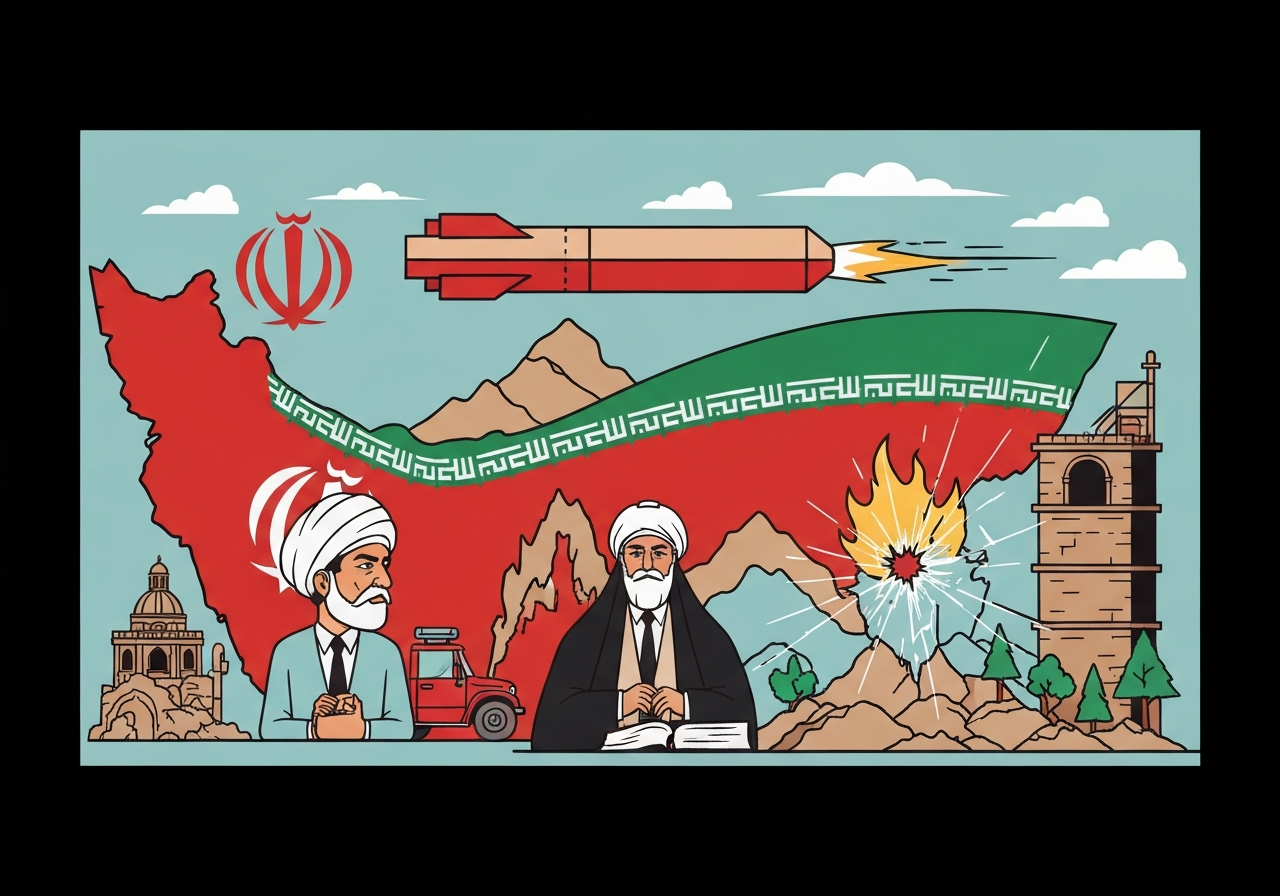
Iranian leaders privately warned in early February 2026 that a limited U.S. military strike could prompt renewed mass street protests and possibly fatally weaken the Islamic Republic’s hold on power. Six current and former officials told Reuters this concern was raised directly with Supreme Leader Ayatollah Ali Khamenei after a violent January crackdown — described by rights groups and witnesses as the bloodiest since 1979 — that left thousands dead or wounded. Officials said many Iranians are now willing to confront security forces again and that external pressure could embolden demonstrators. The worry at senior meetings, they said, is that a strike plus uprisings could produce irreversible damage to the regime.
Key Takeaways
- Six current and former Iranian officials reported briefing Supreme Leader Ayatollah Ali Khamenei in early February 2026 that a U.S. strike could spur renewed protests and threaten regime stability.
- Witnesses and rights groups said security forces used lethal force in the early January protests, which observers called the deadliest unrest since 1979; sources describe “thousands” killed or wounded.
- U.S. options under consideration reportedly include targeted strikes on security personnel or leaders intended to galvanize protesters, while U.S. carrier deployments increased Washington’s military reach in the region.
- Senior insiders and former officials — including ex-president Hassan Rouhani and others quoted via foreign outlets — warned that only major reforms could defuse public anger, while hardliners urged harsher measures.
- Officials told Khamenei that widespread anger has eroded fear as a deterrent, increasing the risk that foreign pressure could accelerate internal collapse, according to those briefed.
- Tehran publicly dismissed protests as “sedition,” with Khamenei accusing demonstrators of atrocities and alleging foreign orchestration by the United States and “Zionists.”
Background
The warnings to Iran’s top leadership came after a wave of anti-government protests in early January 2026 that followed a violent domestic incident and were met with an intense security response. Rights groups and on-the-ground witnesses reported that the security crackdown was the bloodiest unrest since the 1979 Islamic Revolution; those sources described large numbers of deaths and injuries, a claim the government attributes to violent “terrorists” with foreign links. The January unrest significantly hardened public anger and widened fissures between reformist figures, dissident establishment figures, and hardline security elements.
International tensions rose concurrently. The United States deployed a carrier strike group and supporting vessels to the Middle East, expanding military options available to Washington. According to reporting cited by officials, U.S. deliberations in late January and early February 2026 included limited, targeted strikes aimed at degrading security forces or leadership to encourage internal opposition — an approach some regional partners say would not by itself topple the clerical structure.
Main Event
In high-level briefings conveyed to Khamenei, six current and former officials warned that the suppression of January protests pushed public anger to a new threshold. Several attendees — unnamed because of sensitivity — said they told the supreme leader that fear no longer restrained many citizens and that a foreign strike could trigger mass demonstrations. One official warned that outside actors desired renewed unrest to bring down the Islamic Republic and that a combined military-provoked backlash would be catastrophic.
Former and dissident Iranian figures amplified that view publicly. Ex-President Hassan Rouhani (quoted by foreign outlets) urged sweeping reforms, warning minor changes would be insufficient and predicting fresh unrest if leaders failed to act. Hardline parliamentarians sharply rebuked those calls, with at least one senior MP calling for punitive measures against Rouhani himself.
Observers noted the contrast with reactions to earlier foreign strikes: when Israel and the U.S. targeted parts of Iran’s nuclear infrastructure in June, street protests did not follow. Officials and analysts now say the January crackdown changed the social calculus. A former senior moderate official quoted by Reuters said, “People are extremely angry” and that the “wall of fear has collapsed,” meaning a U.S. attack could produce renewed and more determined demonstrations.
Analysis & Implications
If a U.S. strike were to occur, the interplay of external pressure and domestic grievance could produce either rapid escalation or a brutal clampdown. Iranian hardliners would likely justify harsher security measures as defense against foreign aggression, increasing the likelihood of lethal confrontation. Officials who briefed Khamenei argued this dynamic could produce “irreparable damage” to the political establishment if protests spread in response to an attack.
For Washington and regional partners, the strategic calculus is fraught. Targeted strikes intended to embolden protesters carry the risk of unanticipated outcomes — strengthening hardliners, provoking retaliatory action, or exposing civilians to increased violence. Israeli and Arab interlocutors cited in reporting cautioned that airpower alone would be insufficient to remove the clerical leadership and that any limited strike could further complicate diplomatic tracks over the nuclear file.
Economically and socially, prolonged unrest would magnify existing grievances: the country faces long-term economic pain from sanctions, allegations of corruption, and widening inequality. Reformist and establishment dissidents say only substantive political change — not cosmetic adjustments — can address the root causes of dissent. Absent credible reform, analysts warn the protests could become protracted and more violent, with domestic consequences for the security apparatus and regional ripple effects.
Comparison & Data
| Event | Approx. scale / outcome |
|---|---|
| January 2026 protests | Rights groups/witnesses report thousands killed or wounded; described as deadliest since 1979 |
| June (previous year) strikes on nuclear sites | Damage to facilities; no immediate surge in anti-government protests reported |
The available public figures on January casualties come from rights organizations and eyewitness reporting compiled during and after the events; government tallies have not corroborated those totals publicly. Historical comparison indicates the January unrest was characterized by higher lethality than unrest episodes in recent decades, prompting rare private alarms among senior officials.
Reactions & Quotes
An attack combined with demonstrations by angry people could lead to a collapse (of the ruling system). That is the main concern among the top officials, and that is what our enemies want.
Unnamed senior official (briefing Reuters)
People are extremely angry. The wall of fear has collapsed. There is no fear left.
Former senior moderate official (quoted to Reuters)
If America attacks, I will go back to the streets to take revenge for my son and the children this regime killed.
Tehran resident, bereaved parent (contacted by Reuters)
Unconfirmed
- Precise casualty totals from the January crackdown remain disputed; figures described as “thousands” come from rights groups and witness accounts but lack a unified, independently verified tabulation.
- How Khamenei personally responded in the high-level briefings reported by officials was not disclosed; sources declined to provide direct quotations from the supreme leader.
- Specific operational plans for any U.S. strikes and the exact list of potential Iranian targets were not publicly released and remain subject to U.S. decision-making and intelligence assessments.
Bottom Line
Senior Iranian figures privately conveyed to their supreme leader in early February 2026 that a limited U.S. strike risks catalyzing renewed, larger-scale protests by a population they say has been pushed beyond fear. That assessment — reported by Reuters and republished by The Jerusalem Post — frames a hard dilemma for both Tehran and foreign capitals: military pressure aimed at weakening the regime may instead accelerate a volatile domestic breakdown or provoke harsher repression.
For policymakers, the situation underscores the importance of carefully weighing kinetic options against possible political and humanitarian fallout inside Iran. For observers and the Iranian public, the weeks ahead are likely to determine whether frustration translates into sustained change, renewed cycle of violence, or an entrenched security response that further constrains political space.
Sources
- The Jerusalem Post — news (republished reporting from Reuters, original story Feb 2–3, 2026)
- Reuters — international news agency (original reporting cited in republished articles)