
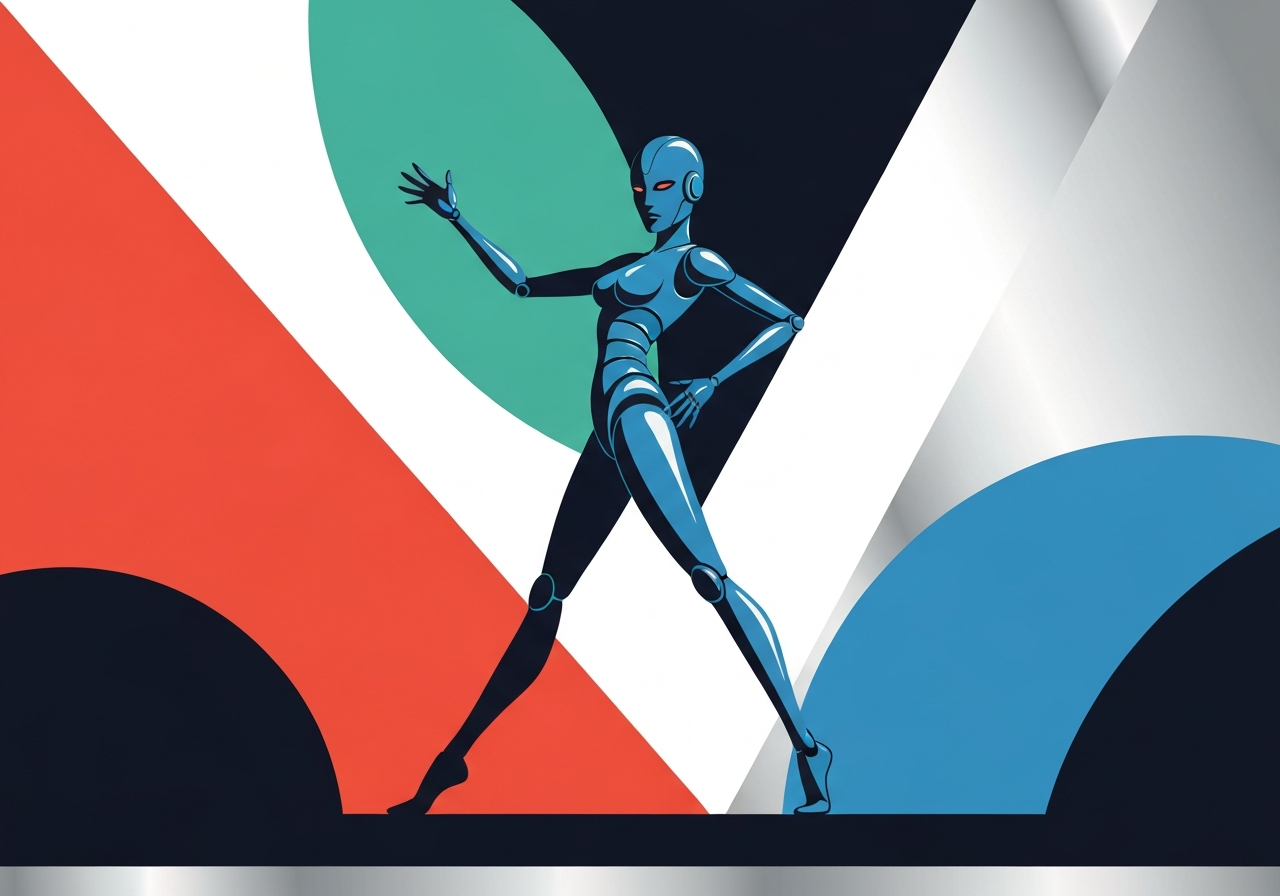
In a high-profile Super Bowl placement airing just after halftime, Svedka — owned by Sazerac — has revived its long-dormant robot mascot Fembot in a 30-second commercial that the company says was created primarily with generative AI. The spot pairs Fembot with a new companion, Brobot, whose TikTok-style dance was chosen from a user contest won by 23-year-old Jessica Rizzardi of Nashville. Much of the finished tableau was assembled from AI prompts and studios’ tools rather than a conventional live-action shoot, a production choice Sazerac frames as an artistic and thematic decision. The campaign is already being positioned by the brand as a milestone in Big Game advertising and a likely conversation starter.
Key Takeaways
- The commercial runs 30 seconds and will air immediately after halftime during the Super Bowl broadcast.
- Fembot returns to the brand after nearly 13 years as Svedka leaned into a techno-themed creative approach.
- The partners Fembot and Brobot perform a dance selected via a public contest; the winning routine was submitted by 23-year-old Jessica Rizzardi from Nashville.
- Sazerac promotes the spot as the first known Super Bowl ad produced “primarily” with AI tools, a claim that industry observers may scrutinize.
- Sara Saunders, Sazerac’s chief marketing officer, says the choice was driven by storytelling and aesthetics rather than cost or speed savings.
- The ad includes a visual gag — Brobot short-circuits after drinking Svedka — intended to underline a pro-human message.
- Vodka is an unusual Super Bowl category; Smirnoff joins Svedka as a vodka advertiser, the first time the spirit has had that kind of presence in three decades.
- Production involvement included generative-studio technologies also used in recent high-profile AI ads, a trend that has prompted debate about creativity and ethics.
Background
Svedka first introduced robot imagery into its campaigns years ago; the brand’s Fembot character had been absent from mainstream campaigns for nearly 13 years before this revival. The decision to bring back a robotic mascot coincides with a larger advertising trend: brands increasingly experimenting with generative AI to create imagery, motion, and creative variations at scale. For Svedka, those tools offered an opportunity to lean into a futuristic aesthetic that contrasts with vodka’s typically neutral sensory profile — odorless and colorless — by foregrounding visual spectacle.
The Super Bowl has historically favored beer advertisers and larger category staples for its mass-reach spots; vodka has been less prominent in recent decades. Smirnoff’s concurrent presence marks a notable category shift, while Sazerac framed its Fembot-led spot as a natural fit for a brand seeking to stand out. At the same time, the advertising industry’s AI turn is not uniform: some brands are using AI as a discrete tool for postproduction or visual tweaks, while others embrace generative systems more centrally in ideation and image creation.
Main Event
The finished 30-second commercial centers on two robotic figures — the returning Fembot and a newly introduced Brobot — arriving at a house party where human attendees are celebrating. The pair discover bottles of Svedka within their casings, perform a choreographed TikTok-style dance, and interact with the crowd; at one point Brobot drinks and malfunctions, a motif intended to signal the value of real-world connection. According to the campaign materials, much of the visual sequence was produced via AI prompting and generative imagery rather than filmed in a conventional live-action pipeline.
Dance choreography for the spot was sourced through an open contest that invited user submissions; the winning routine, performed in the ad, was created by Jessica Rizzardi, a 23-year-old from Nashville. Sazerac and its creative partners selected that entry from numerous submissions, folding user-generated social content into the campaign’s creative DNA. Sazerac emphasizes that the AI approach enabled expressive movement and an aesthetic the brand wanted, rather than functioning primarily as a budget cut.
Sara Saunders, Sazerac’s chief marketing officer, told reporters the company accepted the risk of a provocative Super Bowl vodka spot and embraced AI as a way to start a conversation. She framed the campaign’s theme as pro-human: the robots’ return, in Sazerac’s telling, is meant to encourage people to put down their devices and engage face to face. The ad will run in a value-rich broadcast moment, increasing the likelihood of social chatter and critical attention.
Analysis & Implications
Svedka’s choice to foreground generative AI in a Super Bowl spot signals a broader test case for how mainstream advertisers might use these tools in marquee media buys. If the campaign draws strong attention — positive or negative — it will demonstrate that high-cost, high-visibility platforms can be used to showcase AI aesthetics rather than only conventional production values. That could accelerate adoption of AI-centric pipelines for brands seeking novelty and shareable creative moments.
At the same time, the move raises questions about authorship, labor, and creative control. Agencies and studios that provide generative solutions are still refining how they document prompt provenance, credit creative contributors, and ensure compliance with intellectual-property expectations. Brands that say AI did not significantly reduce time or expense are flagging one likely outcome: early adopters may prioritize visual experimentation over immediate operational savings.
Public and regulatory scrutiny of AI-generated creative remains likely. Past AI-driven spots have provoked mixed responses — some viewers praise novelty while others criticize perceived inauthenticity or ethical corners. The Super Bowl’s scale magnifies both applause and backlash, meaning Svedka’s commercial could catalyze industry discussion about disclosure, standards for crediting human contributors, and transparency around AI tools used in production.
Comparison & Data
| Campaign | Role of AI | Note |
|---|---|---|
| Svedka (Super Bowl) | Primary creative generation | 30-sec spot featuring Fembot/Brobot; dance from user contest |
| Google Pixel (Big Game) | AI assistant in narrative (Gemini) | Used AI character to structure story beats and assist protagonist |
| Coca-Cola (Holiday) | Generative visuals | AI-created animal reactions; mixed public reception |
The schematic table above shows how recent high-profile campaigns have used AI either as a narrative device, a postproduction tool, or as the primary mechanism for creating imagery. Svedka’s placement is notable because it leans heavily toward the latter. Contextually, brands vary in whether they call the play an efficiency improvement or a deliberate creative choice; Svedka’s team has framed the move as aesthetic rather than budget-driven.
Reactions & Quotes
Company leadership framed the decision publicly as a conscious, conversation-starting risk. Context before and after each excerpt clarifies intent and anticipated response.
“We always knew we were signing up for risk because a vodka ad in the Super Bowl is polarizing to a certain degree,”
Sara Saunders, CMO, Sazerac (as reported)
Saunders said the team embraced controversy as part of the brief, positioning the ad to spark discussion about humans and technology rather than avoid debate.
“For us it’s never been an efficiency play, it’s been a storytelling play; that’s why we’ve always had strong hands on the keyboard,”
Sara Saunders, CMO, Sazerac (as reported)
That remark was offered to explain why the brand did not emphasize cost or speed gains from AI and instead selected the approach for creative and thematic reasons.
Unconfirmed
- The claim that this is the “first” Super Bowl ad created primarily with AI may be contested; other campaigns have used AI tools in central ways and independent verification is limited.
- Precise cost and timeline comparisons between this AI-led process and a conventional shoot have not been fully disclosed beyond the company’s summary statements.
- The detailed technical provenance of every image and animation pipeline (which models, datasets, or third-party assets were used) has not been exhaustively published by the brand or studios.
Bottom Line
Svedka’s AI-forward Super Bowl spot is deliberately provocative: it combines nostalgic brand iconography with cutting-edge generative tools and user-sourced choreography to create a compact, conversation-oriented commercial. The company frames the execution as a creative choice intended to highlight human connection — even as the imagery itself was largely assembled by AI — a juxtaposition that is likely to fuel industry debate.
Whether the ad becomes a model for future marquee spots or a one-off experiment depends on how audiences and industry stakeholders judge authenticity, effectiveness, and ethics. Expect more brands to pilot generative techniques in premium placements, and for researchers, regulators, and creative communities to press for clearer disclosure and standards as those experiments proliferate.
Sources
- The Hollywood Reporter (entertainment journalism; primary report referenced)
- Sazerac Company (official corporate site; company owner and campaign spokesperson)
- Silveside AI (creative studio; referenced involvement in recent AI-driven beverage ad work)