
Lead
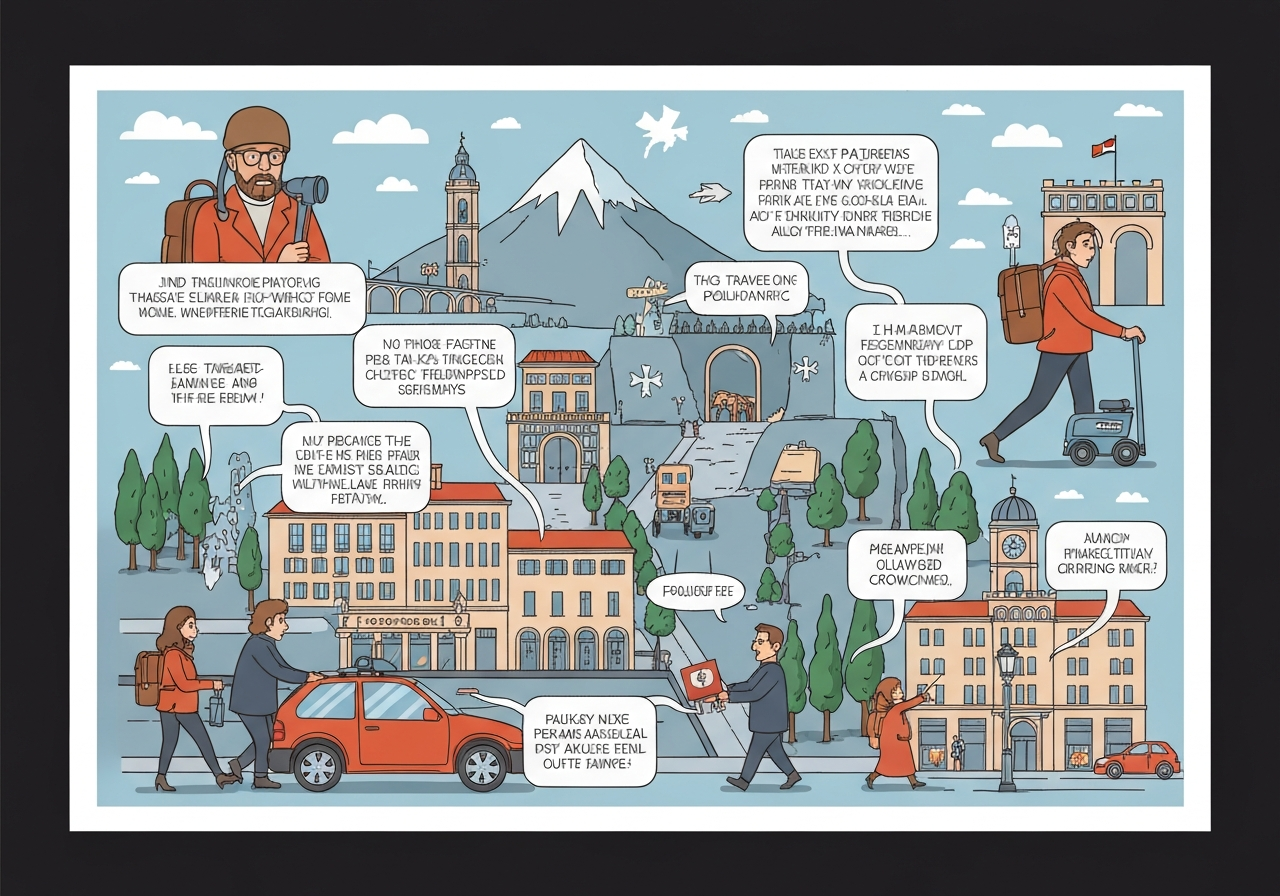
The 25th Winter Games, opening Feb. 6, 2026, will be staged across roughly 8,500 square miles of northern Italy, from Milan to alpine valleys such as Cortina d’Ampezzo. Organizers have prioritized a dispersed venue plan that avoids large stadia construction but relies on upgraded local roads, tunnels and expanded rail and bus links. That geographic spread, narrow mountain roads and recurring snowfall mean spectators, teams and broadcasters face complex journeys and likely delays. Officials mark each completed tunnel or added train as a local victory against what many call a logistical test.
Key Takeaways
- The Games cover about 8,500 square miles and use eight distinct locations, increasing travel demand across northern Italy.
- Main venues include Cortina d’Ampezzo, Bormio (men’s downhill), Val di Fiemme (Nordic skiing), Anterselva (biathlon) and Milan (hockey), requiring inter-city travel of hundreds of miles for some spectators.
- New or upgraded infrastructure—such as the Tai di Cadore bypass tunnel—was finished ahead of the Games to ease traffic on narrow alpine roads.
- Organizers expanded train and bus services and extended shuttle routes, but mountain roads remain susceptible to heavy snow and closures.
- Local officials framed the dispersed model as more sustainable and as an economic opportunity for multiple host communities rather than a single Olympic city.
- On-the-ground reporting noted heavy traffic jams and snow-related slowdowns, and at least one traveling observer required assistance while en route to a venue.
Background
When Milan and Cortina won the 2026 bid, planners emphasized reuse of existing facilities and avoiding large new venues concentrated in one area. That approach was pitched as more sustainable and less costly than building a single, sprawling Olympic city. It also aligned with host-region interests: smaller municipalities sought the economic boost of hosting specific competitions without shouldering the cost of an entirely new sports complex.
But Italy’s topography complicates that promise. The host sites are separated by winding alpine passes and deep valleys; where straight-line distance looks moderate on a map, actual road travel often requires long detours, slow climbs and single-lane stretches. For years, regional authorities invested in incremental projects—tunnels, road widenings, rail frequency increases—to reduce bottlenecks rather than undertake sweeping infrastructure programs.
Main Event
In the days leading to the opening ceremony, local ceremonies marked the completion of some projects seen as essential to the Games’ operability. Officials and clergy attended the inauguration of a bypass tunnel near Tai di Cadore, which engineers say will shave travel time on a key route into Cortina. Authorities presented such projects as necessary to cope with the expected influx of visitors driving between venues.
Despite upgrades, travel on match days has been uneven. Field observations and official traffic bulletins reported heavy snowfall and congested roads in the alpine corridors, which produced slow-moving traffic and occasional closures. Even relatively short transfers between nearby venues can take far longer than timetables suggest, straining spectator itineraries and broadcast schedules.
Rail and bus operators have extended services—adding trains into Milan and boosting regional bus shuttles from Mestre and other transit hubs—but capacity remains limited on the last-mile mountain routes. Organizers stress that many trips will require multi-leg journeys: shuttle to a station, intercity train, then bus into the valley—each stage vulnerable to weather and local delays.
Analysis & Implications
The dispersed model spreads economic benefits across towns from northern Lombardy to South Tyrol and the Veneto region, but that diffusion shifts the burden onto transport networks. Rather than paying for a concentrated infrastructure build, Italy chose incremental upgrades, which can reduce upfront cost but are more sensitive to peak-demand stress and extreme weather.
For athletes and teams, staggered competition sites complicate logistics for equipment transfer, medical support and acclimatization. Broadcasters and international delegations may face increased operating costs for ground transport and contingency crews, and tighter coordination is required to preserve event schedules when a mountain pass is closed by snow.
From an environmental perspective, organizers argue the plan reduces the need for new construction, but increased road travel between venues carries its own emissions risk unless spectators shift to rail and shared shuttles. Long-term, the infrastructure investments—if maintained—could leave a legacy for local mobility and tourism, but only if traffic management and weather-resilient maintenance are sustained after the Games.
Comparison & Data
| Metric | Value |
|---|---|
| Area covered by Games | ~8,500 sq. miles |
| Number of host locations | 8 |
| Opening ceremony | Feb. 6, 2026 |
The table highlights the scope that differentiates Milan–Cortina 2026 from more geographically compact Games. Those differences drive a heavier reliance on intermodal transfers and local road resilience, particularly in mountain weather conditions that can alter travel times by hours.
Reactions & Quotes
“Our goal was to complete this project for the Olympics,”
Claudio Andrea Gemme, head of Italy’s highway authority
Gemme spoke at the inauguration of the Tai di Cadore bypass tunnel, framing the work as a concrete mitigation to the alpine transport challenge.
“It’s more complicated, but it’s also more beautiful — one can see all of the valley,”
Gianluca Lorenzi, mayor of Cortina d’Ampezzo
The mayor emphasized the visitor experience and the regional benefits, acknowledging logistical complexity while pitching travel between venues as part of the appeal.
Unconfirmed
- Whether intercity travel times will meet original spectator itineraries on peak competition days — official timetables may not reflect real-time snow impacts.
- Exact net carbon impact of the dispersed approach versus centralized construction — comprehensive lifecycle accounting of travel emissions and avoided construction is not publicly available.
- Claims that all incremental infrastructure upgrades will remain fully operational and staffed for the entire Games period in the event of concurrent severe weather.
Bottom Line
Milan–Cortina 2026’s spread-out format trades concentrated construction for a tourism-led, low-build legacy—but it places a premium on resilient transport and weather contingency. For many attendees the experience will be scenic and memorable; for others it will require flexible plans, buffer time and patience.
What matters now is operational execution: reliable shuttle coordination, real-time traffic management and rapid-response snow clearance. If those systems hold, the dispersed model could deliver a broadly shared economic benefit without major new venues; if not, the Games risk being remembered as a logistical strain rather than a sustainable template.
Sources
- The New York Times (news media) — reporting on venue spread and transport challenges.
- Milano Cortina 2026 (official Games website) — event schedule and host-site information.
- ANAS (Italy’s highway authority) (official) — information on recent road and tunnel projects cited by local officials.