
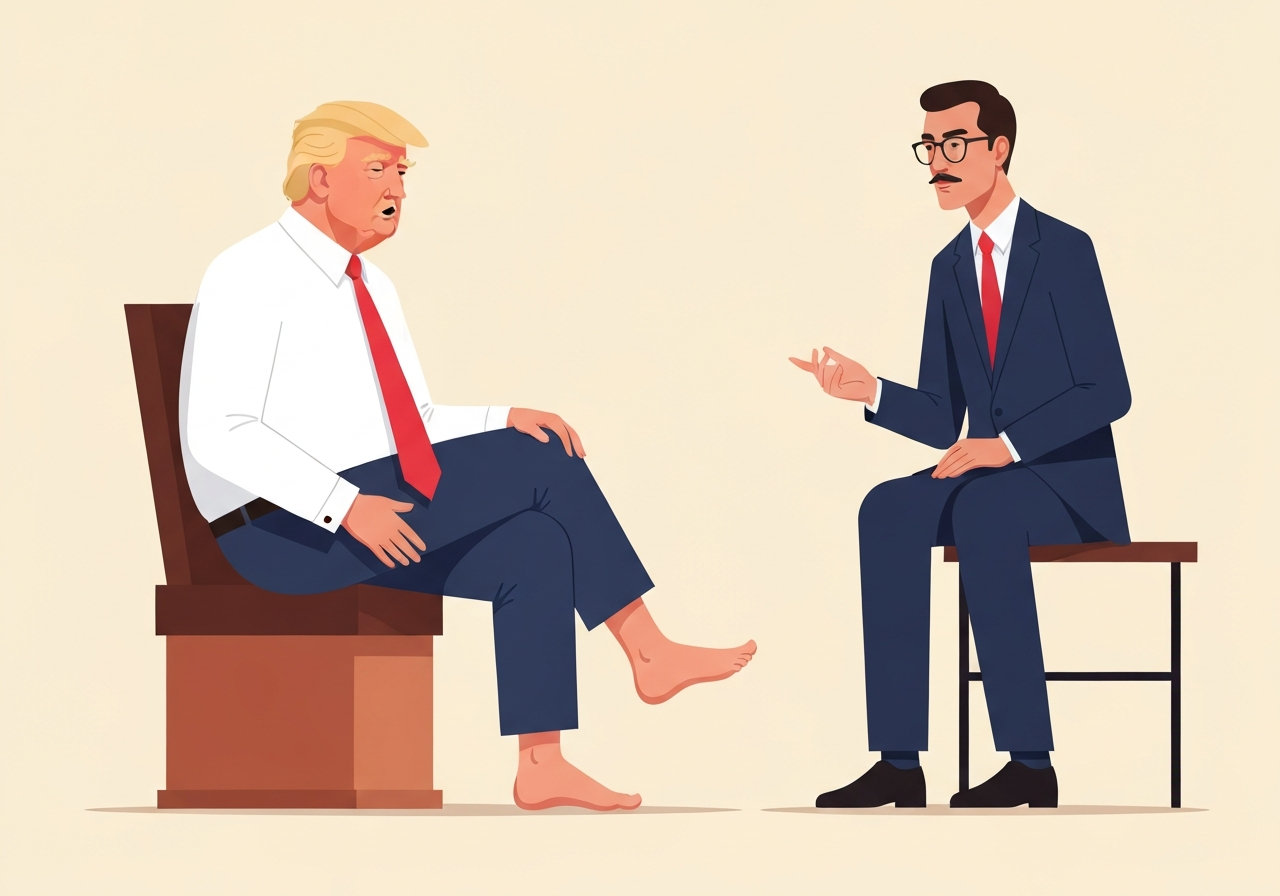
In their first in-person meeting on Feb. 3, 2026 in the Oval Office, President Donald Trump, 79, met Colombian President Gustavo Petro, 65, for talks that covered Venezuela, oil and energy policy, and Colombia’s upcoming elections. A widely circulated photograph from the meeting drew attention to Trump’s visibly swollen ankles protruding from his shoes while he spoke with Petro. Vice President J.D. Vance and Secretary of State Marco Rubio were seated opposite the two leaders during the session. Both presidents described the conversation as constructive despite prior public tensions between them.
Key takeaways
- The meeting took place on Feb. 3, 2026, in the Oval Office and was the first face-to-face encounter between Trump and Petro.
- Photo evidence showed Trump’s ankles extending from his shoes; the image circulated on social platforms and on the White House’s X account.
- Agenda items reportedly included Venezuela, oil and energy, and Colombia’s upcoming presidential elections, per NBC News sources.
- Trump has a documented diagnosis of chronic venous insufficiency; he has acknowledged wearing compression socks but said he stopped because he disliked them.
- White House officials reaffirmed Trump’s fitness for office; a White House aide responded to inquiries with a pointed public rebuttal.
- Observers note prior verbal sparring between the two leaders, including a reported warning from Trump toward Petro last month.
Background
The meeting follows a year of intermittent public clashes between Trump and Petro, marked by sharp rhetoric on regional issues. Relations between the United States and Colombia have traditionally included cooperation on security, migration and trade; recent friction has centered on differing approaches to Venezuela and regional diplomacy. Trump assumed the presidency at age 78 in 2025 and remains the oldest U.S. president to take office; his health has been the subject of sustained public attention. The White House disclosed last year that Trump was diagnosed with chronic venous insufficiency, a common circulatory condition that can cause leg swelling.
Colombian President Gustavo Petro, 65, was in Washington for bilateral discussions at a moment when Colombia faces a significant electoral cycle at home. Both leaders have domestic constituencies that watch foreign-policy gestures closely, particularly on Venezuela, where regional alignments remain fluid. The presence of Vice President J.D. Vance and Secretary of State Marco Rubio at the table highlighted Washington’s desire to frame the meeting as a coordinated executive-level engagement. Images from official and social accounts of the meeting were quickly picked up by international outlets and social media, focusing attention on both substance and optics.
Main event
The Oval Office session on Feb. 3 lasted several minutes and included an exchange of views on Venezuela’s political and humanitarian situation, energy cooperation and Colombia’s electoral calendar. Sources who spoke with NBC News said sanctions and energy security were part of the conversation, though officials gave few public specifics about any concrete agreements. In photographs from the encounter, Trump is seated next to Petro and appears mid-conversation while his ankles are visible outside his shoes; aides and other cabinet officials sat across the room.
After the meeting, Trump told reporters that the pair “got along very well” and called the discussion “very good,” adding that they were working on sanctions and other matters. Petro described the meeting as “very positive” and said it had an “optimistic and constructive tone,” while acknowledging policy disagreements. Those comments came after earlier public back-and-forth: last month Trump issued a curt warning to Petro during a separate exchange and later spoke with him by phone, after which both sides framed subsequent contacts more diplomatically.
Visuals from the meeting — including a photo shared by the White House’s X account — became the most visible element of coverage, drawing commentary about presidential fitness and public optics. Observers noted the simultaneous focus on both policy outcomes and the president’s physical presentation, a dynamic that frequently shapes modern coverage of high-level diplomacy. The White House maintained that the meeting’s content, rather than incidental imagery, best reflected the engagement between the two leaders.
Analysis & implications
At a policy level, the meeting signals a willingness by both administrations to engage on shared regional priorities despite prior rhetoric. Venezuela remains a central point of contention and cooperation for the United States and Colombia; any tacit coordination on sanctions or humanitarian measures could shift regional alignments. For Washington, forging working-level ties with Bogotá matters for migration management, counternarcotics efforts and energy supply discussions, especially amid global market volatility.
Domestically for both presidents, the optics of the meeting carry political weight. For Trump, managing perceptions of vigor and cognitive steadiness is vital given his age and public scrutiny of health; for Petro, the ability to secure constructive engagements with a U.S. president who has criticized him publicly can bolster his international standing ahead of Colombia’s elections. Photographs that emphasize physical appearance rather than policy make it harder for administrations to control the narrative around substantive outcomes.
Internationally, a cordial public framing reduces the likelihood of sharper diplomatic friction in the near term, but concrete policy shifts would require follow-up at the working level. Energy and oil discussions may have implications for regional markets if coordinated actions are pursued, but observers caution that initial statements do not yet amount to binding commitments. Analysts will watch subsequent meetings, joint statements and any changes to sanctions or trade measures for a clearer read on impact.
Comparison & data
| Item | Trump | Petro |
|---|---|---|
| Age | 79 | 65 |
| Meeting date | Feb. 3, 2026 (Oval Office) | |
| Topics reported | Venezuela, oil & energy, Colombia presidential elections | |
| Notable attendees | VP J.D. Vance; Sec. of State Marco Rubio | |
The table above summarizes verifiable details from the encounter. While age and meeting logistics are straightforward facts, reported agenda items and attendee roles come from media sources cited below. Photographic circulation and social attention quickly focused on the president’s visible swelling, echoing earlier instances where appearance influenced coverage more than policy content.
Reactions & quotes
Officials and commentators offered a mix of defense and critique after the photo circulated. The White House responded briskly to coverage that emphasized the president’s appearance.
“President Trump is the sharpest, most accessible, and energetic president in modern American history.”
White House assistant press secretary Davis Ingle (statement)
The quoted aide framed the photograph and subsequent scrutiny as politically motivated and attempted to shift attention back to the administration’s agenda. Ingle, a former intern to Senator Marco Rubio, also used pointed language in the public response, which critics said was an unusually personal condemnation for an official statement.
“We got along very well. He and I weren’t exactly the best of friends, but I wasn’t insulted because I never met him.”
President Donald Trump (comments to reporters)
Trump emphasized the cordial tone of the meeting in a brief on-camera interaction with reporters, highlighting that past rhetoric had not prevented productive diplomacy. Petro, for his part, described the talks as positive and constructive, framing the engagement as forward-looking despite policy differences.
“It was a very positive meeting with an optimistic and constructive tone.”
President Gustavo Petro (post-meeting remark)
Petro’s comment sought to reassure domestic and international audiences that the bilateral channel remained open even as each leader maintains differing political priorities. Observers noted that public conciliation can be a prelude to more detailed, technical negotiations behind closed doors.
Unconfirmed
- Reports in the sourced coverage that the U.S. “seized Venezuelan autocrat Nicolás Maduro” are inconsistent with widely reported accounts and require independent confirmation; this item is flagged as unverified.
- Some social-media claims tying the photograph to an acute medical episode for the president have not been substantiated by medical releases and remain unconfirmed.
Bottom line
The Feb. 3 Oval Office meeting between President Trump and President Petro combined substantive regional topics with potent visual optics. While both leaders described the encounter as constructive, the photograph of Trump’s swollen ankles shifted public attention toward questions about appearance and health, a recurring theme since Trump became the oldest U.S. president to assume office in 2025. Policy implications will hinge on subsequent working-level follow-through, particularly on Venezuela and energy cooperation.
For observers, the episode underscores how modern diplomacy plays out simultaneously on policy and image fronts: agreements require technical follow-up, but public perception can influence political leverage at home. Watch for official readouts, any changes to sanctions or energy coordination, and further meetings that could clarify whether the February talks produce measurable policy outcomes.
Sources
- The Daily Beast (news outlet) — original reporting and image circulation details.
- NBC News (news outlet) — sourcing on discussion topics and meeting context.
- The Wall Street Journal (news outlet) — reporting on medical disclosure and compression-sock comments.
- Getty Images / Anadolu (image agency) — photographic coverage of the Oval Office meeting.