
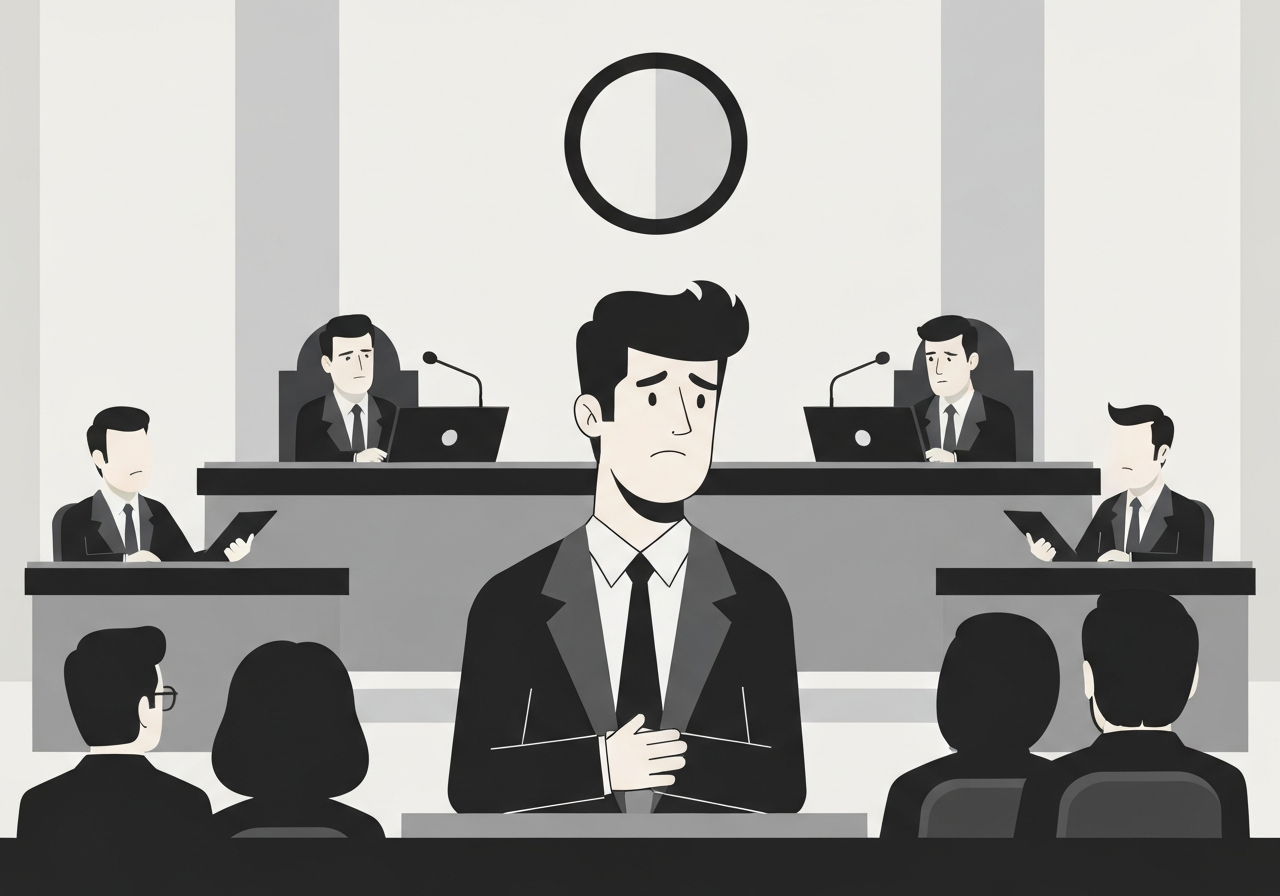
Lead: Ryan Routh, 60, who a jury convicted last fall of planning a sniper attack on then-presidential candidate Donald Trump at Trump International Golf Club in West Palm Beach, is scheduled to be sentenced Wednesday in federal court. Arrested on Sept. 15, 2024, Routh faces a statutory maximum of life imprisonment; federal prosecutors are asking U.S. District Judge Aileen Cannon to impose that term. The case followed a separate, fatal 2024 attack in Pennsylvania that wounded Trump and left the suspected shooter dead. At sentencing, Routh — who represented himself at trial and has since been assigned new counsel for this hearing — will have a final chance to speak.
Key Takeaways
- Ryan Routh was arrested Sept. 15, 2024, at Trump International in West Palm Beach after a Secret Service agent identified a man holding a semi-automatic rifle hidden in the tree line.
- A federal jury convicted Routh last fall on all counts related to an attempted assassination; sentencing is set for Wednesday, and prosecutors seek life imprisonment.
- Routh is 60 years old; his defense cites age, mental health concerns and an ineffectual self-representation and asks for a 27-year term instead.
- Investigators used cellphone records and license-plate reader data to place Routh in West Palm Beach and to document scouting activity while he lived in his vehicle at a truck stop.
- The trial lasted about two-and-a-half weeks; prosecutors spent seven days presenting evidence while Routh’s defense took only a few hours and offered three witnesses.
- When the guilty verdict was read, Routh attempted to stab himself with a pen and later filed erratic court submissions, including a written remark referencing the near-success of the stabbing.
- No new witnesses or evidence are expected at sentencing; other than counsel, only Routh is expected to speak in court.
Background
The charged plot unfolded amid a high-security, politically fraught 2024 campaign season in which then-candidate Trump was already the target of a prior attack. In July 2024, Thomas Crooks fired at Trump in Pennsylvania, wounding him near the right ear; Crooks was killed on the scene by a Secret Service agent. That shooting heightened protectiveness around public appearances and intensified scrutiny of threats to candidates.
Routh was arrested on Sept. 15, 2024, after an on-duty Secret Service agent observed a man later identified as Routh holding a semi-automatic rifle concealed in foliage at Trump International Golf Club in West Palm Beach. The agent confronted Routh, fired at him during the encounter, and Routh fled; he was captured shortly afterwards. Federal authorities then assembled physical, electronic and testimonial evidence tying Routh to surveillance of the course and surrounding approach routes.
The case drew attention from multiple stakeholders: the Department of Justice, which prosecuted the matter; the Secret Service, which investigated and confronted the suspect on the scene; and defense counsel, who contested aspects of competency and choice of counsel. The courtroom proceedings occurred in U.S. District Court before Judge Aileen Cannon, whose handling of pretrial and trial motions shaped the pace and format of the trial.
Main Event
The prosecution contended for seven days during the trial that Routh planned a sniper-style attack timed around Trump’s golfing routine. Investigators presented cellphone location data and license-plate reader hits showing Routh’s movements from North Carolina to West Palm Beach, and surveillance that prosecutors said documented him scouting potential positions while living in his vehicle at a truck stop.
On the day of the arrest, a Secret Service agent testified that he saw Routh holding a semi-automatic rifle concealed in the tree line of the course. The agent approached, exchanged fire with Routh, and Routh fled the scene by car; law enforcement tracked and detained him soon afterward. The government characterized those actions as the culmination of preparatory steps consistent with an attempted assassination.
Routh’s courtroom defense was brief and fragmented. After a period of disagreements with federal public defenders, Judge Cannon allowed Routh to represent himself at trial. He called only three witnesses and presented a disjointed case; Routh testified that he was a peaceful person who lacked the “cold heart” necessary to kill.
The jury deliberated for about two hours before returning guilty verdicts on all counts. Immediately after the verdict was read, Routh attempted to stab himself in the neck with a pen and was restrained by federal marshals. Subsequent filings from Routh included an apology to the court and a written passage stating, in effect, that had the pen been a quarter inch further back the proceedings would have been unnecessary — a filing the court docket records.
Analysis & Implications
The sentencing will test how the federal judiciary balances punishment, public safety and mitigating factors such as age and asserted mental-health issues. Prosecutors argue that the gravity of an attempted assassination of a major-party presidential candidate warrants the maximum sentence, citing the potential for mass political destabilization and the clear planning behavior the government says Routh exhibited.
Defense counsel’s request for a 27-year sentence underscores typical mitigation themes: the defendant’s age, alleged mental-health conditions, and an ineffective self-representation that deprived the jury of a more robust factual context. If the judge imposes a term substantially below life, appellate questions could follow about whether the sentence adequately reflected the offense’s seriousness.
There are broader security and political consequences regardless of the precise term imposed. A life sentence would send a deterrent message and reassure some officials about accountability for extremist violence; a reduced term could prompt debate about how the federal system treats older defendants with documented behavioral or psychological problems. Either outcome will be scrutinized by agencies refining protective measures for candidates.
Comparison & Data
| Item | Date/Value |
|---|---|
| Arrest | Sept. 15, 2024 |
| Prior Pennsylvania shooting | July 2024 — suspect killed; Trump wounded at right ear |
| Trial length | About 2.5 weeks; prosecution 7 days of testimony |
| Defense sentence request | 27 years |
| Prosecutor sentence request | Life imprisonment |
The table above summarizes the case timeline and the opposing sentencing recommendations. These discrete data points — dates, trial length, and recommended penalties — frame the legal questions before the judge and will shape public discussion once the ruling is issued.
Reactions & Quotes
Prosecutors urged the court to impose the maximum penalty, arguing the defendant’s conduct reflected premeditation and posed extreme danger to public officials.
Prosecutors (court filing)
Routh told jurors he was nonviolent and said he lacked the “cold heart” required to carry out a killing, testimony the defense offered to challenge intent.
Ryan Routh (trial testimony)
In post-verdict filings, Routh apologized for the trial and wrote that, had his earlier self-harm attempt been slightly more effective, others “would not have to deal with all this mess.”
Ryan Routh (court filing)
Unconfirmed
- Whether Routh had a concrete timeline or backup plan beyond the surveillance activities remains unclear because the defense did not present an extensive counter-evidence record.
- No public evidence has definitively linked Routh to any network or accomplices; investigators have not publicly confirmed third-party coordination.
- Specific clinical diagnoses tied to Routh’s mental-health references have not been detailed in public court filings and remain unverified.
Bottom Line
The Routh sentencing will close a high-profile federal prosecution arising from a 2024 campaign-season plot; prosecutors seek life in prison while defense counsel presses for 27 years based on age and mental-health mitigation. The hearing is likely to be short on new fact-finding — no witnesses or exhibits are expected — and will instead center on legal argument about the appropriate punishment given the established facts.
Beyond the individual penalty, the case reinforces persistent concerns about candidate security, the role of electronic trail evidence (cellphone and license-plate data) in modern investigations, and the implications when defendants choose self-representation. Observers should watch Judge Cannon’s reasoning for signals about how federal courts weigh deterrence, incapacitation and mitigation in politically sensitive violent cases.
Sources
- NPR (news report summarizing trial and court filings)
- The Associated Press (news/photo agency — photo attribution and related reporting)